
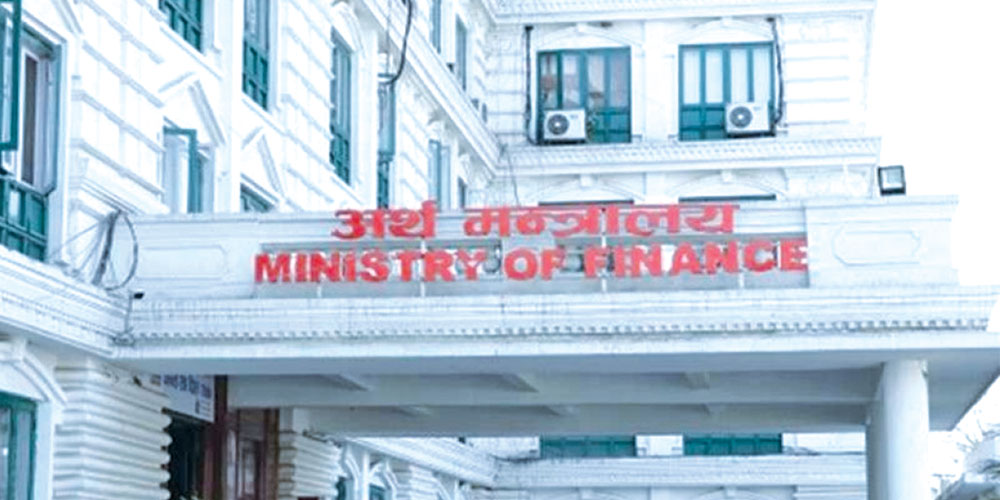
Kathmandu- The Government of Nepal has started a new system to pay government employees twice a month, instead of the traditional once-a-month salary payment.The system was launched as a pilot project from Baisakh 16, beginning with employees of the Ministry of Finance and the Office of the Financial Comptroller General. These employees are now receiving their salaries every 15 days.
Financial Comptroller General Shobhakanta Poudel said that the technical system is fully ready and has been opened for other government offices as well. A formal circular will soon be issued to expand this system across all federal government institutions.
Earlier, Finance Minister Dr. Swarnim Wagle had announced this decision on Baisakh 4, aiming to improve financial management and ease cash flow.Under the new system, salaries and allowances are automatically divided into two equal parts and paid twice a month. Deductions such as provident fund, citizen investment fund, social security tax, income tax, insurance, and pension contributions are also split into two payments.
For example, if an employee previously paid Rs. 800 per month for insurance, they will now pay Rs. 400 every 15 days.The government believes this system will help manage the state treasury more efficiently by reducing the pressure of large payments at the end of the month. It is also expected to increase market activity, as employees will have money in hand more frequently, boosting spending.This system is especially expected to benefit lower-level employees, who often struggle to manage expenses throughout the month. Receiving money every 15 days will help them better handle daily costs and bills without relying on loans.
For now, the system is being tested as a pilot project. Based on its success, the government plans to expand it to all government employees, and later to teachers, security personnel, and other public sector workers.Overall, this reform aims to modernize Nepal’s financial system and support economic activity by improving cash flow and increasing consumer spending.