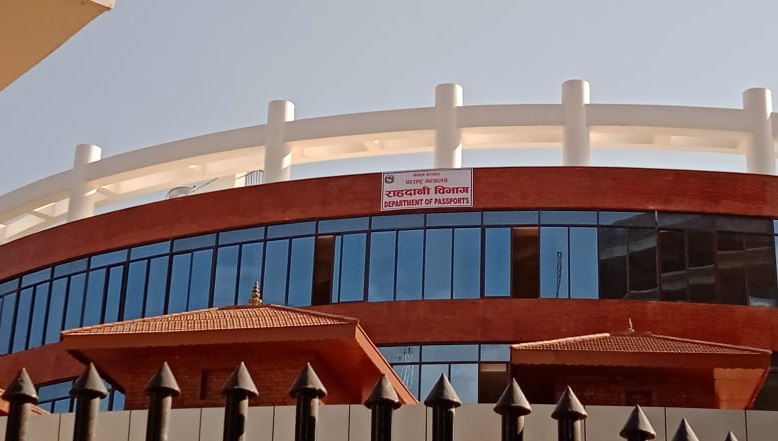
Kathmandu-Nepal’s Department of Passports has increased its electronic passport (e-passport) production capacity to around 1,500 passports per day to meet rising demand, particularly from Nepalis applying for jobs in South Korea under the Employment Permit System (EPS).
In a press release issued on Wednesday, the department said it has been continuously upgrading its service delivery and passport production capacity to provide citizens with faster, safer, and more efficient access to e-passports.
According to the department, demand for e-passports has risen sharply over the past week, driven mainly by an increase in EPS applications and labor approval processes for South Korea. Growing numbers of Nepalis traveling abroad for employment, education, medical treatment, tourism, and other purposes have also contributed to the surge in passport applications.
The department said e-passport services are available not only in Kathmandu but also through all 77 District Administration Offices, selected Area Administration Offices across Nepal, and Nepali diplomatic missions abroad.
It added that efforts are underway to further expand production capacity and strengthen the passport system in line with growing public demand.
Nepal officially launched its e-passport system on November 17, 2021. At the time, the department was issuing only about 100 e-passports per day, and applicants often had to wait more than two weeks to receive their passports.
The department now has the capacity to produce and issue approximately 1,500 e-passports daily, describing the increase as a major milestone in the country’s passport service.
The department acknowledged that the modern technology-based passport system has experienced technical issues during implementation. It said these problems are being addressed as a priority, with the goal of resolving the current technical challenges within one month and fully stabilizing the system within three months.
Officials said they are working closely with technical teams to improve the system’s performance, reliability, and stability so that applicants can receive passport services without unnecessary delays.
Given that passports are essential government documents, the department said priority will continue to be given to applicants who urgently need passports for foreign employment, education, medical treatment, family matters, or other essential purposes.
While continuing to serve the growing number of applicants, the department has also urged citizens to apply for passports during the three-month stabilization period only if their need is urgent.
The Department of Passports said it remains committed to improving service delivery, resolving technical issues, and ensuring that Nepal’s e-passport system becomes more reliable, secure, and efficient.