Kathmandu-The Government of Nepal is preparing to roll out new standards for ride sharing services, with a strong focus on passenger safety and better working conditions for drivers.
The Ministry of Physical Infrastructure and Transport has drafted the “Digital Mobility Service Operation Standards 2082,” aiming to organize the fast-growing digital transport sector under clear and consistent rules.
Safer Vehicles, Better Standards
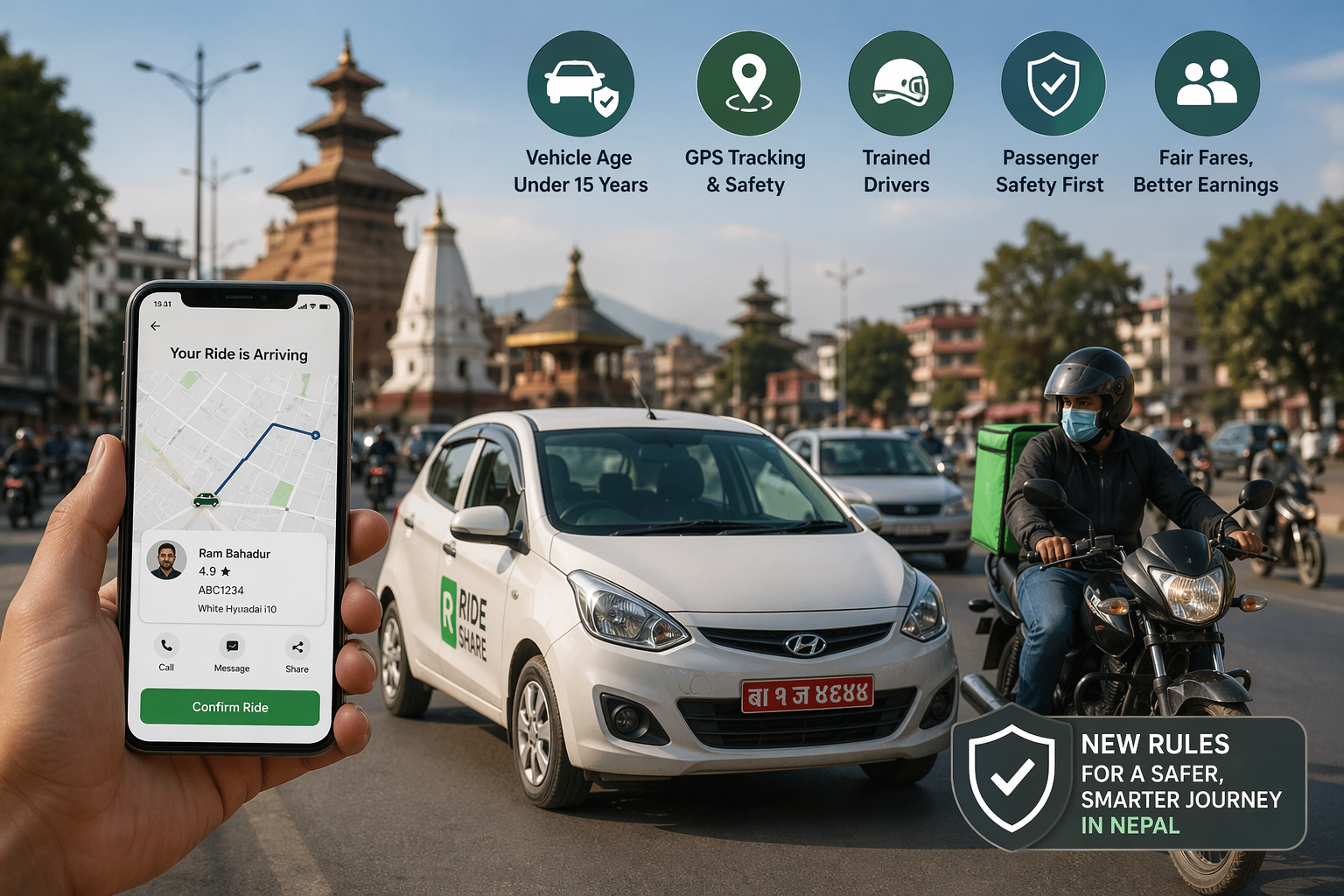
Under the proposed rules, vehicles used for ride-sharing must be less than 15 years old. This applies to both motorcycles and cars, helping ensure safer and more reliable rides.
The draft also outlines technical requirements. Petrol bikes must meet emission standards, while electric ones need minimum power and speed levels. Cars must meet similar standards and include adequate luggage space.
Safety measures are central to the plan. Real-time GPS tracking, emergency alert buttons, and mandatory helmets for riders are proposed. For cars, first-aid kits and emergency systems will also be required.
Who Can Drive
To improve service quality, the government is setting clear eligibility criteria for drivers. They must be at least 18 years old and have held a driving license for at least one year.
Drivers will also need to be physically and mentally fit, free from substance abuse, and have no criminal background. Basic knowledge of traffic rules and the ability to use mobile apps are also required.
Service providers must test drivers before onboarding them, provide insurance, and ensure they are part of social security schemes.
Fair Fares and Better Earnings
The draft introduces a structured pricing system. Base fares are set at NPR 25 per kilometer for two-wheelers and NPR 55 per kilometer for cars, with a minimum fare equivalent to a 2-kilometer trip.
In a driver-friendly move, companies will only be allowed to take up to 10% commission, leaving most of the earnings with drivers. Prices can adjust slightly—within a 20% range—during peak hours or difficult conditions.
Stronger Oversight
The Department of Transport Management Nepal will oversee a centralized digital system to monitor all ride-sharing platforms. Companies must connect their apps to this system for licensing, tracking, and resolving customer complaints.
Drivers will also be limited to working no more than 12 hours a day, helping reduce fatigue and improve safety.
Zero Tolerance for Misconduct
The draft makes it clear that passenger safety comes first. Any misconduct will face strict action, including suspension or legal measures. Service providers will also be responsible for compensating passengers in case of incidents.
Analysis: A Step in the Right Direction
These proposed rules show a practical and positive approach from the government. By focusing on safety, fair pricing, and driver welfare, the framework addresses many of the concerns people have had about ride-sharing services.
Limiting commissions helps drivers earn more, while safety features like GPS tracking and emergency alerts can build trust among passengers. The centralized monitoring system could also bring more transparency and accountability.
Overall, this is a meaningful step toward making ride-sharing in Nepal safer, more reliable, and more balanced for everyone involved.