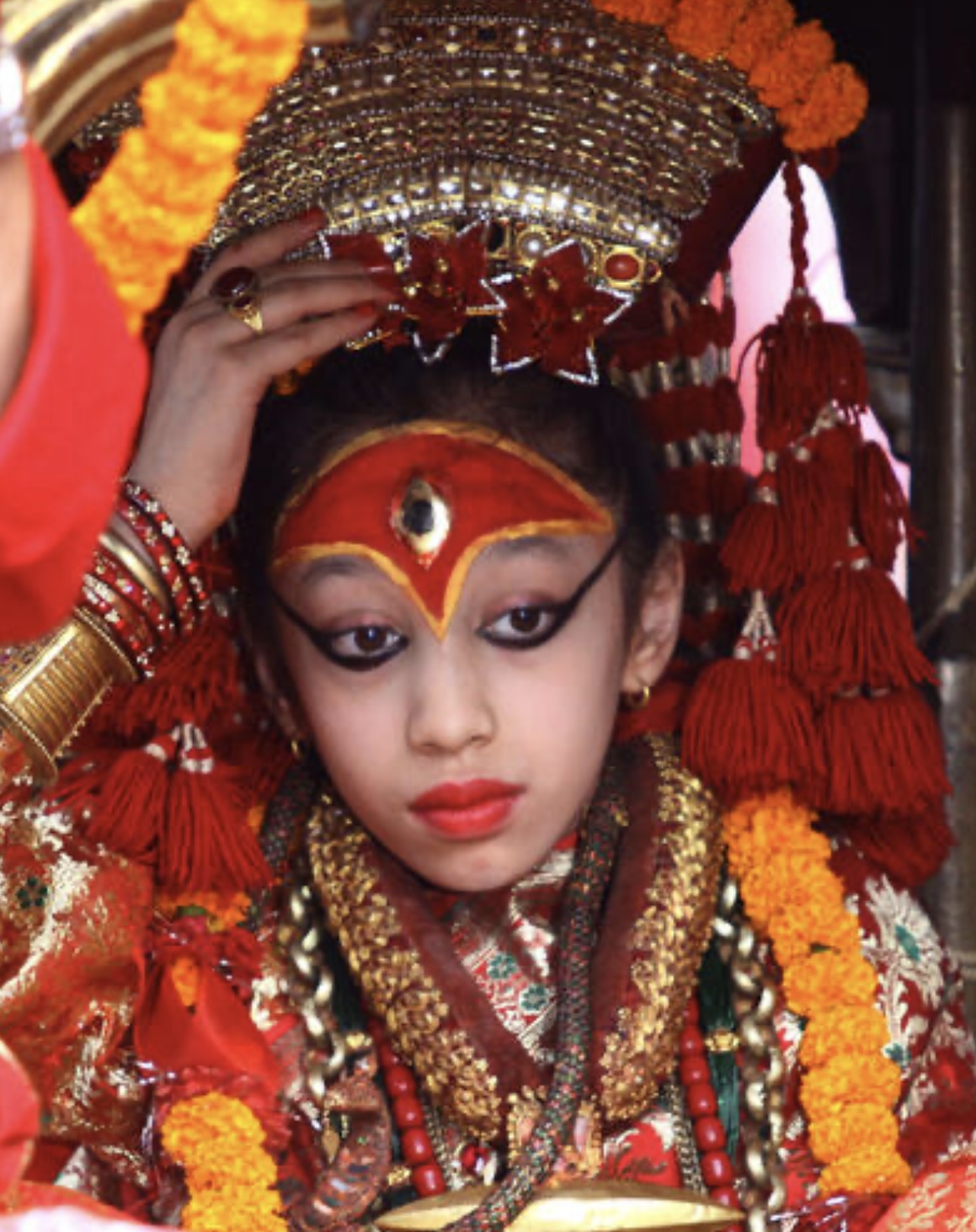
Kathmandu-“Have you ever heard of a living goddess?”
Not a goddess carved from stone. Not one who exists only in mythology or ancient scriptures. A real child with curious eyes, tiny hands and an ordinary smile. She laughs, learns, blinks and breathes like any other little girl.
Yet thousands bow before her.
In the heart of Nepal’s capital, Kathmandu, where centuries-old temples stand shoulder to shoulder and prayer bells echo through narrow brick lanes, a young girl quietly lives behind intricately carved wooden windows. She rarely appears in public. But whenever she does, crowds fall silent. Devotees fold their hands in prayer. Some close their eyes. Others wait patiently, hoping for a single glance they believe will bring blessings, protection and good fortune.
She is the Kumari Nepal’s Living Goddess.
For many visitors, the idea sounds almost impossible to believe. In a world where gods are remembered through statues, paintings and sacred texts, Nepal has preserved something remarkably different. Here, divinity is believed to live in the body of a child.
It is one of the world’s most fascinating religious traditions, where history, mythology, faith and culture merge into a practice found nowhere else on Earth.
The Kumari tradition stretches back more than three centuries and remains deeply rooted in the Kathmandu Valley. Although its origins are wrapped in legend, historians trace the practice to the 17th century during the reign of King Jaya Prakash Malla.
According to legend, the king would secretly meet Taleju Bhawani, the royal guardian goddess, every night. Away from the eyes of the palace, the two were said to play dice together, a symbol of the close relationship between the ruler and the divine protector of the kingdom.
One evening, however, the queen discovered their secret meeting. Feeling betrayed, the goddess disappeared forever. Before leaving, she told the king that she would never again appear before him in her divine form. Instead, she promised to return as a young girl from the Newar Shakya community. If the king wished to receive her blessings again, he would have to find that child and worship her as the living embodiment of the goddess.
That promise became the foundation of one of Nepal’s oldest living traditions.
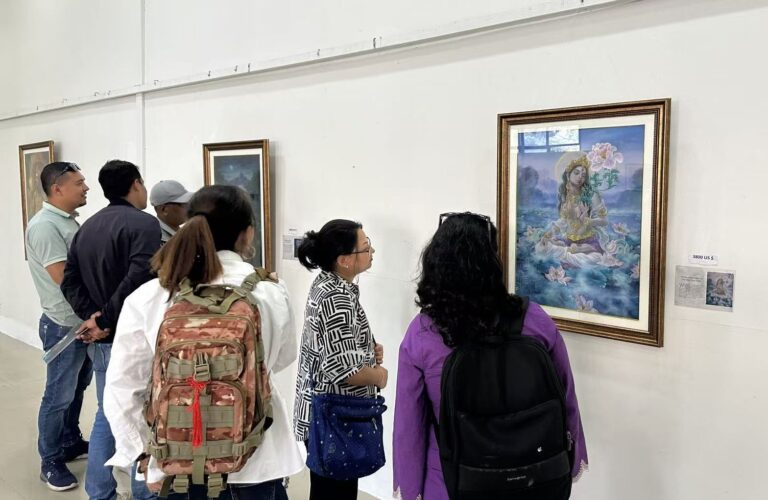
The word Kumari comes from Sanskrit and simply means “virgin” or “unmarried girl.” But in Nepal, it carries a far deeper meaning. The Kumari is believed to be the earthly manifestation of Taleju Bhawani, the powerful protector goddess once worshipped by the Malla kings.
Perhaps what makes the tradition even more remarkable is the way it reflects Nepal’s religious harmony.
Although Taleju is a Hindu goddess, the child chosen as Kumari must come from the Buddhist Newar community, specifically the Shakya or Bajracharya caste. It is a rare example of Hindu and Buddhist beliefs existing not side by side, but intertwined within a single sacred tradition. For centuries, kings sought the Kumari’s blessings before important decisions. Even after Nepal became a republic, the tradition survived, continuing as a symbol of the country’s spiritual and cultural identity.
Becoming the Living Goddess is far from ordinary. Only girls between the ages of three and five are considered. They must belong to the Newar Shakya or Bajracharya community, be in perfect health, have no scars or marks on their bodies, and must never have experienced blood loss, even from losing a baby tooth. Calmness and fearlessness are considered just as important as physical perfection.
Candidates are then evaluated according to Battis Lakshachin, the famous 32 Perfections. These ancient standards describe everything from physical appearance to temperament. The ideal Kumari is said to have eyelashes like a cow, a neck shaped like a conch shell, a chest resembling that of a lion, soft hands and feet, thighs like a deer, clear speech, dark eyes, straight black hair and remarkable serenity.
The process involves senior Buddhist priests, a Taleju priest, the chief royal priest and a royal astrologer, who also compare the child’s horoscope with that of the king according to tradition.
The most mysterious stage comes during Dashain.
According to the tradition, the chosen child must spend the night in a dark room surrounded by the severed heads of 108 buffaloes and goats sacrificed during rituals to Goddess Kali. Amid flickering candlelight, masked dancers and frightening sounds attempt to test her courage. If the child remains calm and fearless, she is believed to possess the divine qualities required to become the Living Goddess.
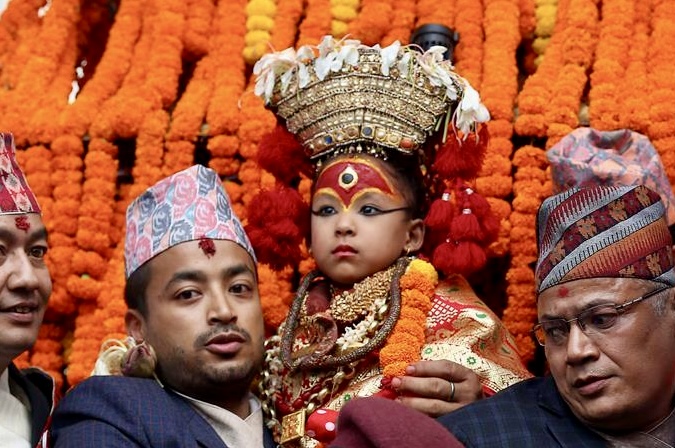
Once selected, sacred rituals welcome Taleju into the child’s body. Dressed in brilliant red robes, adorned with heavy gold jewellery and seated upon a ceremonial throne, she officially becomes the Royal Kumari of Kathmandu.
From that moment, her life changes completely.
She moves into Kumari Ghar, an elegant palace built in 1757 by King Jaya Prakash Malla in Kathmandu Durbar Square. Built in classic Newar architecture, the residence features intricately carved wooden windows, a sacred courtyard known as Kumari Chowk, a stone chaitya representing the Five Buddhas, tantric symbols and a golden throne where the Kumari receives devotees.
Every day, visitors gather beneath the sacred window known as the Sa Jhya, waiting for a brief appearance. Sometimes she looks out for only a few seconds. Yet for many believers, that single glance is enough.
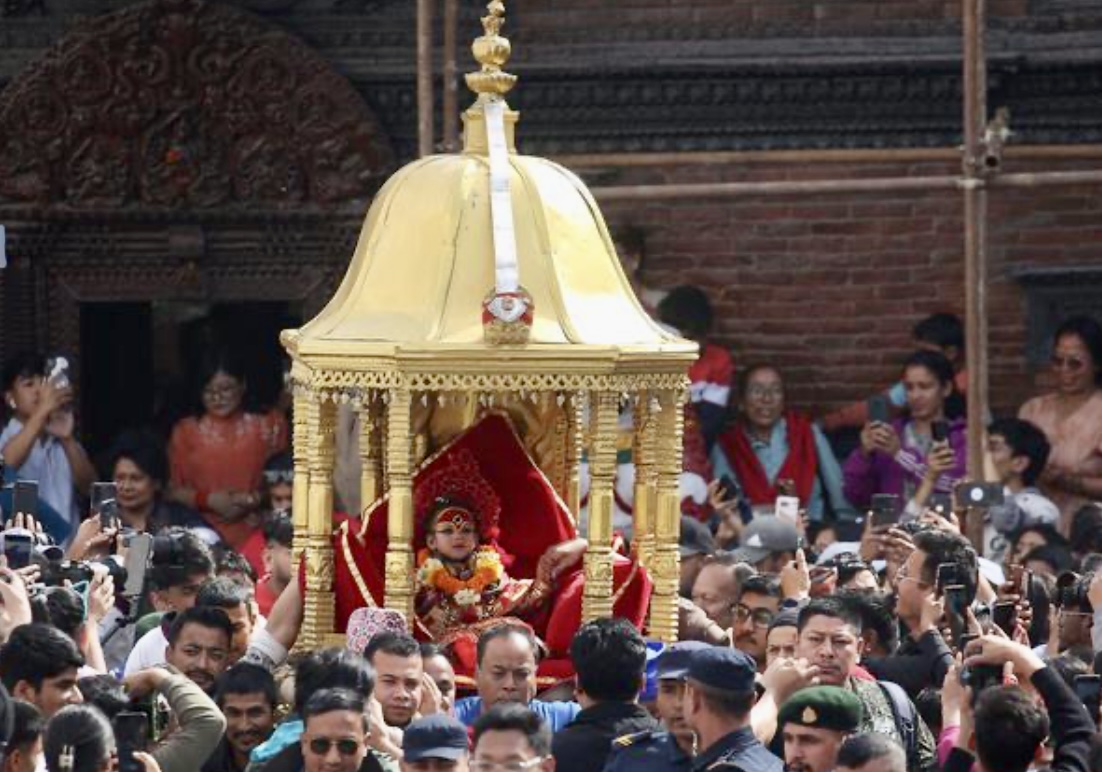
The Kumari rarely walks in public. During major festivals such as Indra Jatra and Dashain, she is carried on a beautifully decorated chariot because her feet should never touch the ground. Her silence itself is considered meaningful. Every facial expression is carefully interpreted by devotees seeking guidance and blessings.
Her appearance is equally symbolic.
She is dressed entirely in red, the colour of divine feminine power. Gold necklaces, bracelets, anklets and ceremonial ornaments decorate her body. A striking third eye, known as the Agni Chakshu, is painted on her forehead to symbolize wisdom and spiritual vision. Around her neck hang sacred necklaces representing protection, prosperity and her authority over powerful mother goddesses.
Despite being worshipped as a deity, the Kumari is still a child. Today, she receives private education, studies for national examinations and has access to books and modern learning. Government support and growing public awareness have also led to greater attention to her education, health and emotional well-being.
Her divine role, however, is temporary.
According to tradition, the goddess leaves her body when the Kumari experiences her first menstruation or suffers an injury that causes bleeding. She then returns to ordinary life.
For many former Kumaris, this transition can be difficult. After years of being worshipped, they must adapt to school, friendships and everyday routines. Earlier generations also faced the superstition that marrying a former Kumari would bring misfortune, although such beliefs have largely disappeared.
Many ex-Kumaris have gone on to pursue higher education, successful careers and family life, proving that their identities extend far beyond their sacred childhood roles.
Today, Living Kumaris continue to serve not only in Kathmandu but also in Patan and Bungamati, preserving a tradition that has endured political change, social transformation and the end of Nepal’s monarchy.
For travellers, the Kumari may appear to be one of the world’s most unusual cultural practices. For many Nepalis, however, she represents something much deeper.
She is history made visible. She is faith given a human face.
And in a rapidly changing world, she remains a quiet reminder that some traditions are not simply remembered they continue to live among the people.
Photo: Sunil Sharma