Opinion: Are the people around you your family members, relatives and friends truly safe from violence?Have you ever asked your mother, sister, daughter, wife or a friend whether they have ever experienced any form of violence in their lives?
Their answer might make you stop and think. Because violence is not always physical. Humiliation, control, intimidation, coercion, discrimination and psychological abuse are also forms of violence.But there is one important thing we need to understand: gender-based violence is not an issue that affects women alone. Women, men, children, and people from sexual and gender minority communities can all experience violence and discrimination because of their gender identity, expression or socially assigned roles.
Against this backdrop, the global 16 Days of Activism Against Gender-Based Violence campaign began on November 25.Running from November 25 to December 10, International Human Rights Day, the campaign aims to end violence, protect survivors and ensure justice.In a country like Nepal, the campaign carries even greater significance. Violence exists within homes and families, in public spaces and workplaces, and increasingly in the digital world.
According to the Nepal Demographic and Health Survey 2022, 23 percent of women aged 15 to 49 have experienced physical violence since the age of 15. Similarly, 8 percent have experienced sexual violence.Even more concerning, 58 percent of women who experienced physical or sexual violence neither sought help nor shared their experiences with anyone.According to Nepal Police data for the fiscal year 2024/25, a total of 70,496 complaints and incidents of domestic violence were registered in one year. That means an average of 48 cases every day.The same police report shows that 88.53 percent of domestic violence victims were women, while 11.46 percent were men. This highlights the reality that men, too, can be victims of domestic violence.
During the same fiscal year, 3,188 cases of sexual violence were registered. These included 2,293 rape cases, 452 cases of attempted rape and 355 cases of child sexual abuse.Police data also show that 610 girls between the ages of 11 and 14 were victims of sexual violence. Boys have also been affected by such incidents.It is important to remember that these figures represent only cases reported to the police. Incidents that go unreported are not included.The nature of violence is also changing with technology.Character assassination through social media, obscene messages, misuse of personal photographs, fake identities, cyberbullying and sexual threats have become serious challenges.
According to UNFPA’s 2025 report, out of 19,730 cybercrime cases registered in Nepal during the fiscal year 2023/24, 8,745 complaints were filed by women.Violence in the digital world is real violence. Abuse carried out from behind a screen can seriously affect a person’s dignity, mental well-being and safety.
Globally, the situation is equally alarming.According to a report by UN Women and the United Nations Office on Drugs and Crime, nearly 50,000 women and girls were killed by their intimate partners or family members in 2024.
That means, on average, one woman or girl was killed every ten minutes.The impact of violence goes beyond individual lives. According to a statement issued by the Government of Nepal and the United Nations on November 25, 2026, disruptions to paid work caused by violence could result in an estimated annual economic loss of around NPR 3.6 billion in Nepal alone.
Understanding the History of the Campaign
On November 25, 1960, three political activists from the Dominican Republic—the Mirabal sisters ,were murdered.
In their memory, November 25 began to be observed as a day against violence against women in 1981.Later, in 1991, women’s rights activists launched the 16 Days of Activism campaign, running from November 25 to December 10.In 2000, the United Nations General Assembly formally designated November 25 as the International Day for the Elimination of Violence Against Women.But the question remains: Can violence really end through a 16-day campaign alone?
Campaign slogans, discussions and commitments will have little meaning unless perpetrators are held accountable, survivors receive justice, and society abandons the mindset of blaming victims.
People who experience violence must not be judged or treated differently because of their gender, identity or social status. They deserve respect, protection and justice.
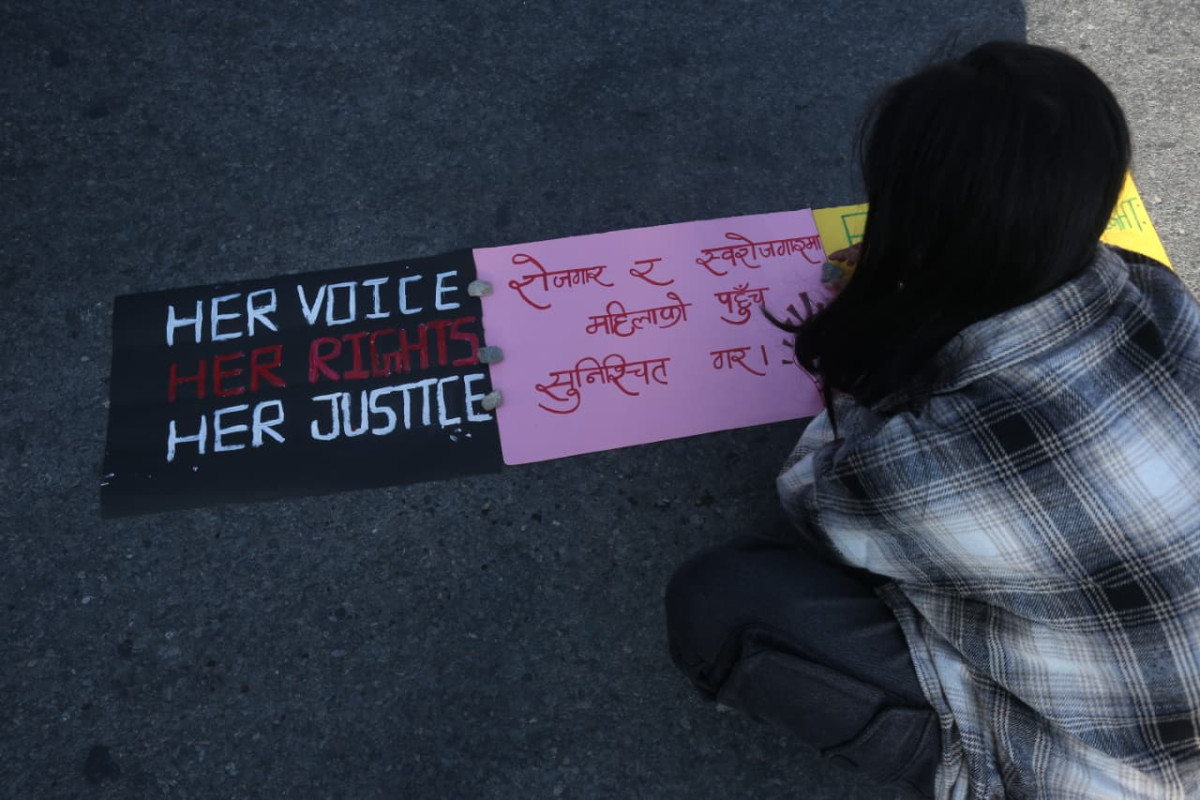
Instead of forcing people to tolerate violence, we must create an environment where everyone feels safe to speak out against it.Let us break the silence and raise our voices. Let us choose equality over discrimination, and respect and safety over violence.
Whether women or men, children or people from sexual and gender minority communities no one should have to experience violence or discrimination.Let us work together to end gender-based violence. Let us stand united not just for 16 days, but throughout all 365 days of the year.Because a life free from violence is not a favour. It is a fundamental right of every human being.