
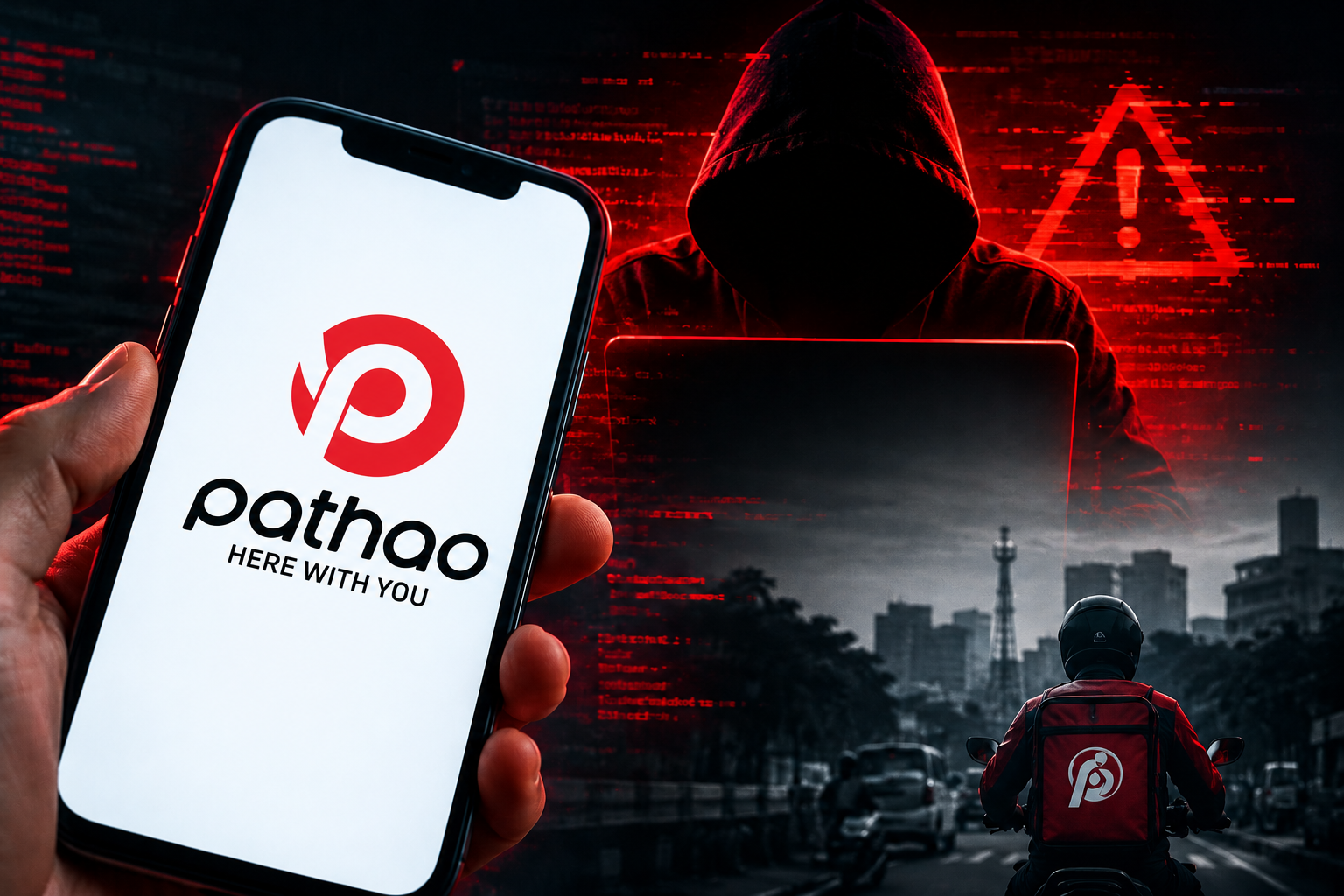
A routine office commute turned unexpectedly difficult as Pathao users struggled to access the app on Monday, amid online speculation of a possible cyberattack
Kathmandu — For Sunil, a regular Pathao user, getting to work usually takes little more than a few taps on his phone.
But on Monday afternoon, that familiar routine suddenly stopped working.
As he opened the Pathao app to book his usual ride to the office, the screen appeared blank. He tried again. And again. Nothing seemed to work.
He had already heard people talking about the app being hacked, but he had not paid much attention to the rumours.
“I kept trying because I thought it might be a temporary problem,” Sunil said.
It was not.
After several unsuccessful attempts—and with time running out—he eventually gave up and booked a ride through another app. By then, the technical problem had turned into a very ordinary but frustrating consequence: he was late for work.
Later that evening, on his way home, Sunil encountered another side of the disruption.
The rider he booked complained that he had also been unable to accept rides through the Pathao system.
For thousands of users and riders who have incorporated app-based transportation into their daily routines, a technical disruption can quickly become more than a problem with a screen. It can mean missed rides, delayed commutes and lost working hours.
Rumours spread faster than the app
Since the disruption began, discussion on social media has intensified over the possibility that Pathao’s systems may have been hacked.
Some online claims have gone further, alleging that hackers were demanding Rs 70 million to Rs 80 million in ransom in exchange for restoring the application and data.
Those claims, however, have not been officially confirmed by Pathao Nepal.
People familiar with the situation have indicated that the disruption may have resulted from a technical glitch, rather than necessarily being a cyberattack. A formal response from the concerned authorities is expected by Tuesday or Wednesday.
The distinction is important because an application becoming inaccessible does not, by itself, establish that a system has been hacked or that user data has been compromised.
Cybersecurity incidents can involve a range of problems, from service disruption and technical failures to unauthorised access and data theft. Determining what happened requires technical investigation.
A digital dependency exposed
What happened on Monday nevertheless highlighted how deeply ride-hailing applications have become embedded in Kathmandu’s everyday life.
For commuters like Sunil, the app is no longer simply a convenient alternative to traditional transportation. It has become part of the daily routine—used to get to offices, meetings, homes and appointments.
For riders, the platform is equally important as a source of income and a way to connect with customers.
When the system stops functioning, both sides of the digital marketplace feel the disruption.
Monday’s episode also illustrated how quickly uncertainty can spread in the age of social media. A service interruption can generate speculation long before technical facts become publicly available.
Back online—but questions remain
By later Monday afternoon, the Pathao app had begun functioning normally again, allowing users to request and accept rides more smoothly.
The restoration provided immediate relief to commuters and riders.
But questions surrounding what caused the disruption remain.
Was it simply a technical failure? Was there a cybersecurity incident? Were any systems or user data affected? And if the ransom claims circulating online are inaccurate, how did they gain traction so quickly?
Pathao Nepal has yet to issue a detailed official statement addressing those questions.
Until an authoritative technical assessment is released, the hacking and ransom claims circulating online should therefore be treated as unverified.
For Sunil, however, the lesson from Monday was simpler.
A few taps that he had come to take for granted suddenly failed—and a routine ride to work became a reminder of how dependent everyday life has become on digital platforms.
The app eventually came back.
But for users, the bigger question is not only whether the app works again. It is why it stopped working in the first place—and whether they can trust it the next time they tap “Book.”