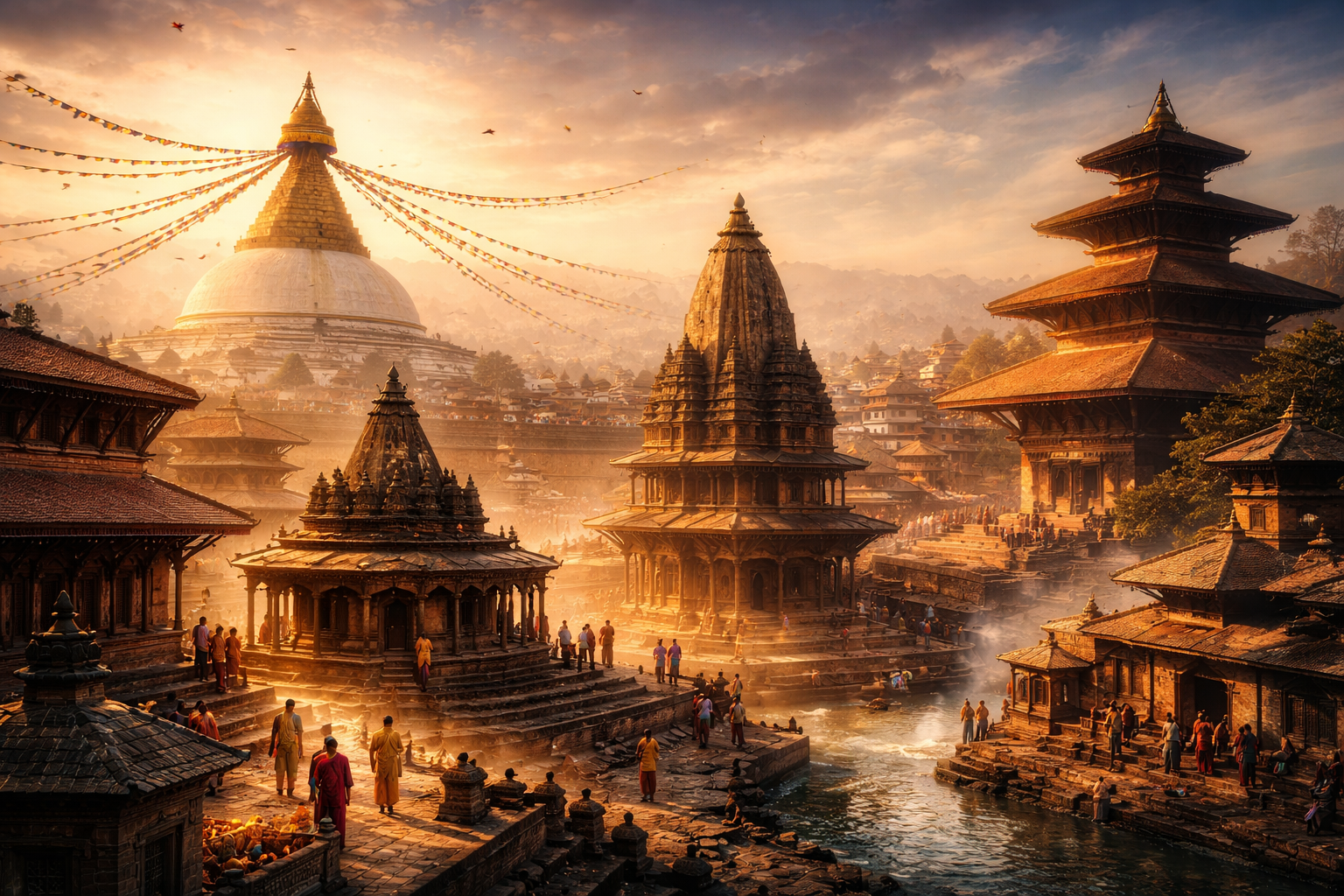
Kathmandu — There is something about standing inside Patan Durbar Square early in the morning, before the crowds arrive, when the sunlight falls gently on centuries-old stone and the pigeons circle above the Krishna Temple. In that quiet moment, heritage is not just a word. It is a feeling. You can sense the hands that carved every window, the prayers that soaked into every wall, the lives that passed through these courtyards over hundreds of years.
Today, April 18, the world observes World Heritage Day — also known as the International Day for Monuments and Sites. It was first proposed by the International Council on Monuments and Sites (ICOMOS) in 1982, and UNESCO officially approved the celebration in 1983. Since then, every April 18 has been a day to pause and reflect on why the places and traditions we inherit from our ancestors matter so deeply.
This year’s theme carries particular weight: “Emergency Response for Living Heritage in Contexts of Conflicts and Disasters.” For Nepal, a country that watched its most sacred temples crumble in 56 seconds on April 25, 2015, this is not an abstract idea. It is a lived memory. It is personal.
Because heritage, in Nepal, is never just about buildings. It is alive.
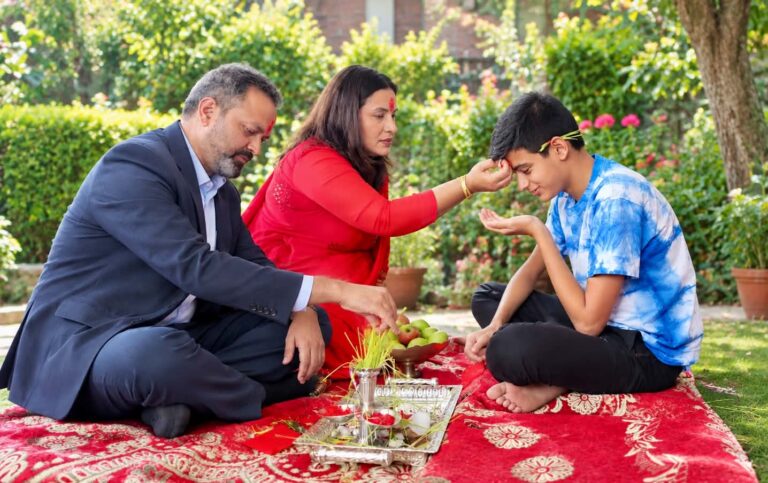
It lives in the hands of a Newar metalworker in Patan who still casts bronze the way his great-grandfather did. It lives in the sound of the panche baja echoing through the hills during a wedding procession. It lives in the smell of incense at Pashupatinath at dawn, in the prayer flags fluttering around Boudhanath at dusk, and in the way a grandmother in Bhaktapur still makes juju dhau in a clay pot, refusing to use anything else.
That is what living heritage means. It is not locked behind glass in a museum. It breathes through communities, through rituals, through the knowledge systems that make each culture unique. And when disaster strikes, when the earth shakes or conflict erupts, these living traditions face extinction just as surely as the physical monuments that house them.
Nepal knows this truth more intimately than most countries in the world.
The 2015 earthquake did not just take nearly 9,000 lives. It took centuries. The iconic Dharahara tower, first built in 1832, collapsed entirely. Temples in the Durbar Squares of Kathmandu, Patan, and Bhaktapur, structures that had survived wars, political upheavals, and the slow weight of time, came down in moments. The nine-storey Basantapur tower was severely damaged. Ancient pagodas that had watched over the valley for generations were suddenly gone.
But what many people outside Nepal did not fully understand was that these were not tourist attractions sitting idle. They were living spaces. People worshipped in them every day. Festivals moved through them every season. Communities gathered in their courtyards to celebrate, to mourn, to simply be together. When the stones fell, the rituals that depended on those spaces were suddenly homeless.
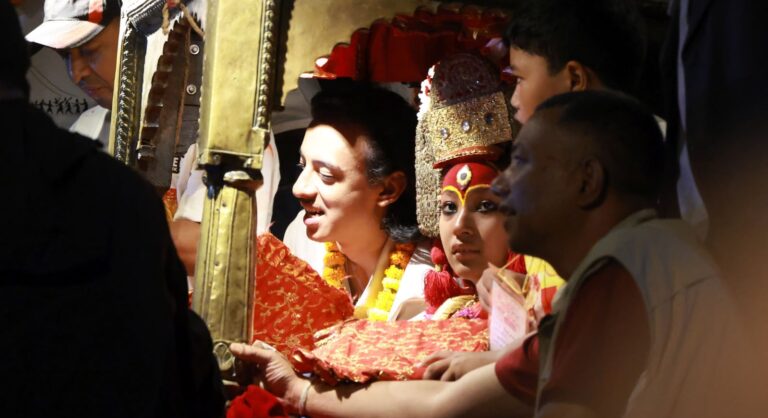
In the years since, Nepal has shown extraordinary resilience. Restoration projects, supported by the Nepali government, UNESCO, and international partners including India’s INTACH, have painstakingly rebuilt many of these sites. If you walk through Bhaktapur today, you will see the 55-Window Palace standing again, the Golden Gate gleaming once more. Kathmandu Durbar Square is alive with visitors and devotees. The Kumari still looks out from her window at Kumari Ghar.
And yet the question remains — are we truly prepared for the next time?
Nepal sits on one of the most seismically active zones on the planet. The question is not if another major earthquake will come, but when. And this year’s World Heritage Day theme asks us to think seriously about that. Not just about rebuilding after destruction, but about planning, preparing, and protecting before it happens.
This means strengthening the structures, yes. But it also means documenting the intangible heritage that lives inside those structures — the chants, the craftsmanship techniques, the oral histories, the festival protocols — so that even if walls fall again, the traditions can survive.
In a timely move, Nepal’s Ministry of Culture, Tourism and Civil Aviation, in collaboration with UNESCO, has just launched a new project to inventory intangible cultural heritage across all seven provinces. The initiative aims to document at least 20 heritage elements, focusing on the traditions of 17 communities. It is a small step, but a deeply meaningful one.
Few countries in the world carry as much heritage per square kilometer as Nepal does. Officially, Nepal has four UNESCO World Heritage Sites — the Kathmandu Valley, Lumbini, Chitwan National Park, and Sagarmatha National Park. But because the Kathmandu Valley listing alone includes seven distinct monument zones, the country is widely recognized as having ten individual heritage sites of global significance.
And each one tells a story that goes far beyond architecture.
Swayambhunath, perched on its hill above the valley, is believed to be over 2,500 years old. Legend says the Kathmandu Valley was once a vast lake, and a lotus flower bloomed on the water, and from that lotus, the stupa emerged on its own. The Bodhisattva Manjushri is said to have drained the lake by cutting a gorge, making the valley inhabitable. Whether you believe the legend or not, standing at Swayambhunath at sunset, watching the all-seeing eyes of the Buddha gaze out across the city, you feel something ancient and true.
Boudhanath, one of the largest stupas in the world, is the spiritual heart of Tibetan Buddhism in Nepal. After the Chinese invasion of Tibet in 1959, refugees settled around the stupa, and today, dozens of monasteries surround it. In the evening, when devotees walk slowly around the dome, spinning prayer wheels in the fading light, the air feels thick with devotion. It is not a performance. It is simply how people live here.
Pashupatinath, on the banks of the sacred Bagmati River, is one of the holiest Hindu temples in the world. Dedicated to Lord Shiva as Pashupati, the Lord of Animals, it draws hundreds of thousands of devotees every year, especially during Maha Shivaratri. The open-air cremation ghats along the river offer a profound and deeply moving encounter with Hindu beliefs about death, the soul, and the cycle of rebirth. Life and death exist side by side here, and somehow, it feels peaceful.
Changu Narayan, often called the oldest Hindu temple in Nepal, sits quietly on a forested hilltop east of Kathmandu. Dating to the 4th century AD, it holds some of the finest Licchavi-era stone inscriptions and carvings in the country, including a famous inscription by King Manadeva I from the 5th century, the oldest of its kind found in Nepal.
The three Durbar Squares — Kathmandu, Patan, and Bhaktapur — each carry their own character. Kathmandu’s is raw and bustling, home to the living goddess Kumari and the grand Hanuman Dhoka Palace. Patan’s is refined and artistic, with a museum that houses medieval treasures. Bhaktapur’s feels like stepping into another century entirely, with the towering Nyatapola Temple dedicated to the tantric goddess Siddhi Lakshmi, and pottery squares where artisans still shape clay by hand just as they have for generations.
And then there is Lumbini, in the Terai plains of southern Nepal, the birthplace of Siddhartha Gautama, who became the Buddha. The sacred garden, the Maya Devi Temple marking the exact spot of his birth, the Ashoka Pillar erected in 249 BC — all of it radiates a quiet power that draws pilgrims from across the world.
Nepal’s natural heritage is equally extraordinary. Chitwan National Park, inscribed in 1984, is one of the last remaining habitats of the one-horned rhinoceros and the Bengal tiger. Its conservation success story, built on community involvement and anti-poaching efforts, is something Nepal can be genuinely proud of.
And Sagarmatha National Park, home to Mount Everest, is not just about the mountain. It is about the Sherpa people who live there, whose culture, traditions, and spiritual practices are inseparable from the peaks they inhabit. The monastery at Tengboche, set against the backdrop of the highest mountains on earth, is one of the most moving places you will ever see.
But Nepal’s heritage goes far beyond what UNESCO has inscribed. With over 125 ethnic groups and 123 languages, the country is one of the most culturally diverse places on earth. Every community carries its own music, its own dances, its own festivals, its own ways of making, building, and believing.
And much of this is under quiet threat.
Nepal is home to an estimated 650 types of traditional musical instruments. But more than 100 of them are gradually disappearing. The beena, once celebrated during the Licchavi and Malla periods and often depicted alongside Goddess Saraswati, has virtually vanished from everyday life. The influence of Western culture, amplified through social media, has accelerated this erosion, especially among younger generations who increasingly see traditional practices as old-fashioned.
There is hope, though. Initiatives like Project Sarangi are working to revive the musical traditions of the Gandharva community. Women have begun playing the naumati baja, traditionally an all-male ensemble, challenging old norms while breathing new life into ancient sounds. These efforts are small, but they matter enormously. Because once a tradition dies, no amount of money or policy can bring it back.
Urbanization is another challenge. The Kathmandu Valley, in particular, is changing rapidly. Traditional Newar neighborhoods, with their distinctive courtyards and communal water spouts, are being replaced by concrete apartment blocks. Historic dhunge dharas are drying up or being buried under construction. The very fabric of community life that made these places special is being slowly torn apart by development that rarely pauses to consider what is being lost.
Climate change, too, is adding new risks. Glacial lake outburst floods threaten heritage sites and communities in the high Himalayas. Shifting monsoon patterns are affecting sites in the Terai. Nepal’s heritage faces threats from above, below, and within.
So what can be done? What can any of us do?
We can start by visiting these places not as tourists, but as people who care. Walk through Bhaktapur slowly. Sit in the courtyard of a temple and watch the light change. Buy a piece of metalwork directly from the artisan who made it, not from a middleman. Ask questions. Listen to stories.
We can document what we know. If you belong to a community with unique traditions, record them. Write them down, photograph them, film them. What is remembered can be preserved. What is forgotten disappears forever.
We can teach our children. Not just about the monuments, but about the meaning behind them. About why the Nyatapola Temple in Bhaktapur has five tiers. About why the eyes on Swayambhunath look out in four directions. About why the Kumari tradition exists and what it represents.
And we can demand better. Better policies, better enforcement of heritage protection laws, better investment in disaster preparedness for the sites that define who we are.
Heritage is not something that belongs to the past. It is the thread that connects who we were to who we are and who we will become. The temples of Kathmandu Valley, the sacred ground of Lumbini, the forests of Chitwan, the peaks of Sagarmatha — these are not just places on a map. They are us. They carry our identity, our memory, and our meaning.
Nepal has already shown the world what resilience looks like. After 2015, communities came together to rebuild not just structures, but traditions. Artisans picked up their tools. Festivals resumed. Prayer wheels turned again at Boudhanath. The Kumari continued her sacred duties.
That spirit — the spirit of a people who refuse to let their heritage die — is Nepal’s greatest treasure. And on this World Heritage Day, it is worth celebrating, protecting, and passing on.
Because when the stones speak and the temples remember, they are telling our story. And that story deserves to be heard for centuries to come.