As 2025 draws to a close, Nepal looks back on a year marked by visible change across mobility, health, employment, culture, and consumer markets. From the rapid rise of electric vehicles to nationwide public health drives and youth-focused job creation, the year reflected a country steadily adapting to new economic and social realities. Here is a wrap-up of five headline stories from 2025 that captured the national mood and pointed toward Nepal’s future direction.
Electric Mobility Takes Center Stage
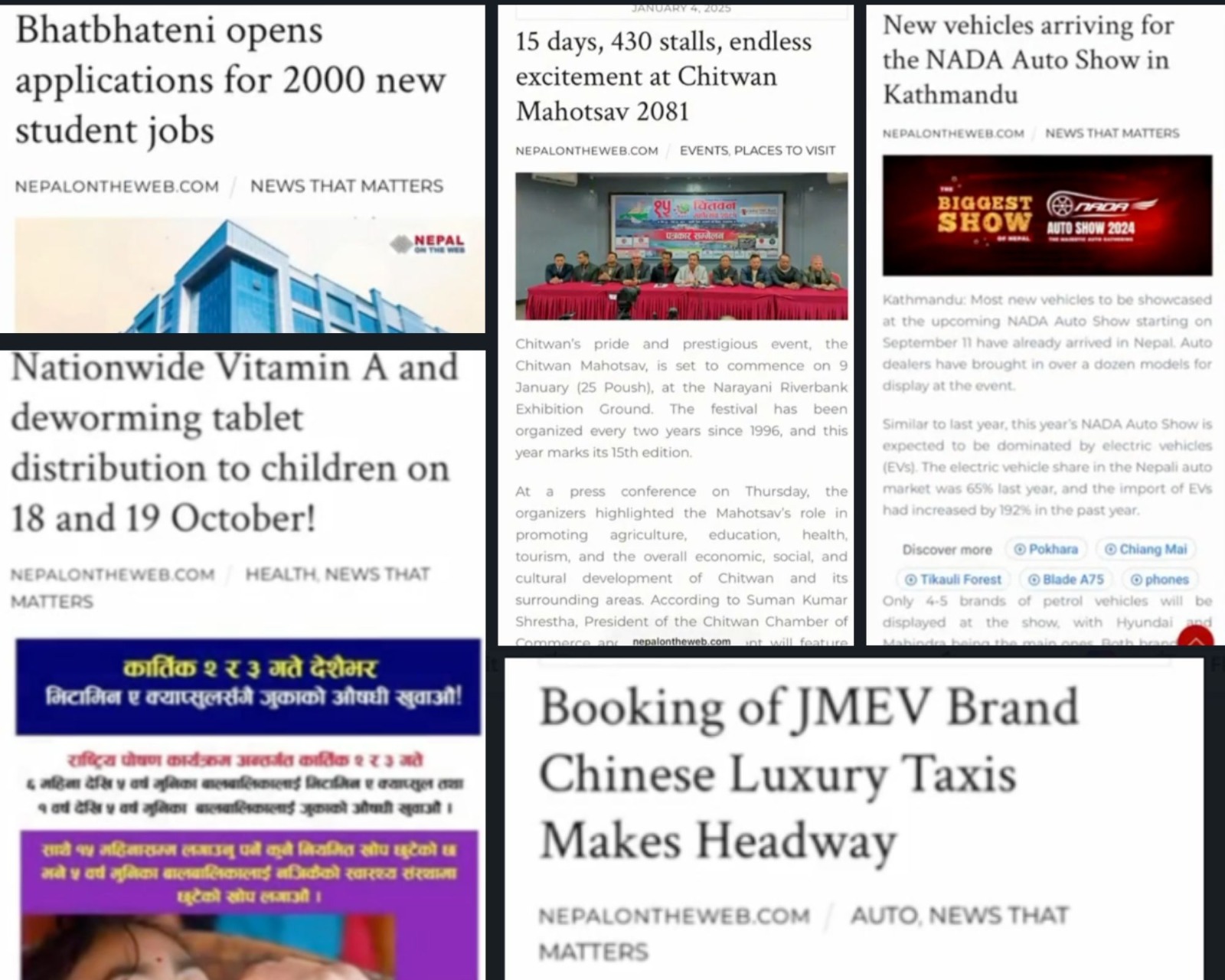
One of the most talked-about developments of the year was the strong push toward electric transportation. Bookings for Chinese-made JMEV luxury electric taxis gained significant traction in Kathmandu Valley, signaling a shift in Nepal’s commercial transport sector. Priced competitively and offering a longer driving range than most existing EV taxis, the new fleet attracted interest from taxi operators looking to reduce fuel costs and embrace sustainability.
With advanced features, fast-charging capability, and extended battery warranties, the arrival of these electric taxis underscored Nepal’s growing confidence in EV infrastructure. The announcement that hundreds of such vehicles would enter the Valley within weeks reinforced the message that electric mobility is no longer experimental but mainstream.
NADA Auto Show 2025 Reinforced Nepal’s EV Dominance
The NADA Auto Show 2025 further cemented this trend. As vehicles arrived ahead of the September exhibition, it became clear that electric models would dominate the show floor. With EVs already accounting for a majority share of Nepal’s auto imports, the event reflected how quickly consumer preferences are evolving.
Global and regional brands introduced new electric SUVs, hatchbacks, and hybrid models, while only a handful of petrol vehicles made appearances. For auto dealers, the show remained crucial, driving a significant portion of annual sales. For consumers, it served as proof that Nepal’s automotive future is electric, diverse, and increasingly competitive.
Nationwide Child Health Drive Reached Millions
Beyond markets and machines, 2025 also highlighted Nepal’s commitment to public health. In October, the government carried out a nationwide Vitamin A and deworming tablet distribution campaign, targeting children under five years of age. Implemented through the National Nutrition Program, the initiative reached families across urban and rural areas alike.
By addressing malnutrition and parasitic infections at scale, the campaign reinforced the importance of preventive healthcare. The involvement of community health volunteers and local health facilities ensured accessibility, while provisions for missed doses reflected a flexible and inclusive approach. For many families, this annual program remains one of the most impactful health interventions of the year.
Chitwan Mahotsav Revived Local Economy and Culture
On the cultural and economic front, the 15th edition of Chitwan Mahotsav stood out as one of the year’s largest public events. Held over 15 days at the Narayani riverbank, the festival combined trade, tourism, food, and entertainment under one umbrella. With more than 400 stalls and hundreds of thousands of visitors, the Mahotsav injected fresh energy into a sluggish local economy.
Beyond commerce, the event celebrated Chitwan’s identity, promoting agriculture, traditional cuisine, and local entrepreneurship. The scale of participation and projected transaction volumes highlighted how regional festivals continue to play a vital role in economic revival and community engagement.
Retail Giant Opens Doors for Student Employment
Rounding out the year was a major announcement in the employment sector. Bhatbhateni Supermarket, Nepal’s largest retail chain, revealed plans to hire 2,000 students aged 18 to 20 through a structured part-time job program. Designed with flexible hours and attractive weekly pay, the initiative aimed to help young people balance work with education.
At a time when youth employment remains a national concern, the move was widely welcomed. It not only offered income opportunities but also provided early exposure to workplace discipline and customer service skills, setting a precedent for private-sector-led youth empowerment.
A Year That Reflected Change
Taken together, these five stories capture the essence of Nepal in 2025: a country embracing cleaner technology, investing in human development, reviving local economies, and creating pathways for its youth. While challenges remain, the year demonstrated steady momentum toward modernization and inclusion. As Nepal steps into 2026, these developments offer both reflection and optimism for the road ahead.