“Mama, can I go outside to play around?” asked the little Yeti-child.
“Yes. Just keep clear of the trails of the little-men. They have started to throw around their little cans again.” said the Yeti-mama.
“Again! Why do these little-men come to our place to trash?” growled the Yeti-papa looking disdainfully at the crowd of humans trudging heavily on the snow at the horizon.
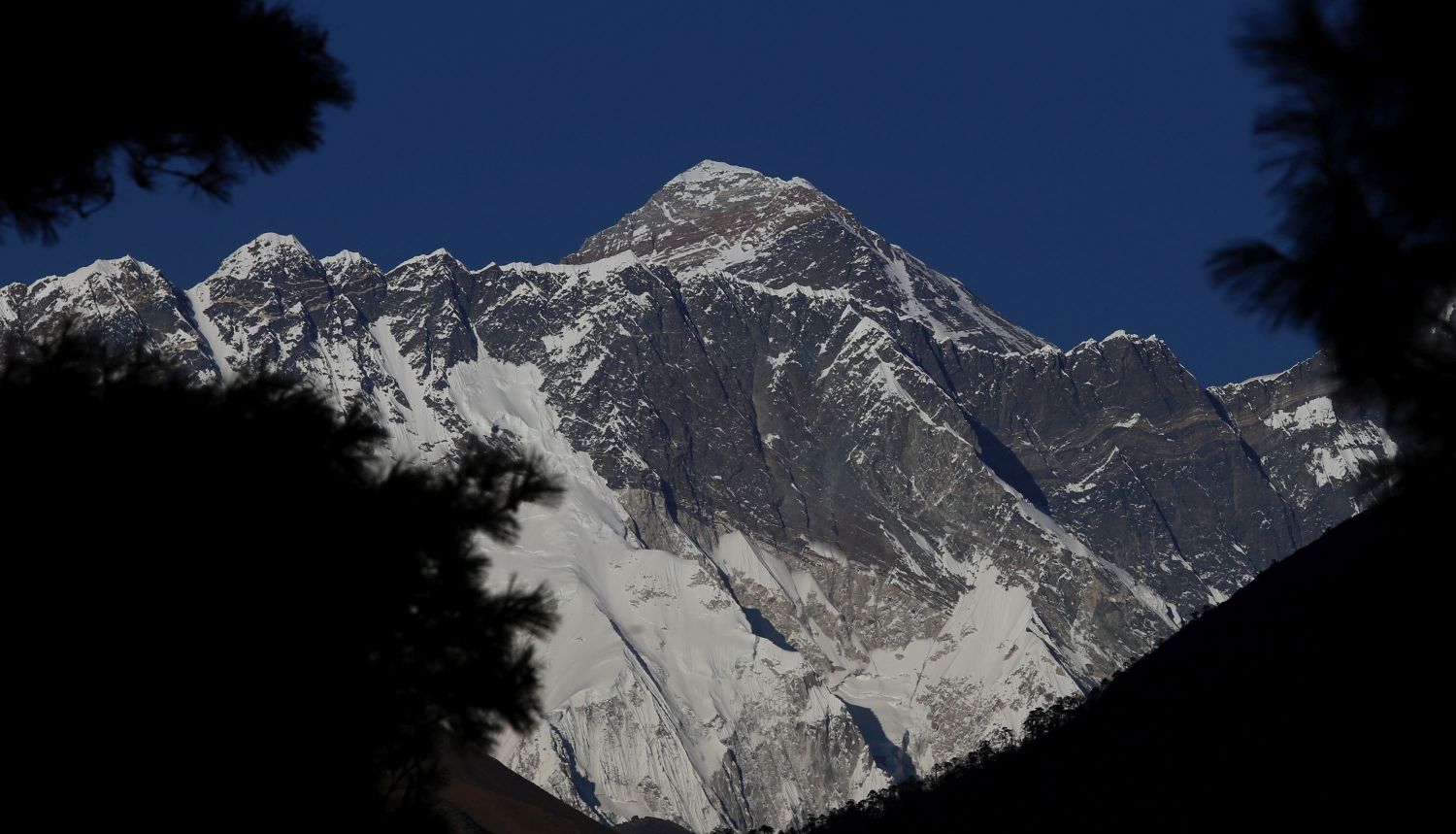
As the first rays of the spring sun hit the Khumbu Icefall this April, a familiar ritual began. The “Icefall Doctors” have already started the perilous task of weaving ladders and ropes through shifting seracs, signaling the official start of the 2026 climbing season. The first ropes of the spring season are being fixed high on the slopes of Mount Everest. And with them comes a familiar mix of anticipation and unease. Spring season on this peak has always been a narrow window, just a few weeks when winds soften and the summit briefly opens to human ambition. But in recent years, that window has also revealed something less romantic: a mountain increasingly strained by the very people drawn to its peak. But this year, the air at Base Camp feels different. It isn’t just the thinning oxygen; it’s the weight of a mountain pushing back against decades of human excess. For the first time in history, the quest for the summit is being fundamentally reshaped by a desperate need to protect the world’s highest ecosystem.
From base camp, the changes are hard to miss. What was once a rugged, icy expanse now resembles a temporary city each spring, with rows of tents, satellite dishes, solar panels, and a steady churn of trekkers, climbers, and support staff. The Khumbu Icefall, long considered one of the most dangerous sections of the climb, is shifting faster as temperatures rise. Sherpas, who do the essential work of route-setting and load-carrying, quietly note that ladders must be repositioned more often than before, as crevasses widen unpredictably.
Climate change is rewriting the mountain’s rhythms. Glaciers are thinning, exposing rock where ice once held firm. Scientists have documented accelerating ice loss across the Himalayas, and this peak is no exception. This doesn’t just affect the aesthetics of the climb; it alters safety. Routes that were once stable are becoming fragile, increasing the risks for everyone on the mountain.
Then there is the issue of waste. Each season, this peak draws hundreds of climbers, and with them comes a logistical footprint that is difficult to contain. Despite stricter regulations from Nepal’s government, such as mandatory waste deposits and retrieval requirements, discarded oxygen canisters, torn tents, food packaging, and even human waste still accumulate. Warmer temperatures are beginning to expose debris long buried under snow, turning parts of the mountain into a stark archive of past expeditions.
At base camp, cleanup teams and local organizations are working to address the problem. Initiatives led by Sherpa communities and environmental groups have removed tons of garbage in recent years. There is a growing sense of stewardship among those who depend on the mountain, not just economically but culturally. Chomolungma, known locally as Sagarmatha and Everest for the world, holds deep spiritual significance, and its degradation is felt as more than an environmental issue.
Tourism, however, is a double-edged sword. It provides vital income for Nepal, supporting thousands of jobs, from guides and porters to lodge owners and pilots. Limiting climber numbers could reduce environmental pressure, but it would also affect livelihoods. Authorities face a delicate balancing act: preserving the mountain while sustaining the economy it supports.
Some climbers are also rethinking their role. A new wave of “leave no trace” expeditions is emerging, emphasizing minimal impact and personal responsibility. Others advocate for stricter permitting systems, better education, and investment in sustainable infrastructure at base camp.
As the spring season unfolds, Chomolungma stands as both a symbol of human aspiration and a warning. The same forces that draw people to its summit, challenge, prestige, the allure of the extreme, are now testing our ability to protect it. The question is no longer just who will reach the top this year, but whether the mountain itself can endure the weight of our presence.
In the thin air above the clouds, where prayer flags snap in the wind and climbers inch toward the summit, the stakes feel higher than ever. Chomolungma is changing. Whether those who climb it can change too may determine its future.
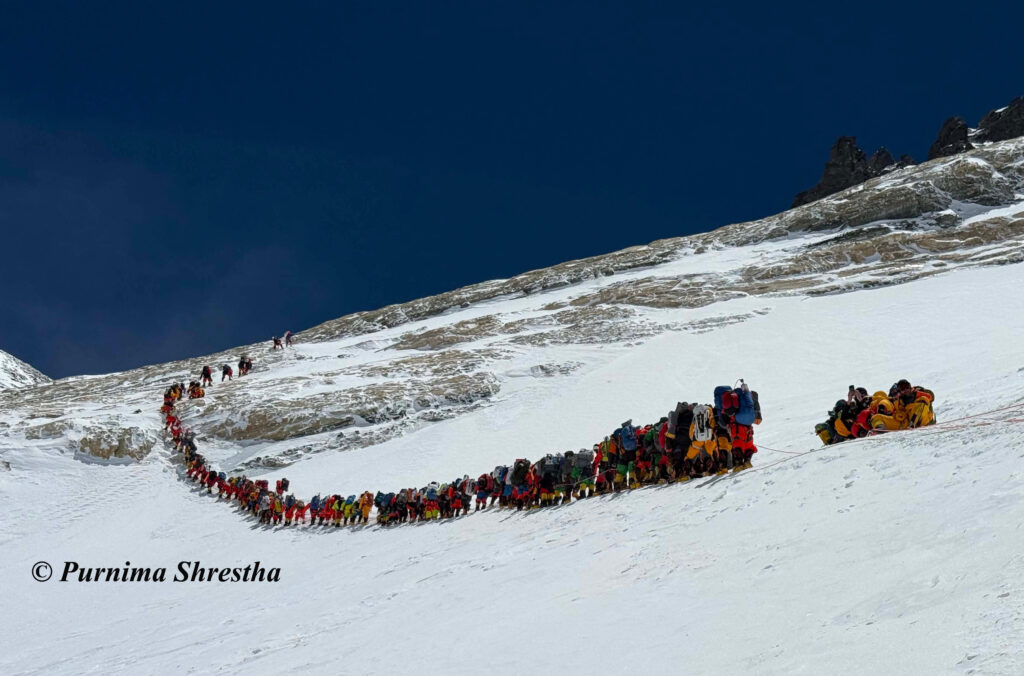
An estimated 850 to 900 climbers are expected to funnel exclusively through the route. This bottle-necking of the mountain has led to fears of catastrophic overcrowding. Recent data shows the Khumbu Glacier is thinning by nearly 30 meters per year. The black rocks of Chomolungma are appearing earlier each season as the snowpack thins, making the terrain more unstable and rockfalls more frequent.
As the 2026 teams begin their first rotations, the goal has shifted. The triumph is no longer just about standing on the peak; it’s about ensuring that when the last tent is packed in June, the mountain is lighter than when they found it. “The highest peak deserves the highest responsibility,” says a veteran guide. “We aren’t just climbing a mountain anymore; we are trying to save it.”
“Mama, when are we going to invite the little-men to our place?” the little Yeti-child was curious.
“When they will learn to love the nature.” answered the Yeti-mama.
“Which will not be very soon…” mumbled the Yeti-papa to himself.