Kathmandu-Nepal is celebrating Saune Sankranti, also known as Karkat Sankranti, with ritual bathing, charitable acts, religious observances, and age-old cultural traditions across the country. Observed every year on Shrawan 1 according to the solar calendar, the festival marks the beginning of the sacred month of Shrawan and holds immense religious, cultural, agricultural, and seasonal significance for Nepalis.
According to Vedic astrology, Saune Sankranti marks the day when the Sun completes its journey through Gemini (Mithuna Rashi) and enters Cancer (Karka Rashi). This transition also signals the beginning of Dakshinayana -the Sun’s southward movement. In Hindu tradition, the year is divided into two sacred periods: Uttarayana, which begins on Magh 1, and Dakshinayana, which begins on Shrawan 1. Both are regarded as spiritually significant, with Dakshinayana considered an ideal time for devotion, meditation, charity, and religious practices.
A Festival Rooted in Agriculture
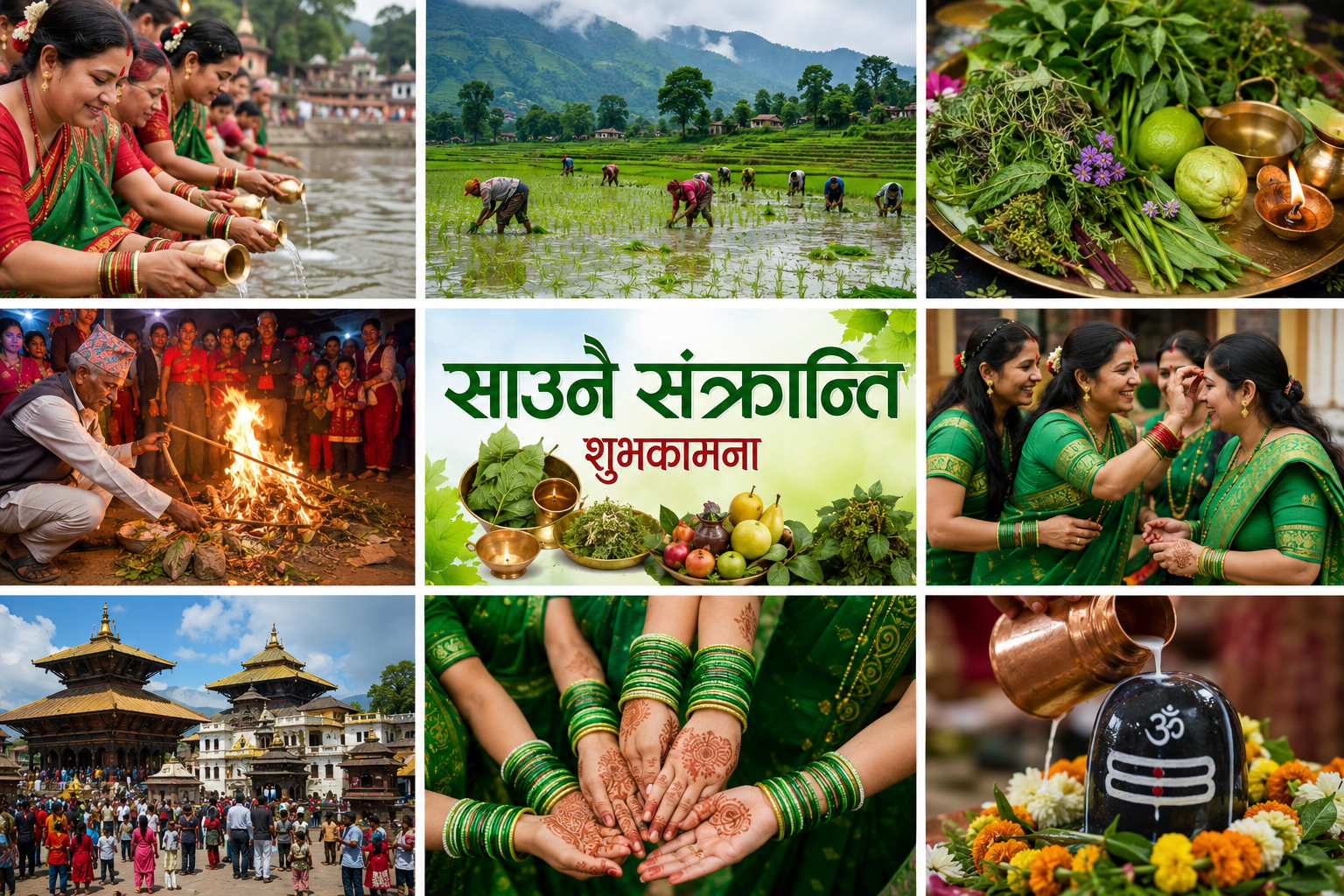
Saune Sankranti has a deep connection with Nepal’s agricultural heritage. During the month of Asar, farmers spend weeks working under scorching sunshine and heavy monsoon rains to transplant rice seedlings in muddy fields. With the completion of this demanding agricultural season, the arrival of Shrawan offers farmers a well-earned period of rest and celebration.
The festival symbolizes the arrival of prosperity, as crops have already taken root and the fear of food scarcity gradually begins to fade. For this reason, Saune Sankranti is also regarded in many communities as the festival of “casting away disease and driving away famine.”
Families traditionally prepare special meals and celebrate after completing the strenuous rice plantation season, expressing gratitude for a promising harvest ahead.
The Ancient Tradition of “Luto Falne”
One of the most unique customs observed during Saune Sankranti is “Luto Falne”—a traditional ritual believed to protect people from skin diseases caused by prolonged exposure to mud, rainwater, and damp conditions during agricultural work.
According to cultural traditions, medicinal plants such as Kag Bhalayo, Kukurdaino, Lute Jhar, Pani Amla (Indian Gooseberry), lemon, guava, pear, and other locally available herbs are gathered and offered while symbolically worshipping Kandarak, a mythical demon associated with disease and misfortune.
A burning ember or torch is then thrown outside the house to symbolically cast away illness, suffering, and negative energy.
Different communities observe the ritual according to their ancestral customs. Many households beat Nanglo (traditional bamboo trays), blow conch shells, ring bells, and close the doors of their homes while performing the ceremony, believing these acts drive away evil spirits and protect family members from disease.
Beginning of Nepal’s Festival Season
Saune Sankranti is also regarded as the beginning of Nepal’s long festive season. As the days gradually become shorter and the nights longer following the Sun’s entry into Cancer, families begin preparing for the series of religious festivals that continue throughout the year.
The day is traditionally observed by taking holy baths, offering donations, performing religious rituals, and visiting temples. Farmers also offer the first seasonal fruits and newly grown crops as a gesture of gratitude to nature and the divine.
Shrawan: The Sacred Month of Lord Shiva
The month of Shrawan is one of the holiest periods in the Hindu calendar and is especially dedicated to Lord Shiva.
Thousands of devotees visit Pashupatinath Temple and Shiva temples across Nepal throughout the month to offer holy water, milk, yogurt, honey, and sacred bel (bael) leaves to the Shiva Lingam. Mondays during Shrawan, known as Shrawan Somwar, are considered particularly auspicious, attracting large numbers of worshippers who observe fasting and perform special prayers for peace, health, prosperity, and family well-being.
Green Bangles and Traditional Attire
Women across Nepal welcome Shrawan by wearing green bangles, green saris, kurtas, and traditional attire, symbolizing nature, fertility, prosperity, renewal, and marital happiness. Many also adorn their hands with mehendi (henna) and observe fasting and daily worship throughout the month as part of their spiritual devotion.
The vibrant green attire seen during Shrawan reflects Nepal’s lush monsoon landscape and the close relationship between people and nature.
Health, Nature, and Cultural Wisdom
Beyond its religious significance, Saune Sankranti reflects centuries of indigenous knowledge about health and seasonal living. The use of medicinal herbs during the Luto Falne ritual highlights traditional practices aimed at preventing skin infections common during the rainy season.
The festival also promotes cleanliness, healthy eating, community participation, and gratitude toward nature, reinforcing values that have been passed down through generations.
Celebrating Saune Sankranti in the Digital Age
Today, Saune Sankranti is celebrated not only in homes and temples but also across social media platforms. Facebook, Instagram, TikTok, and X are filled with images of women in green attire, devotees visiting Shiva temples, cultural performances, and festive greetings.
Popular hashtags such as #SauneSankranti, #Shrawan, #Sawan, #ShrawanSomwar, #LordShiva, #Pashupatinath, #GreenBangles, #HaroChura, #NepaliCulture, #Dakshinayana, and #NatureAndTradition continue to trend as people share the significance of the festival with audiences around the world.
Preserving Nepal’s Living Heritage
Saune Sankranti is far more than the beginning of a new month. It represents the harmony between spirituality, agriculture, health, and nature that has shaped Nepali society for centuries. As communities gather to perform ancient rituals, offer prayers, and celebrate the arrival of Shrawan, the festival continues to preserve Nepal’s rich cultural identity while inspiring younger generations to value their traditions.
From sacred temple visits and agricultural customs to symbolic healing rituals and vibrant green celebrations, Saune Sankranti remains a timeless expression of faith, gratitude, resilience, and the enduring bond between people and nature.