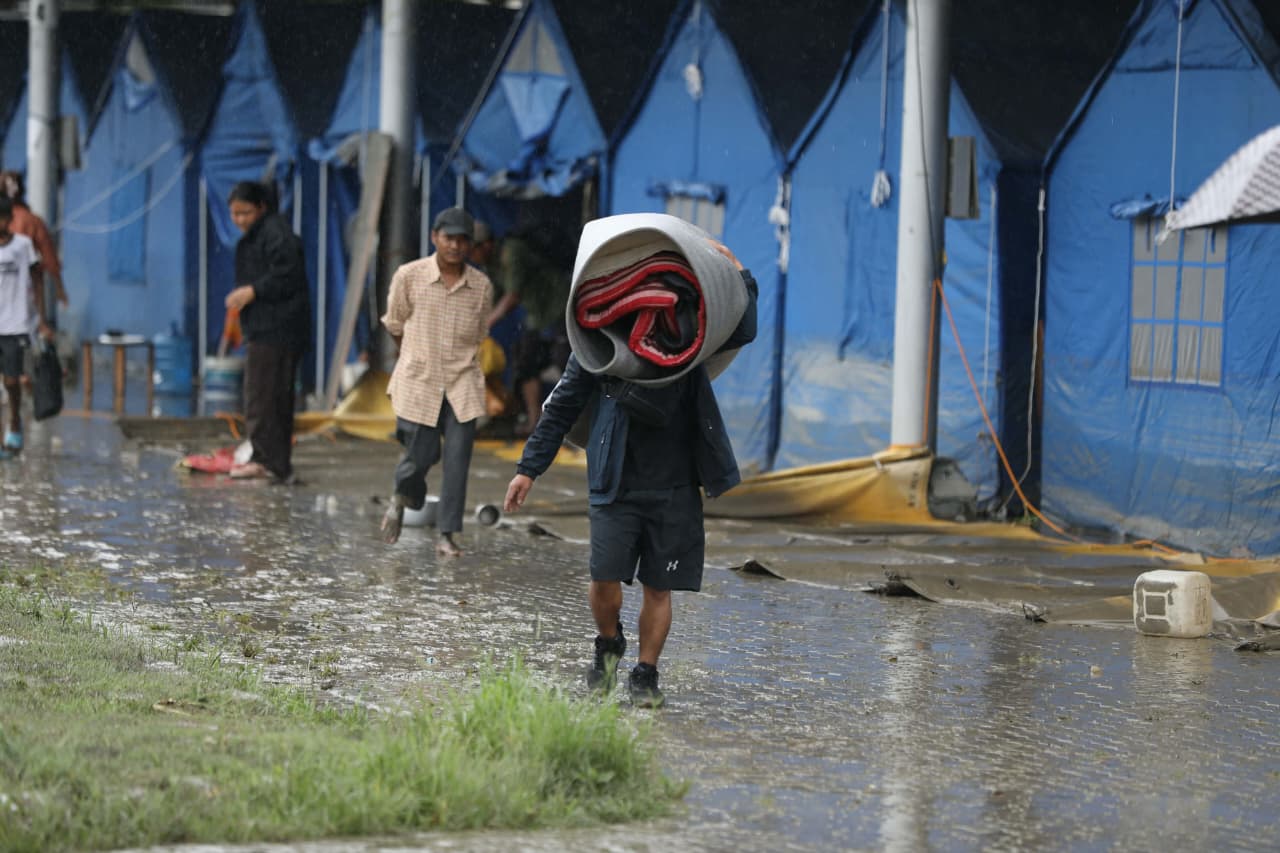
Kathmamndu- While many of us ended Friday with dinner, laughter, scrolling through our phones or settling into bed after a long week, displaced families living in a temporary holding centre in Kirtipur spent the night fighting to survive.
As Kathmandu slept, muddy floodwater from the swollen Bagmati River quietly crept into the Radhaswami Sukumbasi Holding Centre in Sundarighat.Most residents were asleep when the water began entering their shelters shortly after midnight.Parents woke to children screaming. Elderly people struggled to stand. Patients searched frantically for life-saving medicines as water rose around them.Within minutes, the temporary shelters that were supposed to offer safety became traps.Some parents grabbed their children and ran into the darkness. Others desperately tried to save blankets, food, schoolbooks or important documents. Many had no time to save anything at all.By sunrise, nearly everything they owned lay buried beneath thick mud.For these families, however, this was not simply another monsoon flood.
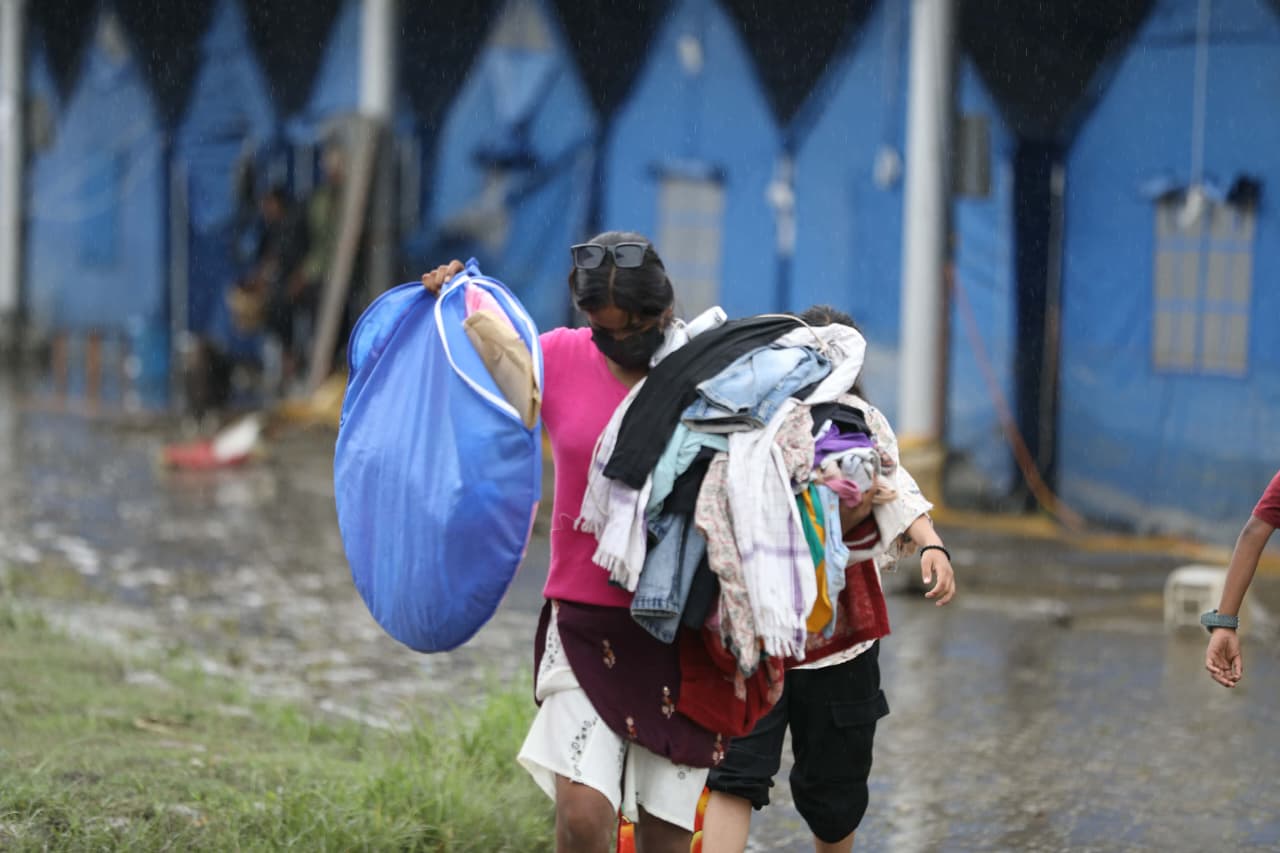
Photo source:Onlinekhabar
It was the second time this year they had watched their lives disappear.Only a few months earlier, government bulldozers had demolished the informal settlements where many of them had lived for years along the Bagmati riverbanks in Thapathali and Gairigaun. Authorities relocated them to the Radhaswami Sukumbasi Holding Centre after assuring them the site would serve only as a temporary shelter until permanent housing was arranged.More than three months later, they were still living in makeshift shelters.Then, the river came.
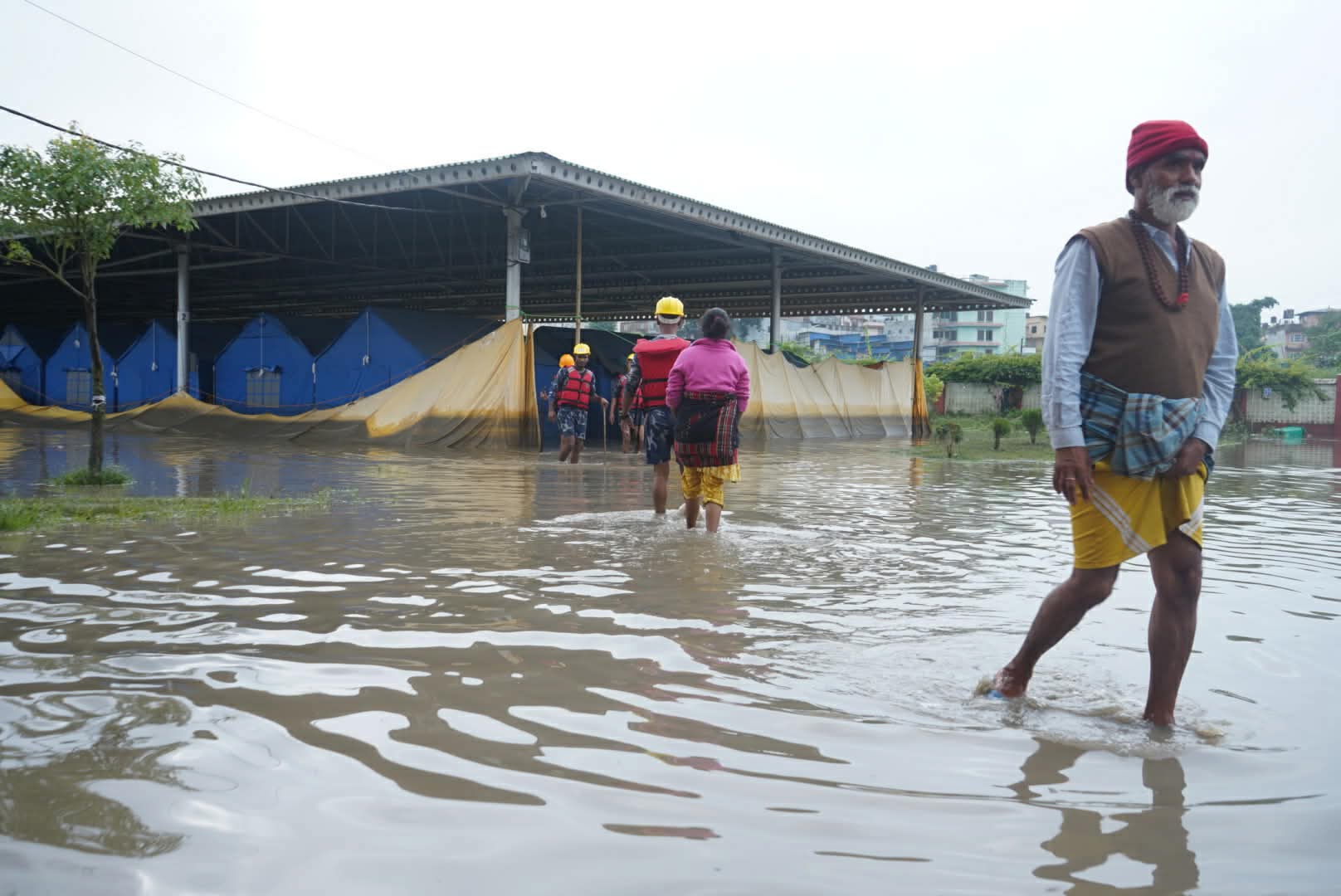
Photo source:Onlinekhabar
“The rice I saved for tomorrow morning was gone.”
Standing barefoot in thick mud, Menuka Gurung carefully lifts a soaked school bag from the ground.Around her lie drenched clothes, broken utensils, mud-covered blankets and a mattress too heavy with water to move.Among everything she lost, it is something painfully ordinary that hurts the most.The breakfast she had prepared for her children.
“The rice I had cooked for tomorrow morning… it was all gone,” she says quietly.The biscuits, beaten rice, clothes and blankets disappeared beneath muddy water within minutes.She looks around the settlement that was meant to offer protection and asks a question she still cannot answer.”We were told this place was safe. If this was meant to protect us, why are we suffering even more?”After a brief silence, she adds:
“We are citizens too. Why doesn’t our life matter?”
A mother searching for medicine she cannot even name anymore
A few shelters away, Gita Lama sits beside her young child, trying desperately to remember the name of the medicine her husband needs every day.He lives with depression and depends on regular medication.The flood washed away both the medicine and the prescription.
“I don’t even remember its name anymore,” she says.As floodwater rushed into their shelter, she faced an impossible decision.
“My child was crying. My husband was confused. Water was rising everywhere.”She chose to save her family.Everything else was left behind.
The family had already lost much of its livelihood after being relocated from Thapathali. Living farther away in Kirtipur made commuting difficult, and she eventually lost her job.Now there is no income, no medicine and no certainty about what tomorrow will bring.
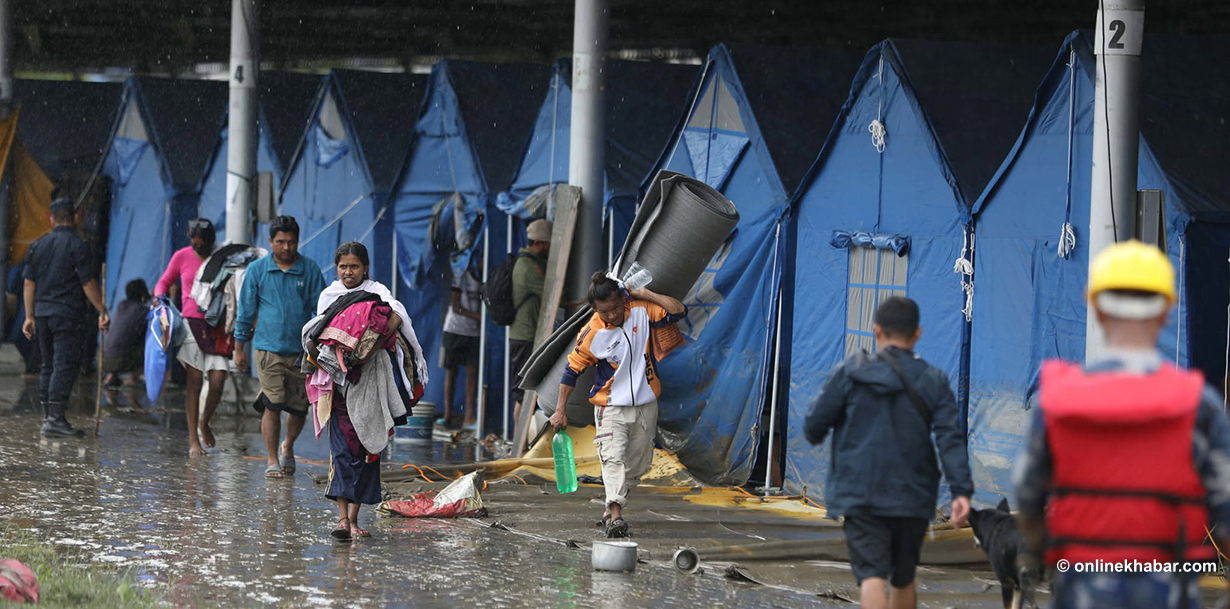
Photo source:Onlinekhabar
Living with illness after the flood
The flood did not wash away only homes.It also swept away treatment.Rasmila Upreti, who is undergoing treatment for a blood infection, lost all of her medication.Other residents suffer from kidney disease, asthma, heart conditions and pneumonia. For many families already struggling to survive, replacing medicines is financially impossible.With the monsoon only beginning, damp shelters, stagnant water and overcrowded living conditions threaten to worsen existing health problems.
“It would have been easier if they had simply killed us.”
Rajkumar Majhi was among the first residents to call journalists while floodwater was still rising around the camp.”We were sleeping,” he recalls. “Nobody warned us that the river was about to overflow.”The flood destroyed his medicines, food supplies and cooking utensils.Looking over the remains of his temporary home, he quietly says:
“It would have been easier if they had simply killed us instead of making us suffer like this.”It is not a plea for death.It is the voice of someone who feels abandoned.
“We are not animals.”
Nearby, Kanchhimaya Ghalan wipes mud from a plastic container before giving up.Nothing inside survived.”We have children,” she says.”We also want to live.””We are not dogs or cats.”For her, the flood is not simply a natural disaster.It is proof that vulnerable families were relocated without ensuring they would be safe during Nepal’s monsoon season.
Losing everything-again
Resident Dambar Tamang estimates that he lost belongings worth nearly NPR 100,000.
“Everything is buried in mud,” he says. “Our children don’t even have slippers to wear.”Across the holding centre, families dig through thick layers of mud hoping to recover citizenship certificates, schoolbooks, cooking utensils, blankets or family photographs.Some manage to recover small pieces of their lives.Many recover nothing.Children have lost books and uniforms.Patients have lost medicines.Workers have lost the tools they depended on to earn a living.Families have lost the fragile stability they had only just begun rebuilding after eviction.
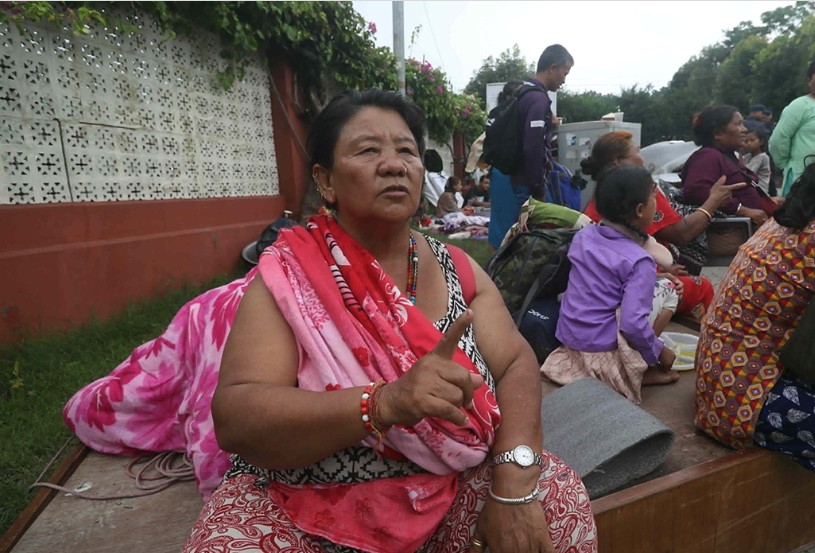
Photo source:Onlinekhabar
A humanitarian crisis-and a question of rights
The disaster has exposed not only the vulnerability of temporary settlements but also the challenges surrounding the protection of housing rights for displaced communities.Residents say they were assured the holding centre would serve only as a temporary shelter while the government arranged permanent resettlement and support to help them rebuild their lives.More than three months later, many families remain in temporary shelters that have now proven unsafe during the monsoon.Beyond the immediate humanitarian emergency, the situation raises important questions about the state’s constitutional and human rights obligations.
The Constitution of Nepal guarantees every citizen the right to live with dignity and commits the state to promoting social justice and protecting vulnerable communities. Nepal is also a State Party to the International Covenant on Economic, Social and Cultural Rights (ICESCR), which recognizes the right to adequate housing as part of the right to an adequate standard of living.
International human rights standards emphasize that evictions and relocations should never leave people homeless or expose them to foreseeable risks. Governments are expected to ensure that relocation sites are safe, habitable and provide access to essential services, including clean water, sanitation, healthcare, education and livelihoods. The UN Basic Principles and Guidelines on Development-Based Evictions and Displacement further emphasize that displaced communities should be meaningfully consulted, protected from foreseeable harm and provided with effective remedies when their rights are affected.For the families in the Kirtipur holding centre, the losses extend far beyond damaged property. Many have lost identity documents, school materials, medicines, food supplies and the tools they relied on to earn a living. Parents worry about feeding their children, while patients wonder how they will continue essential treatment without medicine or money.
As residents continue digging through mud in search of anything they can salvage, the disaster has become more than a story about monsoon flooding. It has become a test of whether the state can fulfil the promises it made and uphold the dignity and rights of some of Nepal’s most vulnerable citizens.With the monsoon only beginning, residents say temporary relief alone is no longer enough. They are calling on the government to honour its commitment by providing safe housing, restoring access to healthcare and livelihoods, compensating families for their losses, and implementing the permanent resettlement they were promised.For these families, this is not simply a plea for assistance it is a call for accountability. They say they are not asking for charity, but for the protection of the constitutional and human rights every citizen deserves.
Before the next rain falls
The monsoon has only just begun.While much of Kathmandu has returned to work and everyday life, displaced families at the holding centre remain surrounded by mud, trying to salvage photographs, medicines, clothes, schoolbooks and memories.They know the next spell of heavy rain could arrive at any time.They fear it could wash away what little they have left.For them, Friday night did not end when the rain stopped.They are still living through it.