KATHMANDU – Nepal and China have explored measures to expand bilateral trade and investment, improve market access for Nepali products and strengthen business-to-business cooperation, as both sides seek to give greater commercial momentum to their economic relationship.
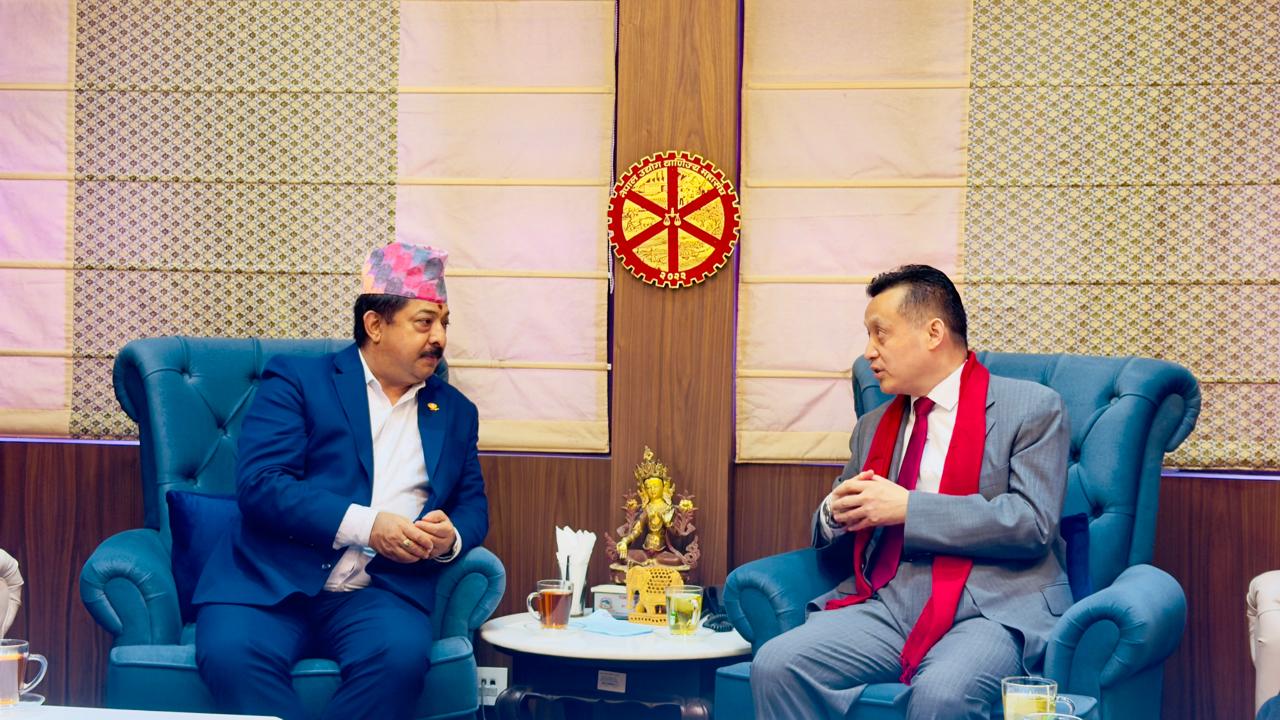
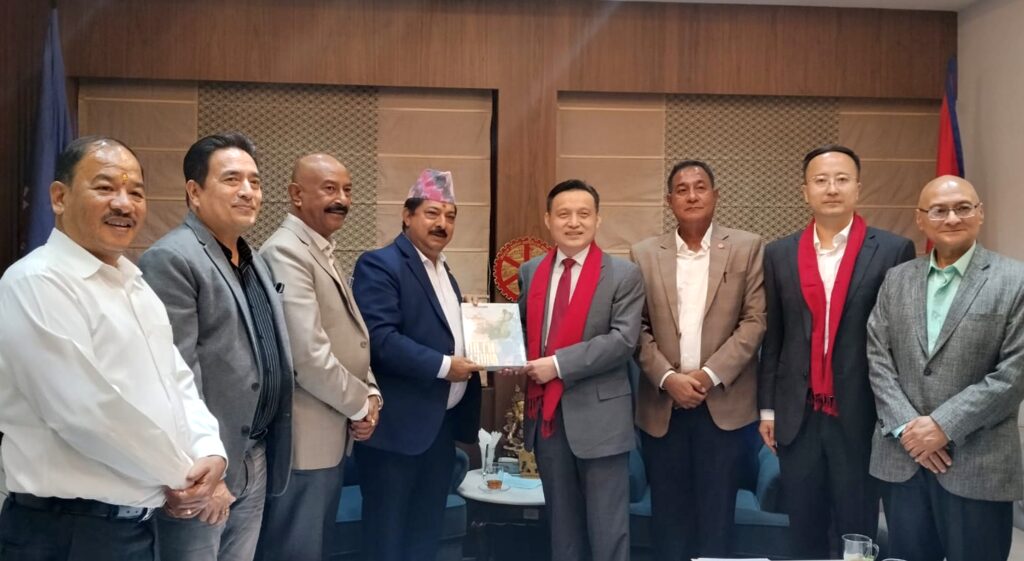
The issue was discussed during a meeting between Anjan Shrestha, president of the Federation of Nepalese Chambers of Commerce and Industry (FNCCI), and Zhang Maoming, Chinese ambassador to Nepal, at the FNCCI Secretariat on Monday.
The two sides discussed strengthening regular dialogue and cooperation among the FNCCI, the Chinese Embassy, the China Council for the Promotion of International Trade (CCPIT) and provincial chambers of commerce in China. They also explored initiatives focused on trade, investment, tourism, technology transfer, joint ventures and export promotion.
Shrestha said Nepal should leverage its longstanding friendship with China to expand commercial and investment ties. He identified tea, coffee, herbs and herbal products, handicrafts, felt products, handmade paper, ready-made garments and singing bowls as areas with export potential in the Chinese market.
“Nepal’s exports to China remain negligible compared with imports. Support from the Chinese side is needed to increase Nepal’s exports,” Shrestha said, stressing that Nepal’s participation in trade fairs should translate into actual orders, long-term buyers and sustainable business partnerships.
The FNCCI has been facilitating the participation of Nepali businesses in various trade fairs in China for more than 15 years, including the **China-South Asia Expo in Kunming**.
Shrestha also called for expanded direct air connectivity between China and Nepal, particularly from Chinese cities to Pokhara and Bhairahawa international airports, to help increase Chinese tourist arrivals.
As Nepal enters the graduation phase from the Least Developed Country (LDC) category, Shrestha said China could play an important role in helping Nepal diversify exports, improve competitiveness and attract quality foreign investment.
“Through cooperation with China, Nepal can expand its production capacity and integrate into regional and global value chains,” he said.
Shrestha also urged the Chinese ambassador to encourage greater participation of Chinese companies in the ’11th Nepal International Trade Fair’, scheduled to be held in Kathmandu in December. He described the event as an important platform for direct engagement between Nepali and Chinese businesses and for developing new commercial partnerships.
Ambassador Zhang said Nepal-China relations should be further deepened in the economic and commercial sectors. He expressed China’s willingness to facilitate the promotion of Nepali products in the Chinese market and expand direct business-to-business contacts between the two countries.
He further said the relationship should evolve from traditional trade towards a long-term economic partnership based on investment, technology, joint ventures, exports, tourism and direct commercial cooperation.
He also urged Nepali businesses seeking to enter the competitive Chinese market to pay greater attention to **product quality, branding, packaging and supply capacity**.
“China is a good neighbour of Nepal and remains positive about Nepal’s development and prosperity,” Zhang said, adding that China was ready to facilitate greater access for Nepali products while encouraging Nepali businesses to strengthen their competitiveness.
FNCCI senior vice-president Sur Krishna Vaidya, vice-presidents Krishna Prasad Sharma and Naresh Lal Shrestha, and Bagmati Province President Bed Bahadur Shrestha, among others, also attended the meeting.
They noted that China is Nepal’s second-largest trading partner and an important source of foreign investment, and called for greater Chinese support and facilitation to expand market access for Nepali products and reduce the persistent imbalance in bilateral trade.