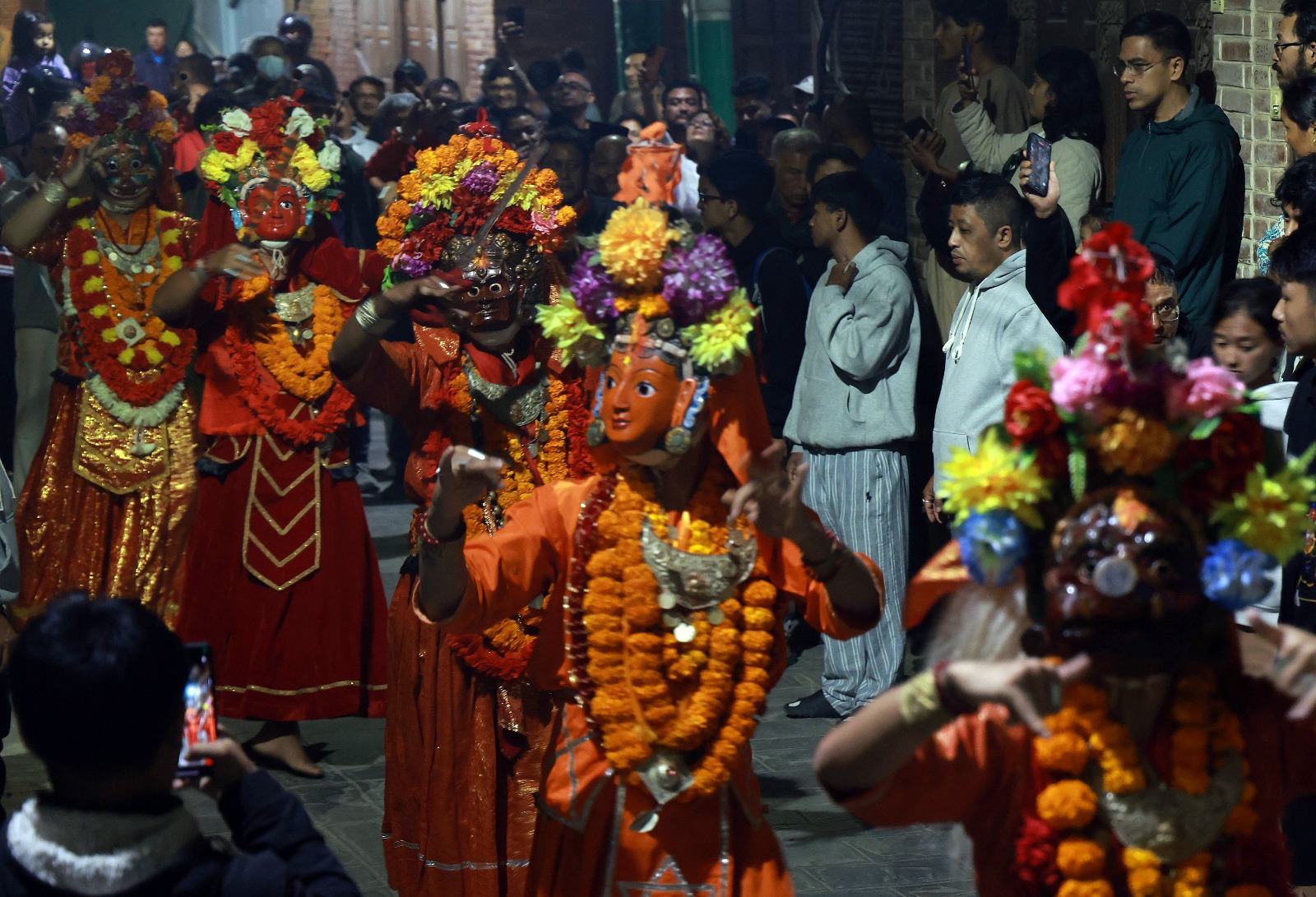
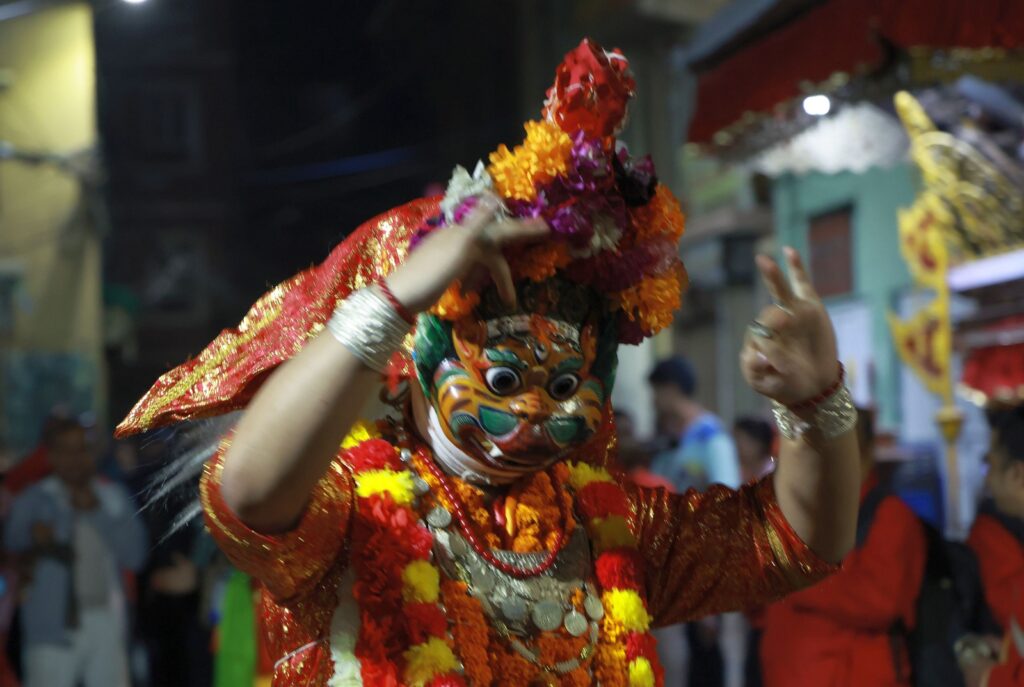
Lalitpur – The centuries-old Asta Matrika Dance, also known as ‘Ga: Pyakhan’, is preserving the rich cultural and religious heritage of the Newar community in Patan, Lalitpur, through traditional masked performances associated with the Dashain festival.
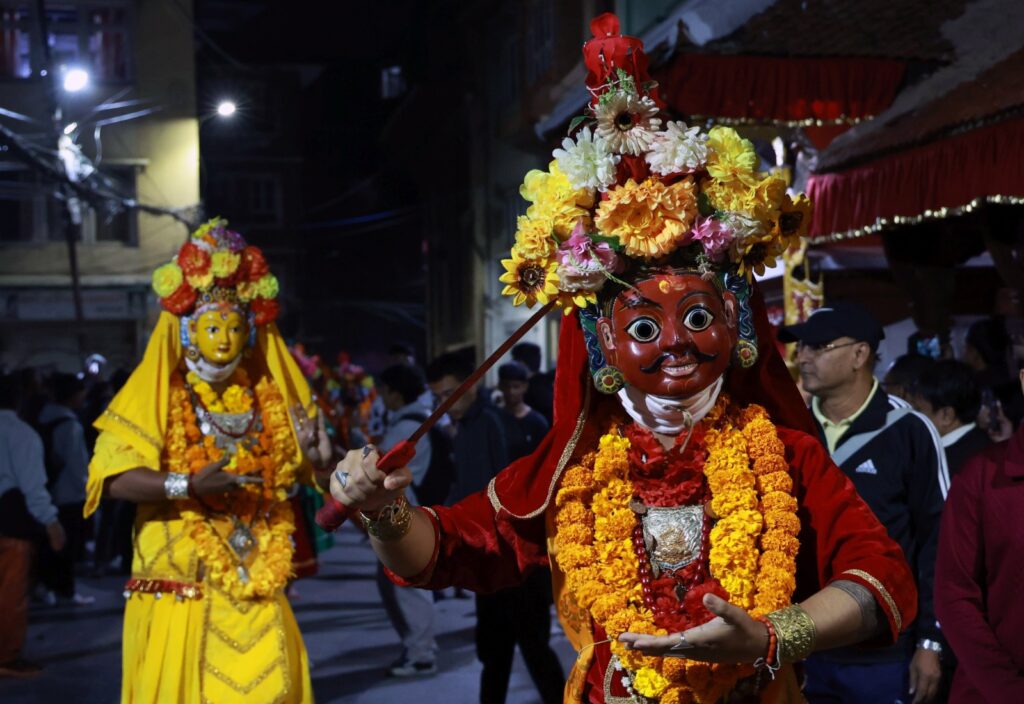
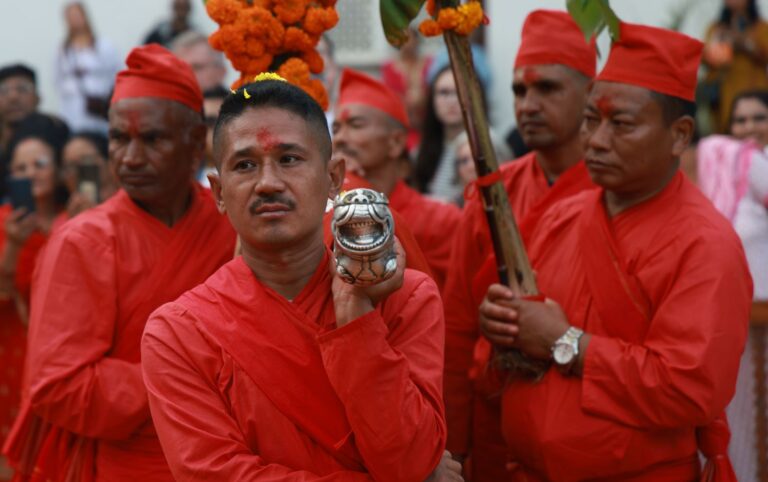
Believed to date back approximately 350 to 362 years to the Malla period in the Kathmandu Valley, the sacred dance is traditionally performed by members of the Shakya and Bajracharya communities. The performance begins on Ghatasthapana, the first day of Dashain, and continues for 11 days, concluding around Ekadashi.
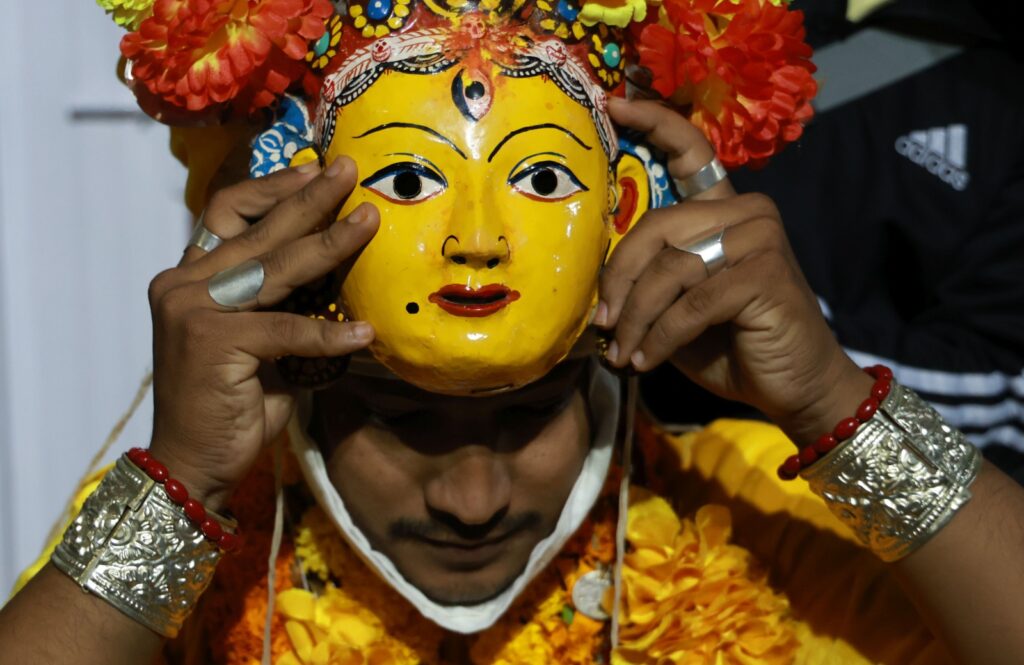
Gaan Pyakhan depicts the eight mother goddesses, known as Asta Matrika in Sanskrit: Brahmayani, Maheshwari, Kaumari, Vaishnavi, Varahi, Indrayani, Chamunda and Mahalaxmi. The performances also feature accompanying deities, including Bhairav, Ganesh, Kumar, Simhini and Byangini.
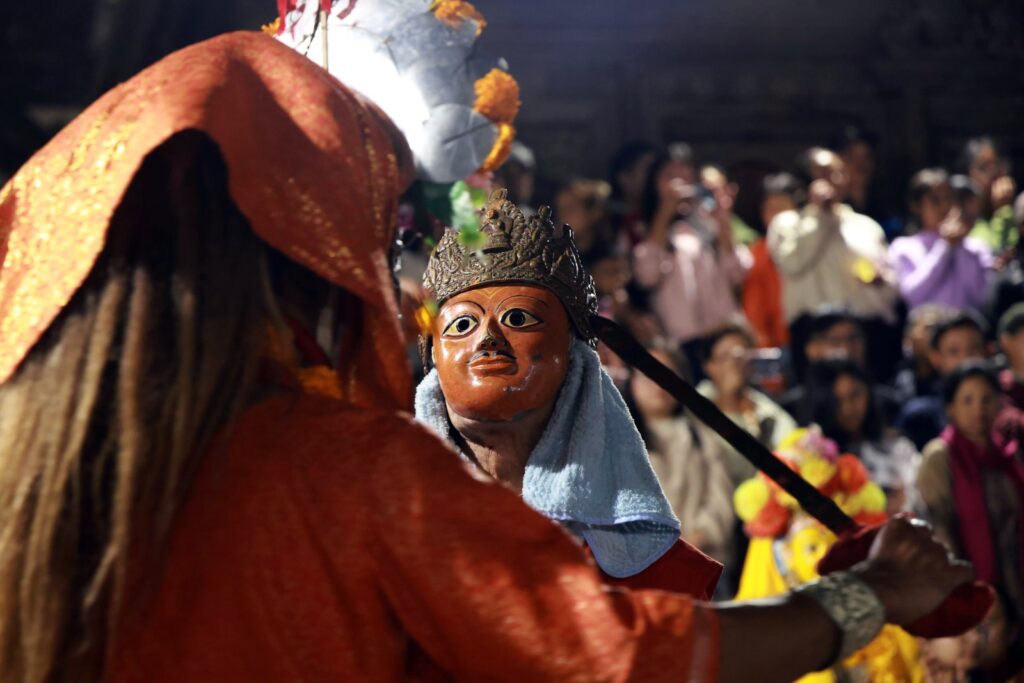
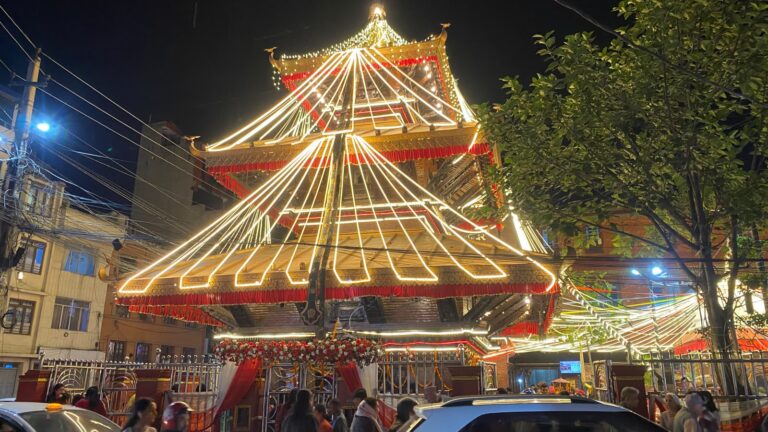
The masked dancers perform at traditional venues across historic Patan, including Mulchowk at Patan Durbar Square, Kartik Dabali and Nakabahil. Through ritual movements, music and elaborate masks, the dance brings ancient beliefs and community traditions into public spaces.
Rooted in religious faith, the performance is believed to ward off evil spirits and protect the community from dangers, while bringing peace, prosperity and well-being. It is also associated with protection against traditional fears such as floods, fire, wild animals, snakes and other misfortunes.
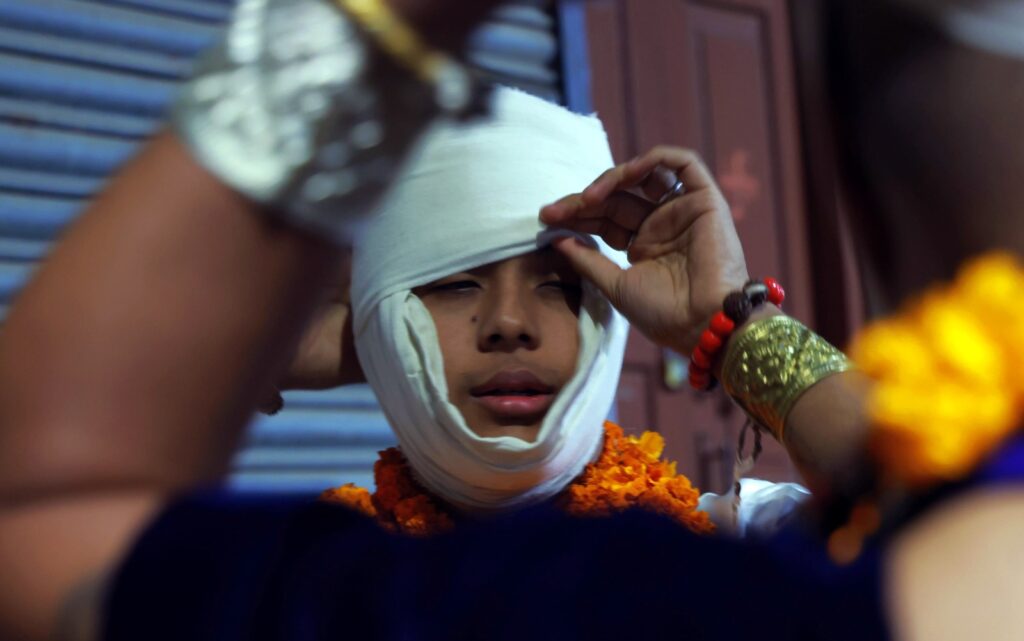
More than a festive performance, Gaan Pyakhan represents the continuity of Newar ritual practices, craftsmanship and communal identity. Its annual observance during Dashain highlights Lalitpur’s living heritage and the role of traditional festivals in keeping Nepal’s cultural legacy alive for future generations.
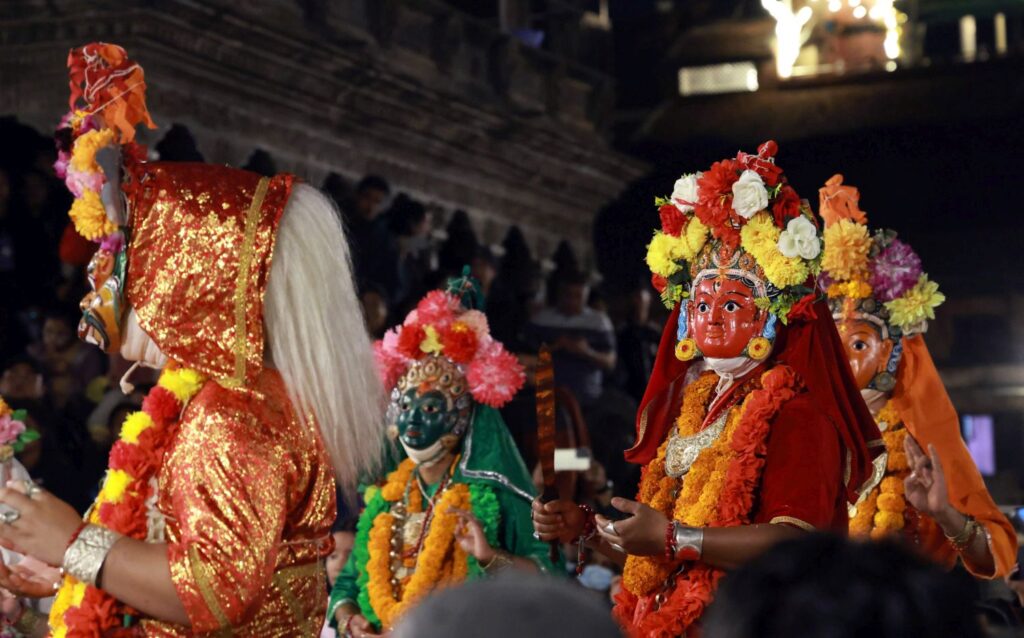
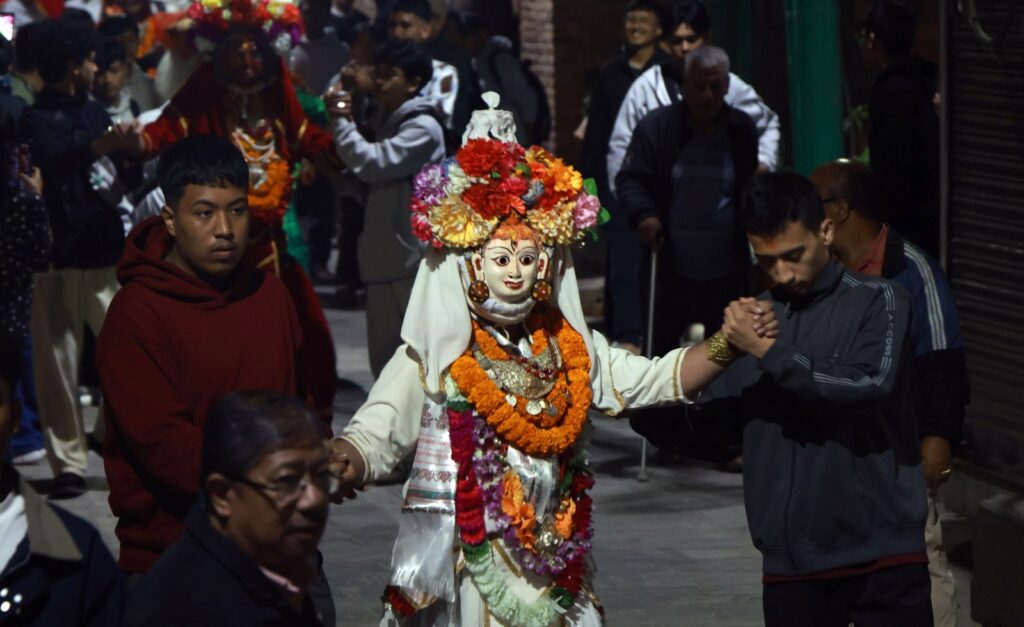
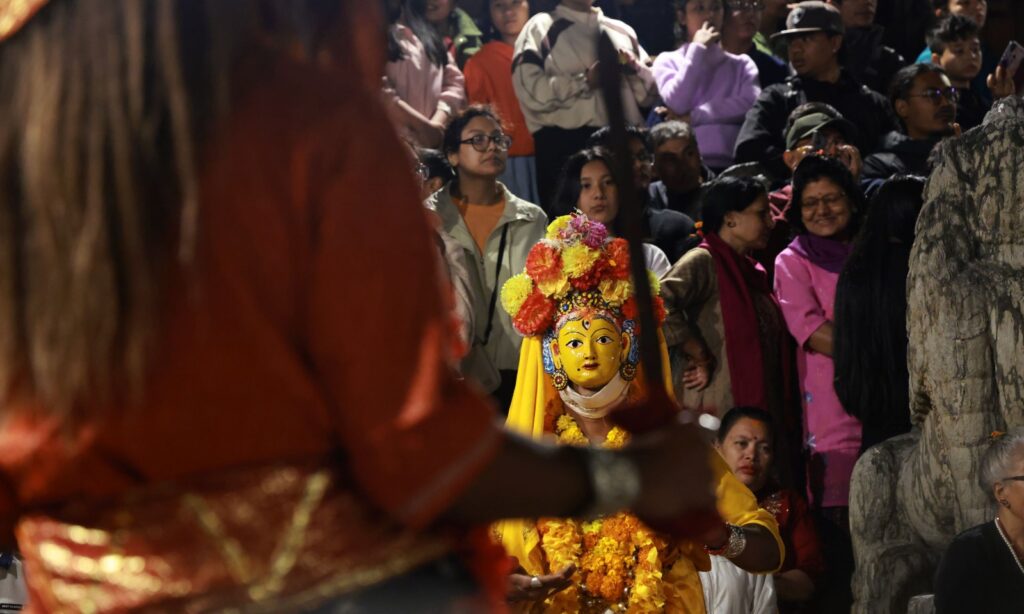
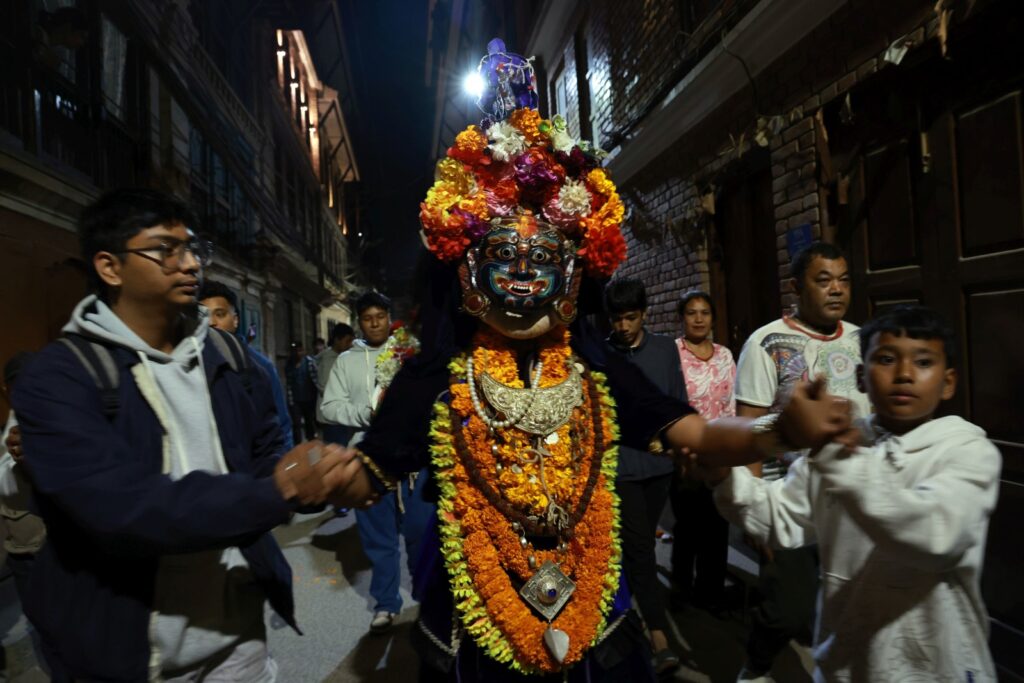
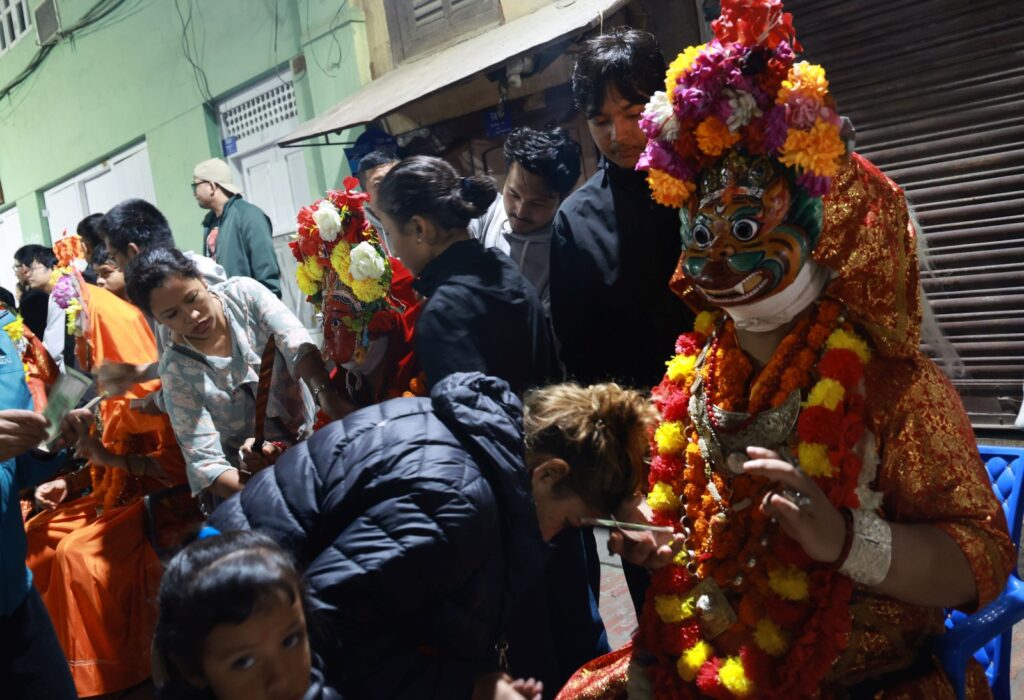
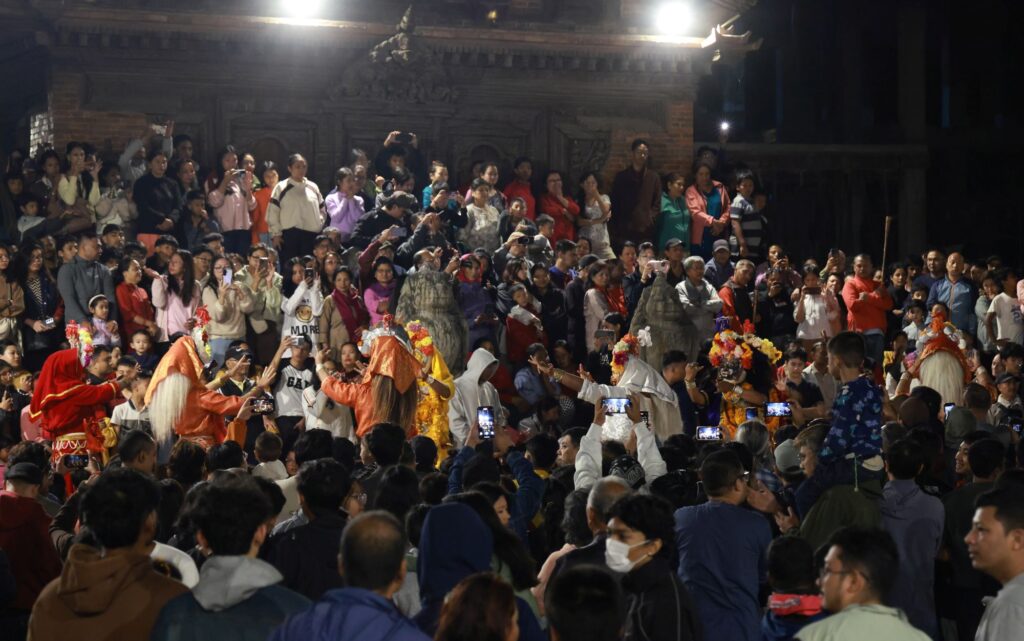
Photo : Sunil Sharma