Bhaktapur– The historic and culturally significant Biska Jatra, which began with great enthusiasm in Bhaktapur, has entered its second day today, highlighted by the unique and world-famous tongue piercing festival in Bode, Madhyapur Thimi.
The festival, locally known as Biska and widely referred to as Bisket Jatra, started in the heart of Bhaktapur at the premises of the five-storied temple and Bhairavnath Temple. A three-tiered pagoda-style chariot of Bhairavnath was pulled to mark the beginning of the celebrations. This sacred event is known in the local Newari language as Dyo Kwah Bijyaigu, meaning the descent of the deity.
Celebrated with the arrival of the Nepali New Year, Biska Jatra carries deep historical and cultural importance. It is observed for eight nights and nine days in Bhaktapur, while in Thimi it is celebrated for three days. The festival is believed to date back to the Licchavi period and is associated with the myth of Bi Syat, meaning the death of serpent deities, symbolizing the end of the old year and the beginning of a new one.
According to cultural historian Purushottam Lochan Shrestha, ancient records including a document from Nepal Sambat 500 found in Thimi mention the term Bisik as a reference to Bishwaketu. Inscriptions from the time of King Yaksha Malla refer to the festival as Bishwajatra, while later records from the reigns of King Jitamitra Malla and Bhupatindra Malla mention the word Bishkyat. Even today, rituals at Taleju Temple include the term Bishwajatra, reflecting the festival’s long historical continuity.
The festival is dedicated not only to Bhairavnath but also to his consort Bhadrakali. It is believed that the pair of flags hoisted on the ceremonial lingo represent both Bhairav and Bhadrakali, symbolizing divine power and protection.
The chariot pulling tradition remains the main attraction of the festival. A large three-tiered chariot built in Taumadhi carries the idols of Bhairavnath and Betal, placed after tantric rituals. Devotees from the lower and upper parts of the city pull the chariot from opposite sides in a symbolic tug-of-war. Each group tries to bring the chariot դեպի their area, and the side that succeeds is considered victorious. This intense tradition reflects both devotion and community pride. The first day concludes after the chariot is taken to the Gahiti area.
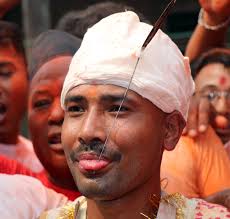
Today, on the second day, attention has shifted to the extraordinary tongue piercing Jatra in Bode. This ritual represents a rare blend of faith, courage, and spiritual discipline. A selected local devotee undergoes the piercing of the tongue with a long iron spike, performed by a traditional Nakarmi priest. Despite appearing painful, it is widely believed that divine power protects the participant from harm.
After the piercing, the devotee carries a sacred oil lamp and walks around important religious sites, including the Mahalaxmi Temple in Bode. Only after completing this ritual journey is the iron spike removed. The participant must observe strict fasting and purification for three days prior to the ritual, reflecting deep devotion and self-control.
Alongside this, the Sindoor Jatra is also being celebrated in Thimi, where locals smear vermilion powder on each other, dance to traditional Dhime music, and carry dozens of ceremonial palanquins, creating a vibrant festive atmosphere.
Biska Jatra and the tongue piercing festival together highlight Nepal’s rich cultural heritage and living traditions, bringing together history, mythology, faith, and community spirit that continue to thrive even in modern times.