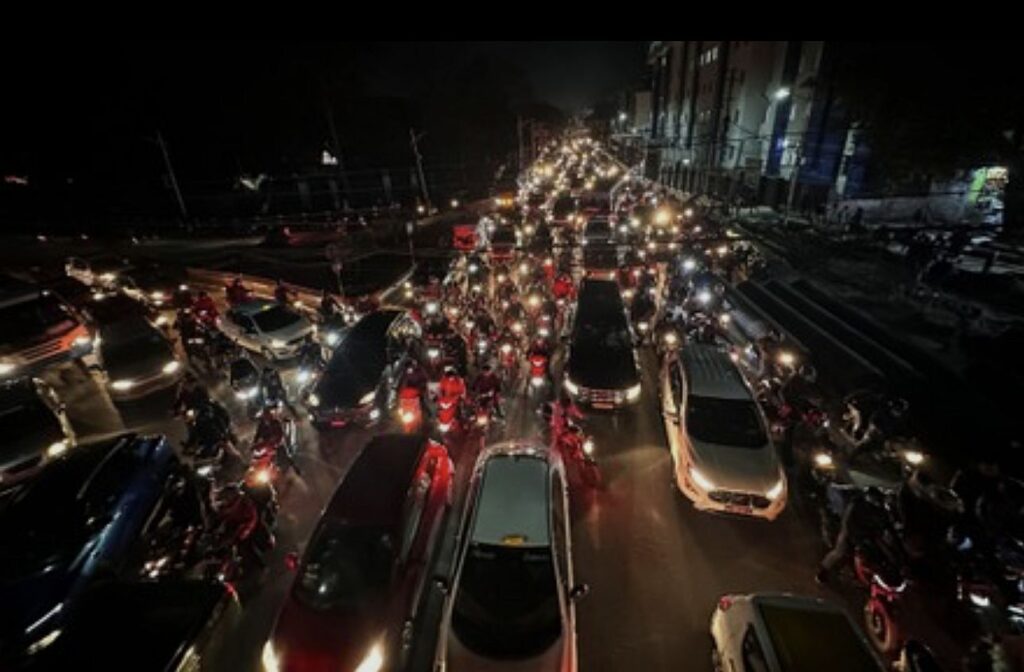
As night crawls in, the street lights of New Road in Kathmandu flicker with a deceptive permanence. To the casual observer, the capital is as vibrant as ever. But beneath the surface, a quiet, mechanical heart failure is beginning to take hold.
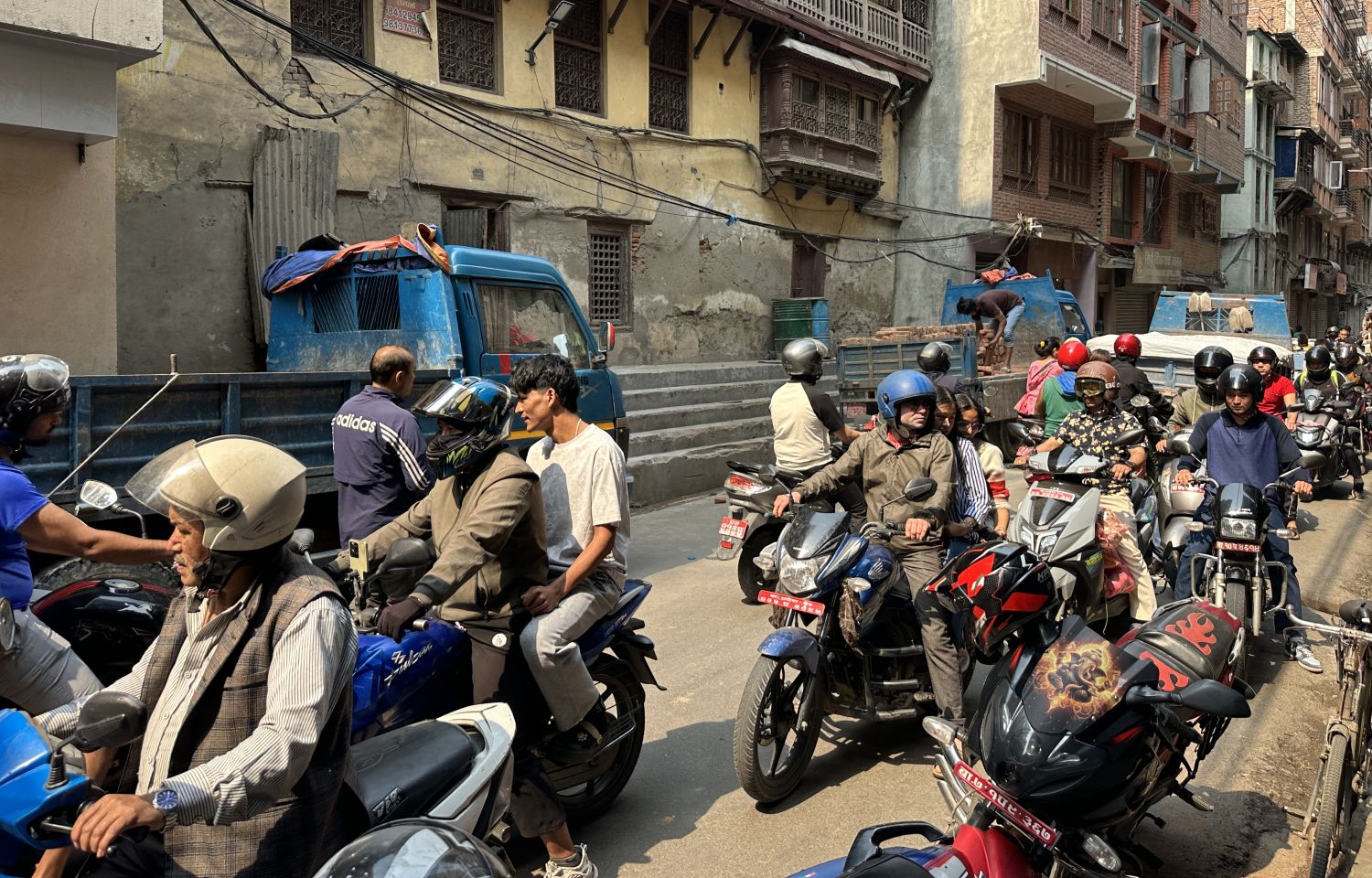
At dawn, the streets hum with a familiar rhythm—motorbikes weaving through narrow lanes, buses groaning under the weight of commuters, and taxis inching through traffic. It is a city in motion, powered almost entirely by fossil fuels. Yet beneath this daily choreography lies a fragile reality: Kathmandu is perilously dependent on a fuel supply chain that could falter at any moment.
Jeevan Maharjan, 38, is starting his scooter to drop his 12-years-old daughter to her school, which is mere 10-minutes walk away. “Then I have to drop my wife to her working place. I am so busy with my scooter.” He exclaims. Her working place is even closer, but walking is taboo for them.
At first glance, it is a Saturday morning like any other in the capital. For most of Kathmandu’s 2.9 million residents, life is proceeding with its usual chaotic charm. But beneath the city’s concrete skin, a silent, metallic countdown is underway. This is the anatomy of a crisis no one is talking about. Yet.
The memory of the 2015 fuel crisis still lingers. Triggered by disruptions along the India-Nepal border, it brought life in the capital to a grinding halt and paralyzed the country for nearly six months. The crisis exposed just how vulnerable Nepal’s energy lifeline is. The nation learned a painful lesson about dependency. Or so it seemed. More than a decade later, little has fundamentally changed.
As of April 2026, the price of petrol in the Kathmandu Valley has breached the psychological barrier of Rs 202 per liter. The crisis is a direct aftershock of the escalating conflict in West Asia. With the Strait of Hormuz facing intermittent closures, landlocked Nepal finds itself at the mercy of a global supply chain that is snapping.
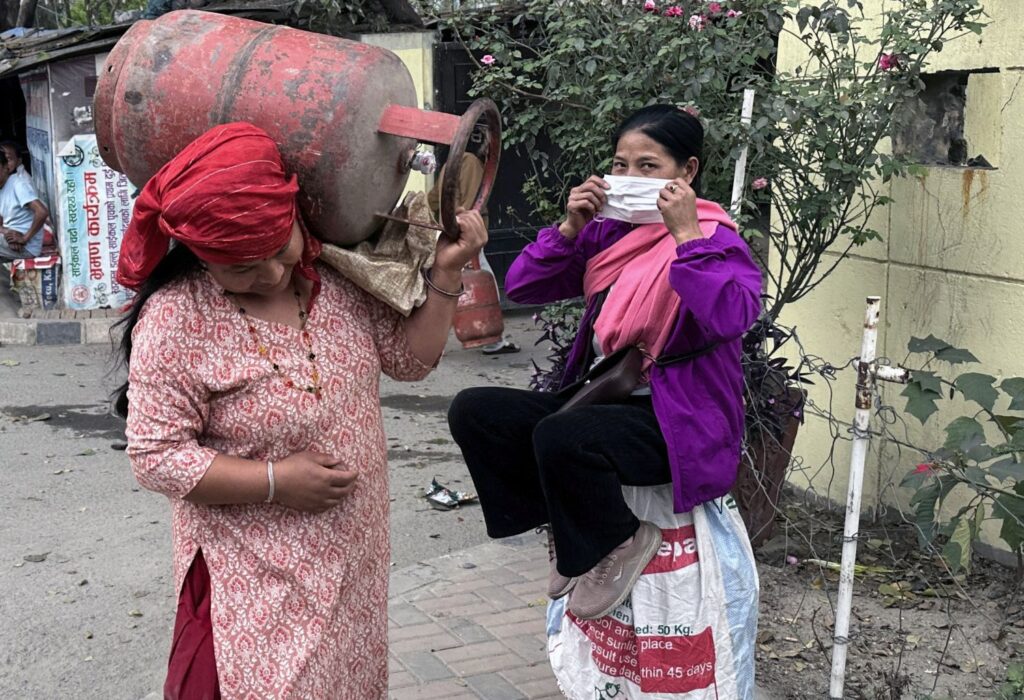
The silver lining, perhaps, is the sudden, desperate pivot toward green energy. For the first time, the transition to electric vehicles is no longer an “environmental choice” It is a survival tactic. The government recently moved to legalize the retrofitting of old petrol engines into electric ones.
Despite all these issues, much of Kathmandu remains in a state of “functional denial.” But as the global geopolitical map remains on fire, the “time bomb” continues to tick. Kathmandu is a city built on the assumption of cheap movement. If the fuel stops, the city stops. The question is no longer if the crisis will peak, but when will it happen. For now, the prices climb higher, and the city waits—oblivious to the fact that the engine is already beginning to smoke.
Despite repeated warnings, efforts to invest heavily in renewable energy infrastructure have moved at a sluggish pace. Hydropower, often hailed as Nepal’s energy future, remains underutilized domestically, while electric mobility adoption is still in its infancy.
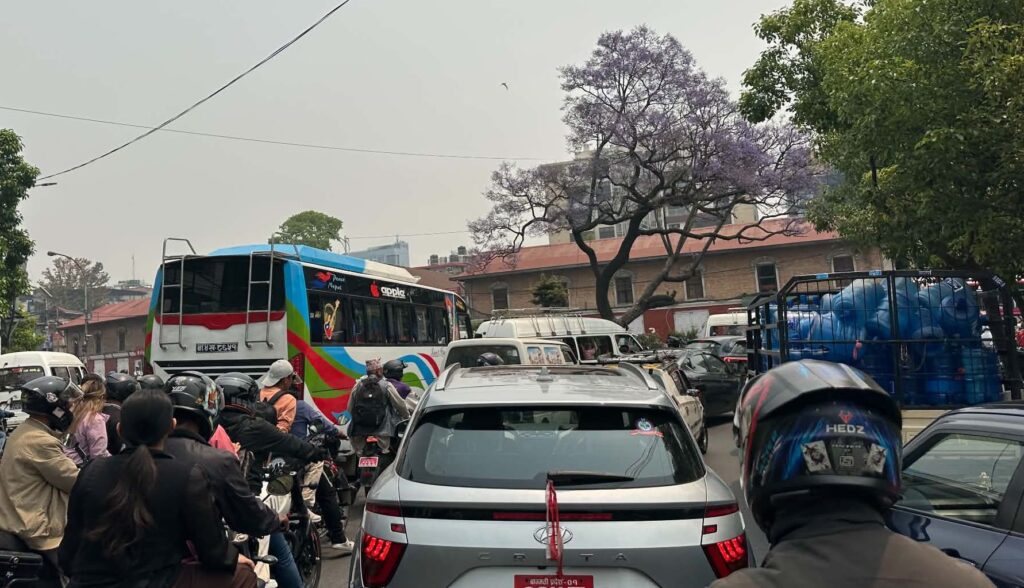
Kathmandu’s population and vehicle numbers have surged dramatically over the past decade. With more cars, buses, and motorbikes on the road than ever before, fuel demand has skyrocketed. Urban planners warn that the valley’s overdependence on fuel-based transportation makes it particularly vulnerable. A supply shock today would likely have even more severe consequences than in 2015—paralyzing not just mobility but also healthcare, food distribution, and emergency services.
A city that has already experienced the shock of a fuel crisis cannot afford to ignore the warning signs. Kathmandu stands at a crossroads. It can continue along its current path—hoping that external factors remain favorable—or it can confront its vulnerabilities head-on and build a more resilient energy future.
Perhaps the most concerning aspect is the public’s growing complacency. Fuel is available—for now. Pumps are open. Prices fluctuate, but supply seems steady. This illusion of stability masks the underlying fragility of the system. There is little public discourse, minimal policy urgency, and almost no behavioral shift toward conservation or alternatives.
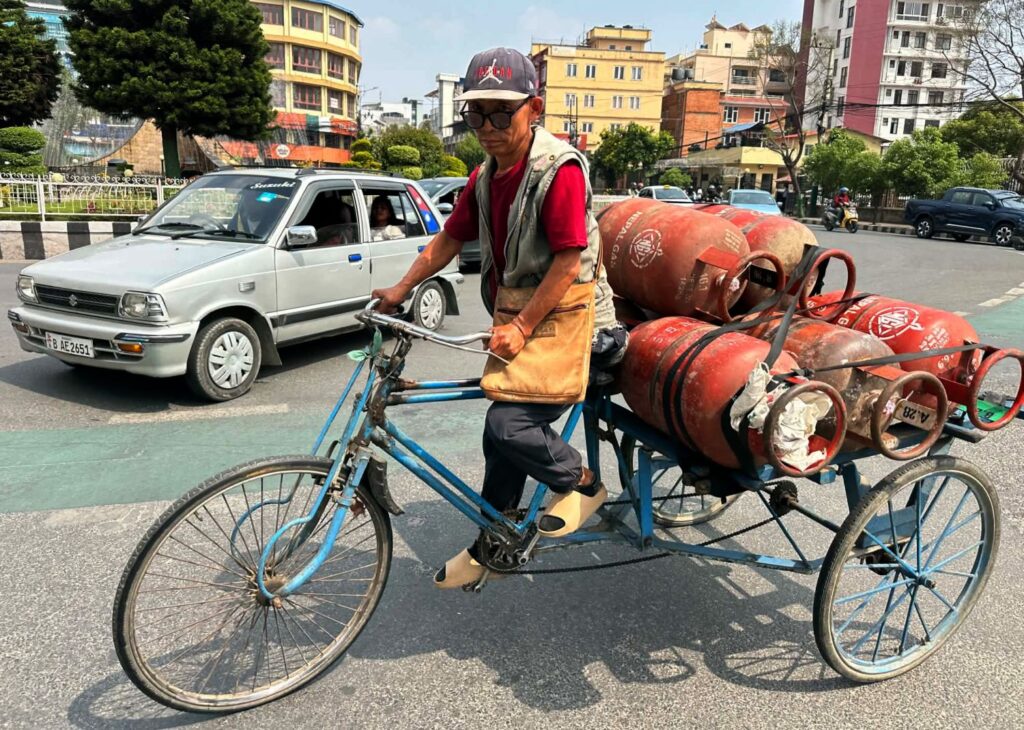
The ticking time bomb is not hidden. It is visible in every congested road. The question is not whether another fuel crisis will come—but whether Kathmandu will be ready when it does.
Perhaps the most surreal aspect of this impending implosion is the profound silence that is engulfing the national psychology. The bomb is ticking, but a deep, weary denial is hovering over all of us that the party will ever end.
Encouraging walking, switching to electric vehicles, and using induction cookers instead of LPG all reduce dependence on imported fuels—that’s exactly what helps a country like Nepal deal with fuel crisis. Such measures will definitely delay, reduce, and better manage fuel crisis in Nepal.