
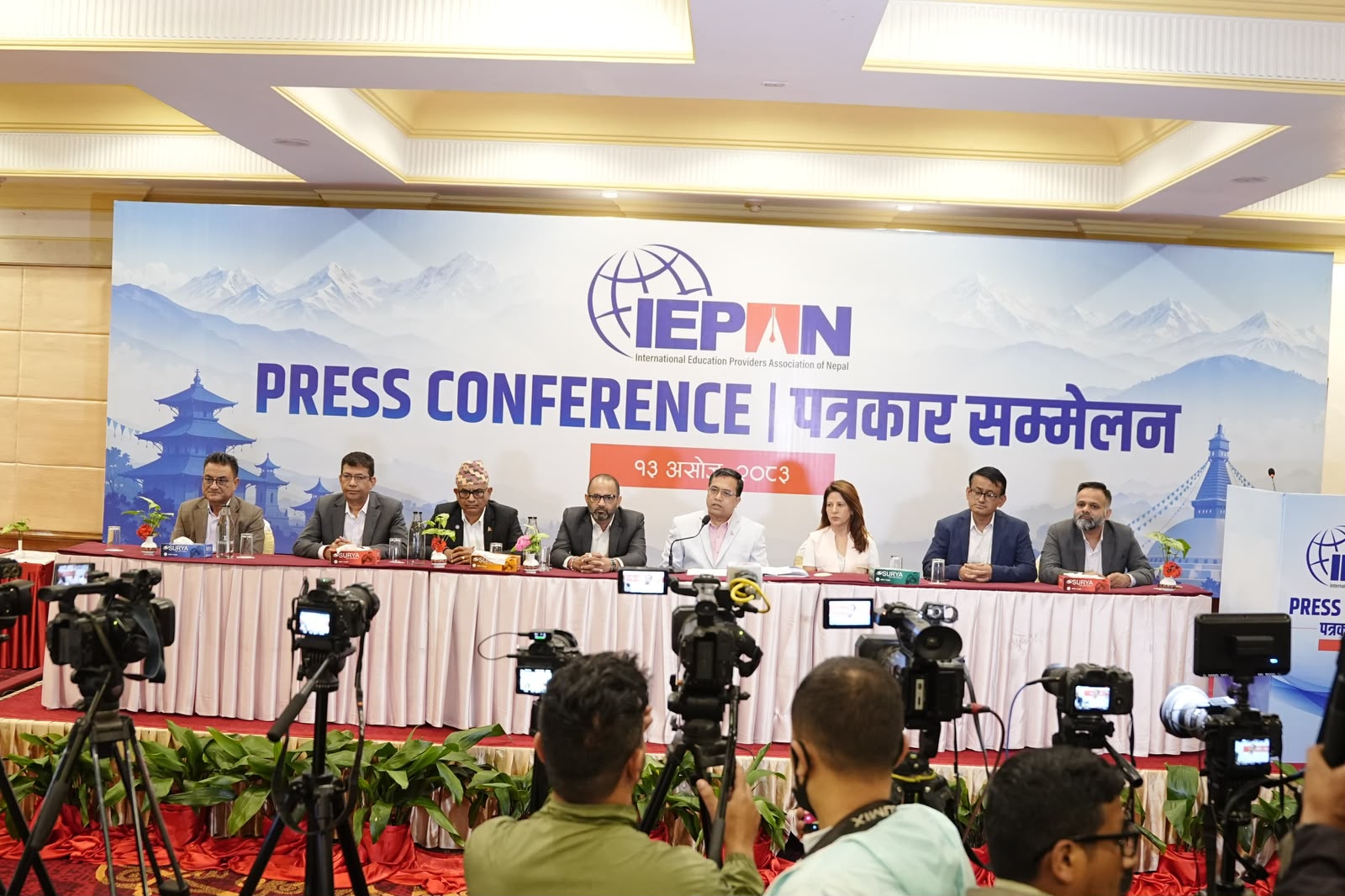
Kathmandu – The International Education Providers Association of Nepal (IPEAN) has called for public discussions on academic programs affiliated with foreign universities in Nepal to be based on facts, laws and evidence.
IPEAN said that questions regarding the legality of such institutions or the quality of education should be assessed based on existing legal provisions, approval of educational institutions and programs, university accreditation, degree credibility, international recognition, academic reputation, and the opportunities and acceptance graduates receive in the job market.
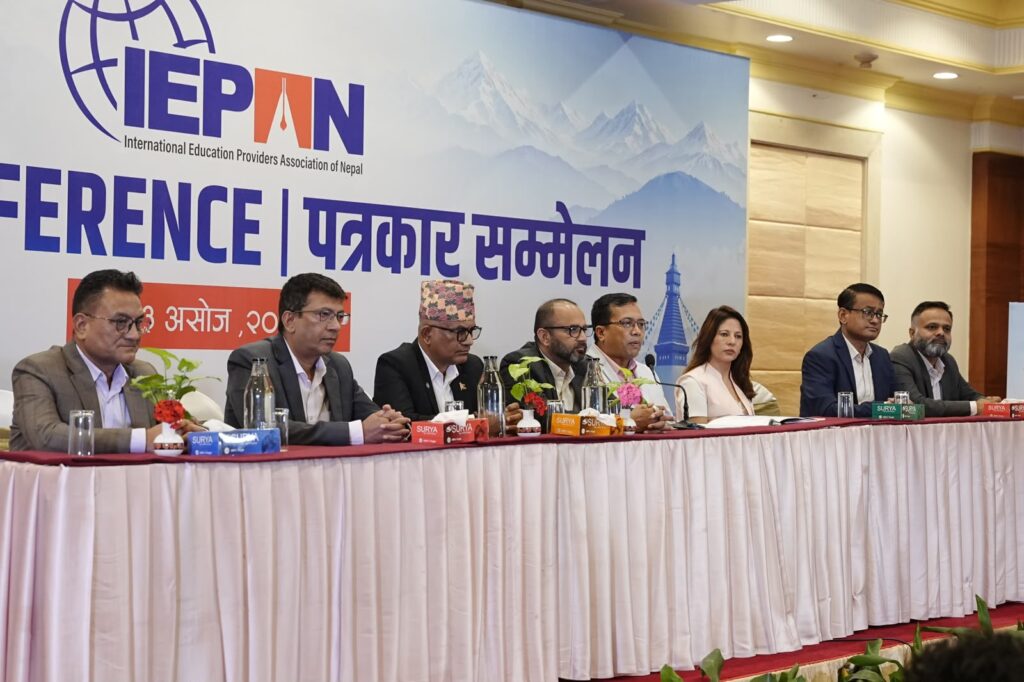
Speaking at a press conference, IPEAN President Laxman KC said claims that programs currently operating with permission from the Ministry of Education could be shut down at any time without a legal basis were incorrect. He said the Foreign Educational Program (Operation and Regulation) Regulations, 2083, issued under Section 19 of the Education Act, 2028, provides a framework for the operation and regulation of such programs.
According to KC, programs affiliated with 35 foreign universities from seven countries are currently being operated in Nepal. A total of 37,208 students are enrolled in programs offered by 58 institutions that have received permission to operate such programs.
IPEAN claims that the sector has generated around 5,000 direct and 15,000 indirect jobs and attracted approximately Rs 25 billion in investment. It also said the sector contributes around Rs 500 million in direct revenue and more than Rs 1 billion in indirect revenue annually, while generating economic activity worth an estimated Rs 15–20 billion.
KC said students can pursue international degrees while remaining with their families in Nepal, reducing overseas living and daily expenses. IPEAN claims that, for some programs, studying in Nepal can cost up to 15 times less than studying abroad. The association estimates that this could help reduce potential foreign-currency outflows by around Rs 50–60 billion annually. However, IPEAN clarified that this does not mean all students who go abroad would otherwise have enrolled in programs available in Nepal.
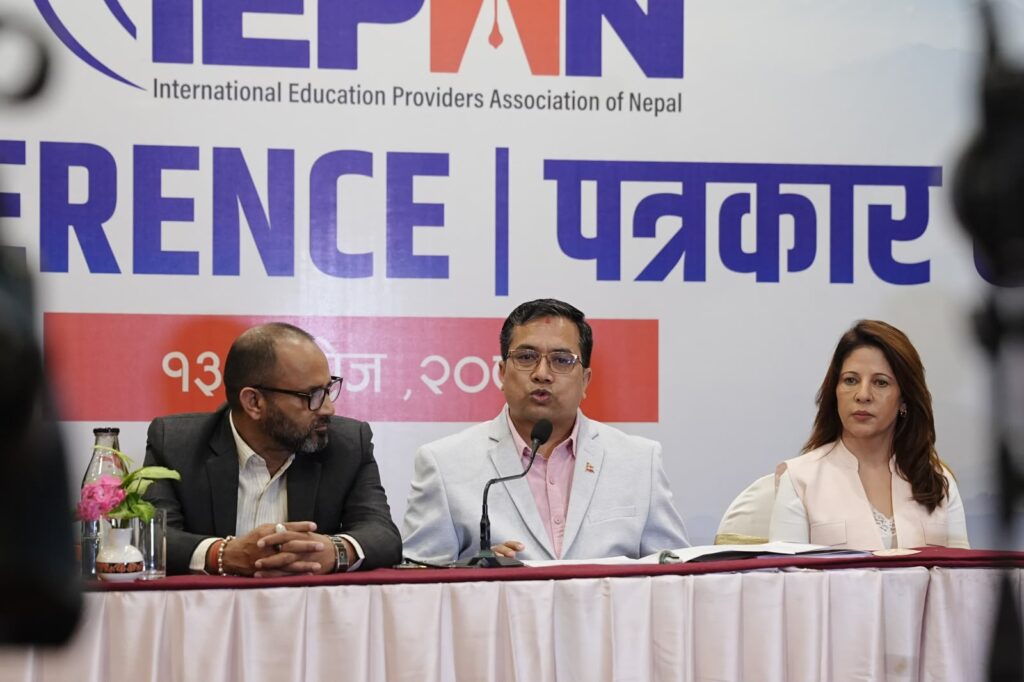
“Recently, we have played a major role in producing IT professionals,” KC said. “Colleges operating in Nepal under affiliations with foreign universities have been trendsetters in IT education.”
According to a study by the Institute for Integrated Development Studies (IIDS), Nepal exported IT services worth approximately US$515 million (around Rs 68 billion) in 2022, while the figure is estimated to have approached US$1 billion (around Rs 145 billion) by 2025. KC attributed this growth to Nepali IT graduates, IT companies, freelancers and initiatives from the private sector.
KC said colleges affiliated with foreign universities have also introduced programs in areas such as artificial intelligence and machine learning, big data analytics, cybersecurity, network security, hotel and hospitality management, interior design, entrepreneurship, multimedia and animation.
He said the availability of such programs in Nepal is helping produce skilled workers according to global market demands and is gradually reducing the need for students to make large investments to study abroad.
Highlighting the growing attraction toward overseas education, KC said 112,593 students received study permits in fiscal year 2080/81, while the figure rose to 123,589 in fiscal year 2081/82. According to data presented by IPEAN, Rs 124.95 billion and Rs 138.48 billion, respectively, flowed out of Nepal for educational purposes during those two fiscal years.
KC said Nepal should provide quality, competitive and internationally recognized higher education within the country while also strengthening employment and entrepreneurship opportunities for young people to help reduce the outward migration of students.
The Nepal Education Institution Survey 2081 conducted by the National Statistics Office also highlights the broader contribution of educational institutions outside government ownership. Covering the situation in fiscal year 2080/81, the survey found that 466,805 students were enrolled in higher education at such institutions. Their total value added was estimated at around Rs 160 billion, with 311,516 people involved in the sector.
However, the survey figures represent all educational institutions outside government ownership and do not specifically measure the contribution of the 58 institutions affiliated with foreign universities.
On the issue of quality, KC said colleges affiliated with foreign universities and branch campuses of foreign universities operate under different ownership and management models. He said neither model should automatically be considered superior or inferior. Instead, individual programs should be assessed based on their curriculum, teacher qualifications, infrastructure, assessment methods and student learning outcomes.
He added that the affiliating universities establish curricula and academic standards and also monitor their partner colleges.
KC said the Ministry of Education has been conducting field inspections of institutions through teams that include experts. Under the new regulations, affiliated institutions are required to begin the Quality Assurance and Accreditation (QAA) process within three years.
He also said fees payable to foreign universities are transferred through the banking system based on approval and recommendation from the Ministry of Education, with payment details submitted to the ministry.
IPEAN has called for regulatory authorities to investigate any institution where evidence of irregularities is found.
KC also stressed that short-term training courses in artificial intelligence or cybersecurity should not be compared with full academic degree programs. He said programs should be assessed based on their duration, credits, curriculum and evaluation methods. Students may be assessed through written examinations as well as assignments, research projects and presentations.
KC also outlined a goal of developing Nepal into a destination for international students in the future. For this, he urged the government to establish clear systems for evaluating eligible institutions, student visas and services required by foreign students.
He also called for the government to publish updated lists of approved institutions and programs, clarify quality-assurance standards and strengthen mechanisms for addressing student complaints.