Kathmandu, -The Kathmandu Metropolitan City has accelerated its efforts to rescue and manage homeless and vulnerable individuals living on the streets, aiming to create a more humane and inclusive urban environment.
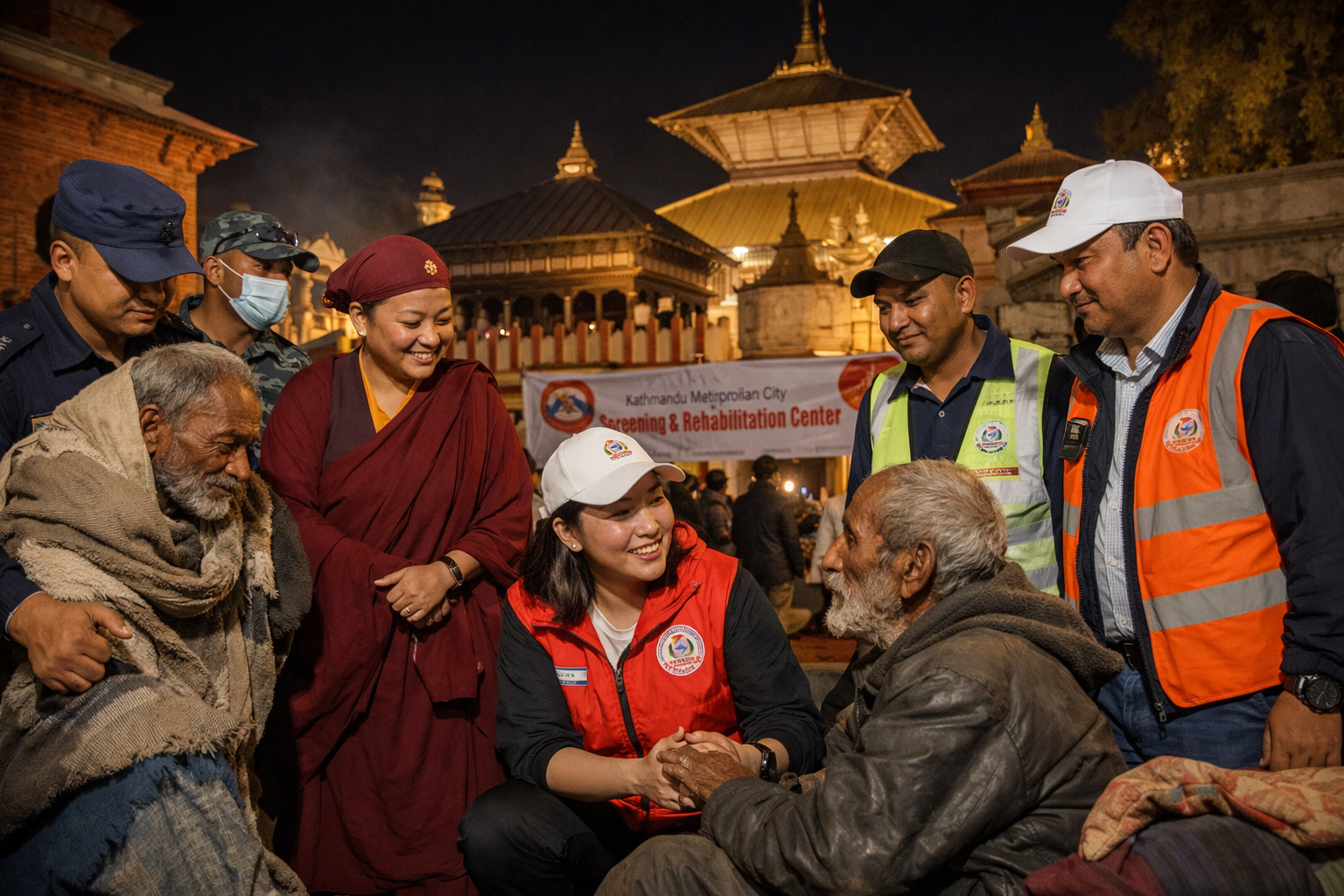
Acting Mayor Sunita Dangol has been actively leading rescue operations in key areas, including the Pashupatinath Temple premises, where a significant number of street-dependent individuals have been identified.
Screening-based approach for better rehabilitation
Unlike previous practices, the metropolitan city has introduced a structured system where rescued individuals are first taken to a screening center instead of being directly sent to shelters. At these centers, individuals are assessed and categorized based on their needs.
According to Dangol, a dedicated screening center will soon be established in coordination with the Pashupati Area Development Trust within the Pashupati area to ensure more efficient management.
Those with families will be reunited, physically weak individuals will receive medical treatment, and people facing mental health challenges will be referred to specialized care centers. Only individuals without any support system will be transferred to shelters such as the Manav Sewa Ashram.
Behavioral challenges and need for ounseling
Dangol highlighted that many rescued individuals tend to return to the streets due to behavioral issues. Easy access to alcohol and drugs, along with the freedom of street life, often makes it difficult for them to adjust to the structured environment of shelters.
To address this, the metropolitan city is focusing on counseling and rehabilitation programs. “Our goal is to ensure that no one is forced to live a painful life on the streets. The city’s doors are always open for those who genuinely need support,” Dangol said.
Expansion Across Kathmandu
The अभियान is not limited to the Pashupati area. The city plans to gradually expand the initiative to other locations such as Kalanki and Swayambhunath, aiming for a long-term vision of making Kathmandu free from street-based homelessness.
Public figures join the cause
Renowned singer and social activist Ani Choying Drolma also joined the rescue अभियान at Pashupatinath. She emphasized that addressing the suffering of homeless individuals is the responsibility of the state and local governments.
Drolma stressed the importance of long-term planning and psychological counseling. “Emotional wounds are often deeper than physical ones. Unless we address mental health, the problem cannot be fully solved,” she said.
She also pointed out that difficult family environments and trauma often push individuals toward substance abuse, eventually leading them to the streets. Understanding their psychology and providing proper counseling is essential for sustainable rehabilitation.
Collective effort for a greater cause
The campaign is a joint initiative involving Kathmandu Metropolitan City, the Pashupati Area Development Trust, Manav Sewa Ashram, and security agencies including the Nepal Police. Officials and stakeholders conducted field visits and began rescue operations immediately after assessing the situation.
According to metropolitan staff member Basanta Acharya, the initiative will continue until the city achieves its goal of becoming a “street human-free” city.
Local residents and stakeholders have also been urged to support the campaign, reinforcing the idea that building a compassionate city requires collective effort.