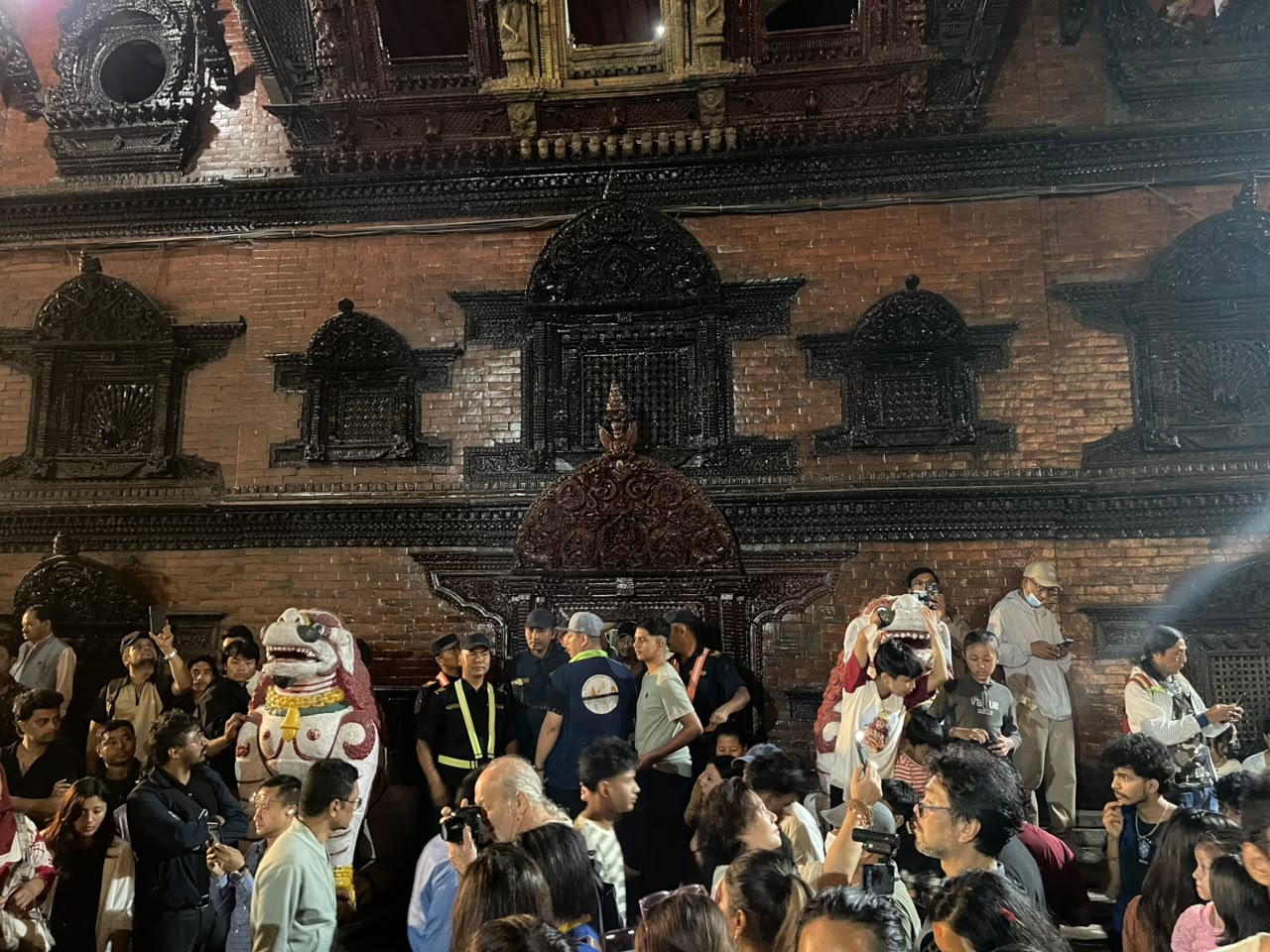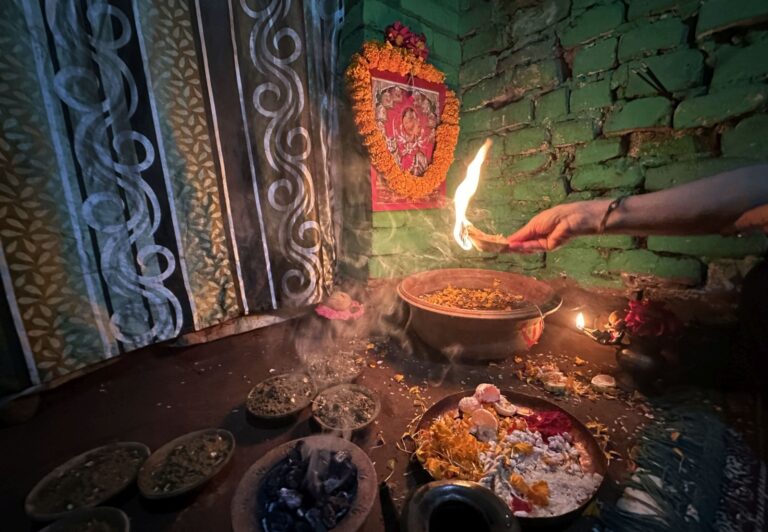
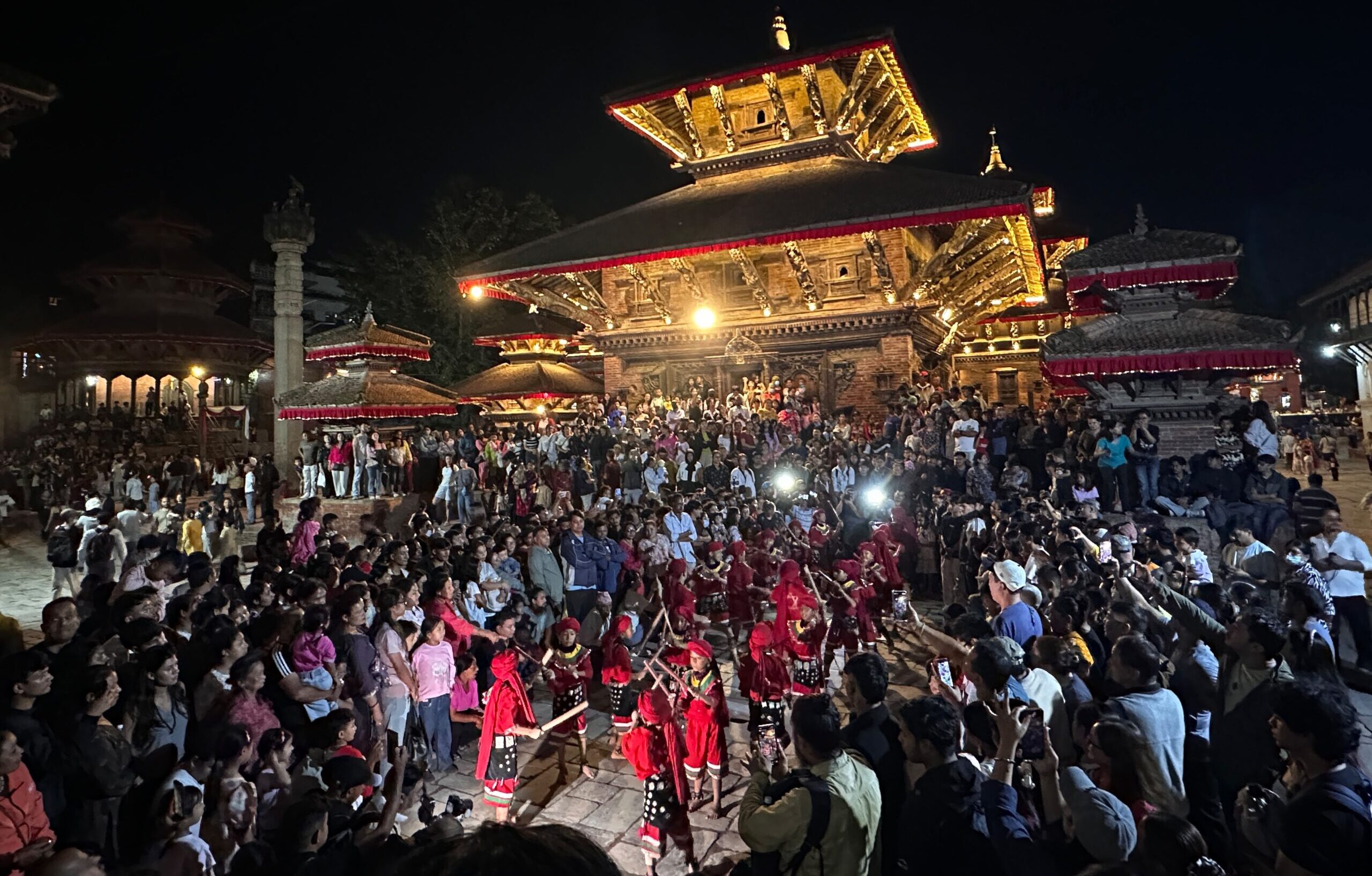
Kathmandu – The eight-day Indra Jatra (Yenya) festival began in Kathmandu with traditional religious rituals at the historic Hanumandhoka and Basantapur area. The festival formally opened with the ceremonial erection of the Indradhwaja, or Yansi, a sacred wooden pole associated with the festival. A religious ceremony involving the worship of Bhairav is performed at its base.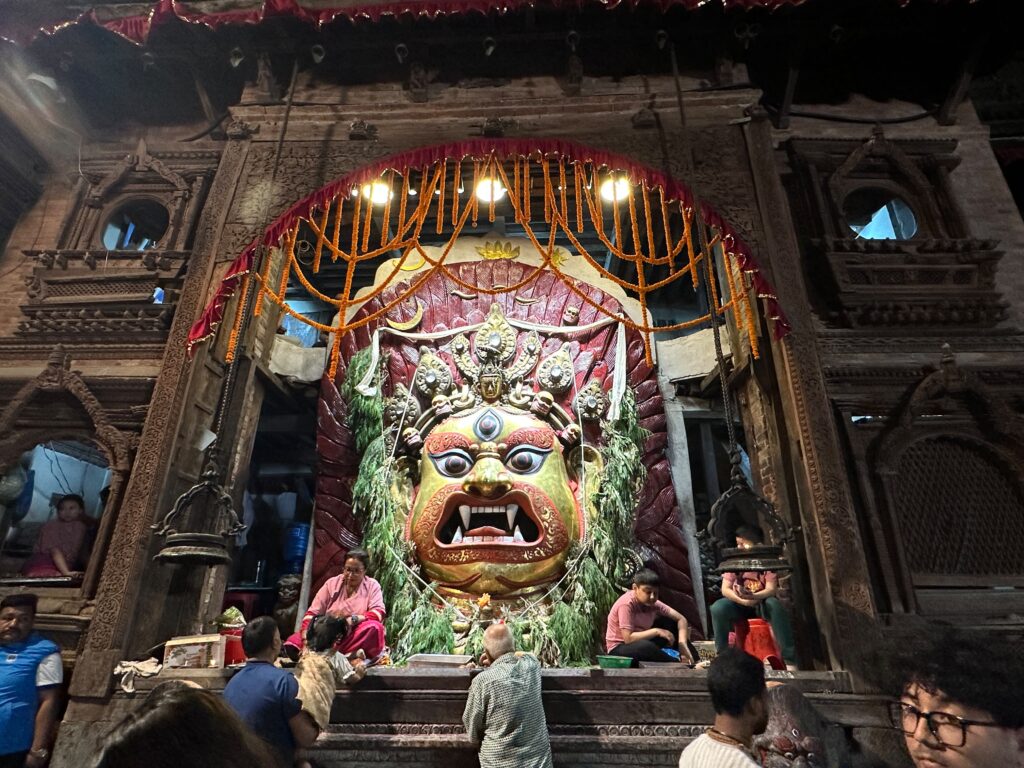
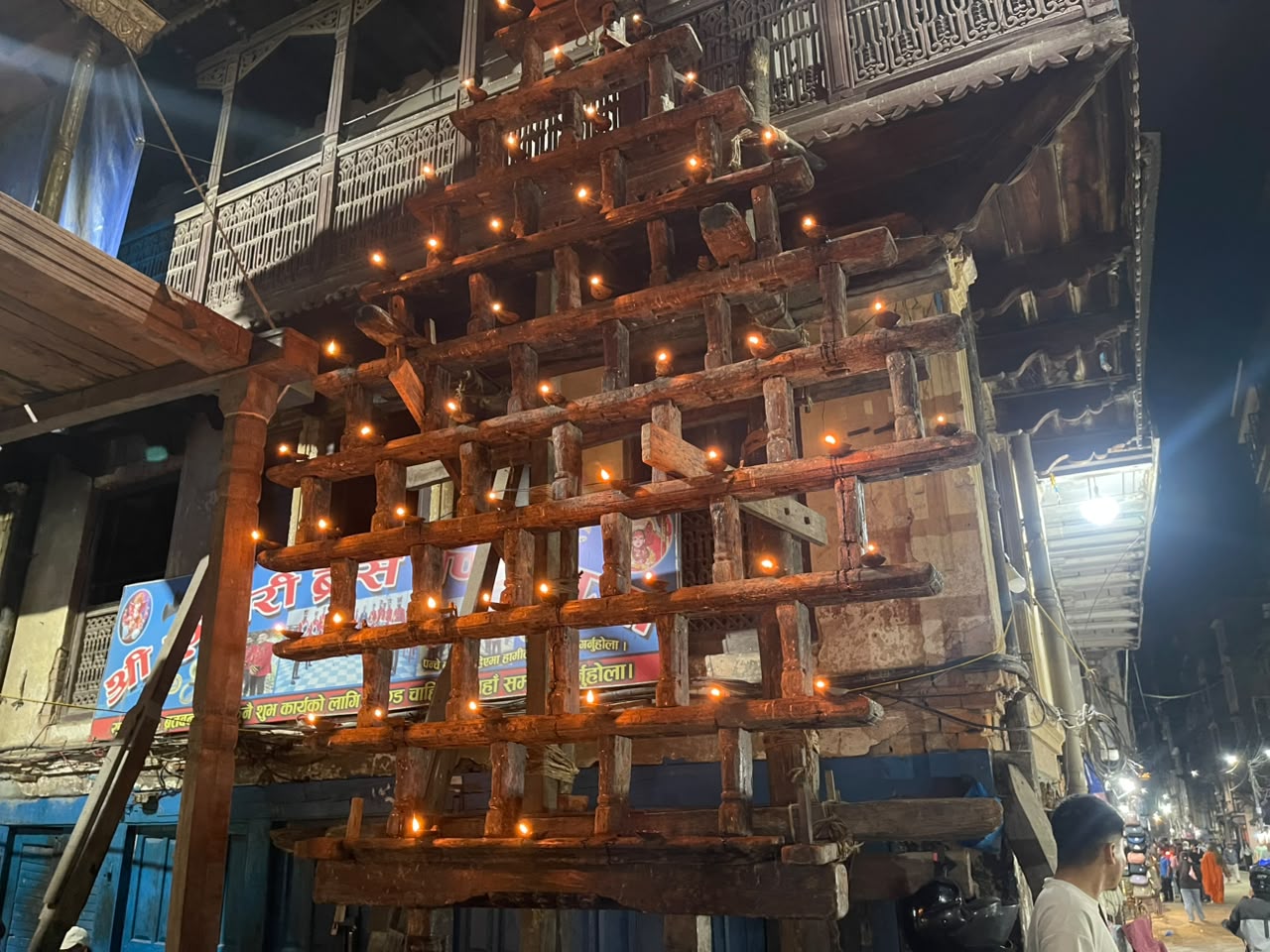
The opening day is traditionally known as Upaku, and carries a strong element of remembrance. Members of the Newar community walk through the historic parts of Kathmandu carrying butter lamps, known as Palchaa, in memory of family members and loved ones who have passed away. The practice turns the evening into a solemn observance alongside the wider festivities of Indra Jatra.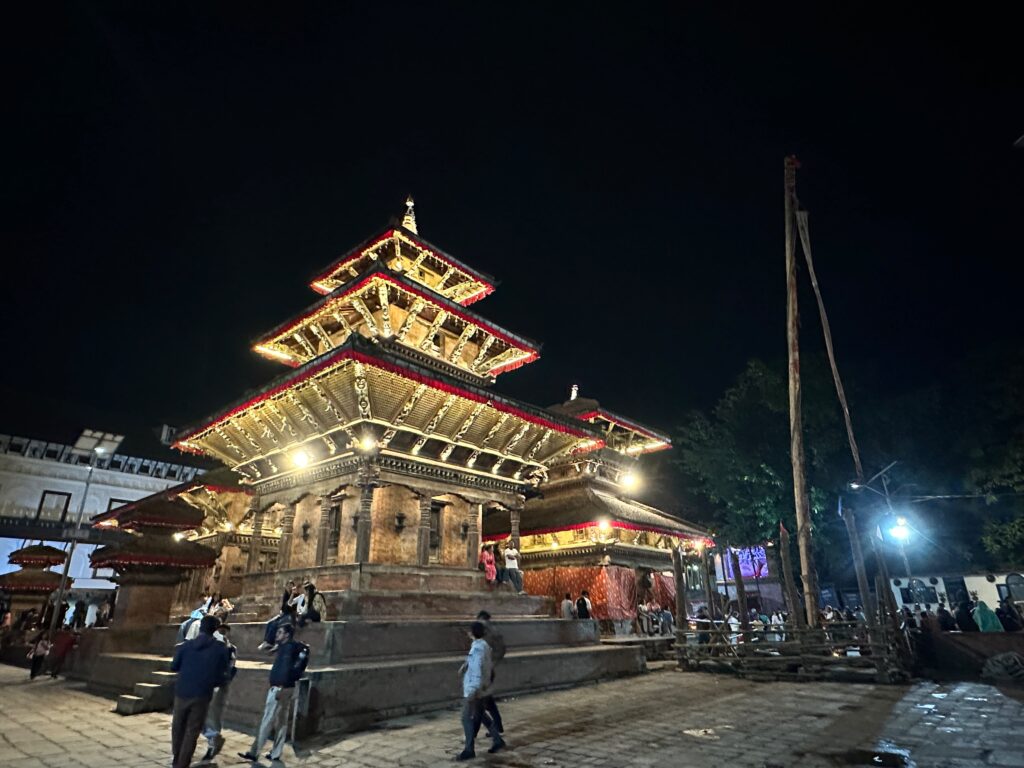
The festival also features a range of traditional religious and cultural activities, including masked dances, musical performances and processions. Among the best-known are Lakhe, Mahakali, Bhakku, Dashavatar and Pulukisi, with Pulukisi representing Airavata, the mythical elephant associated with the Hindu deity Indra.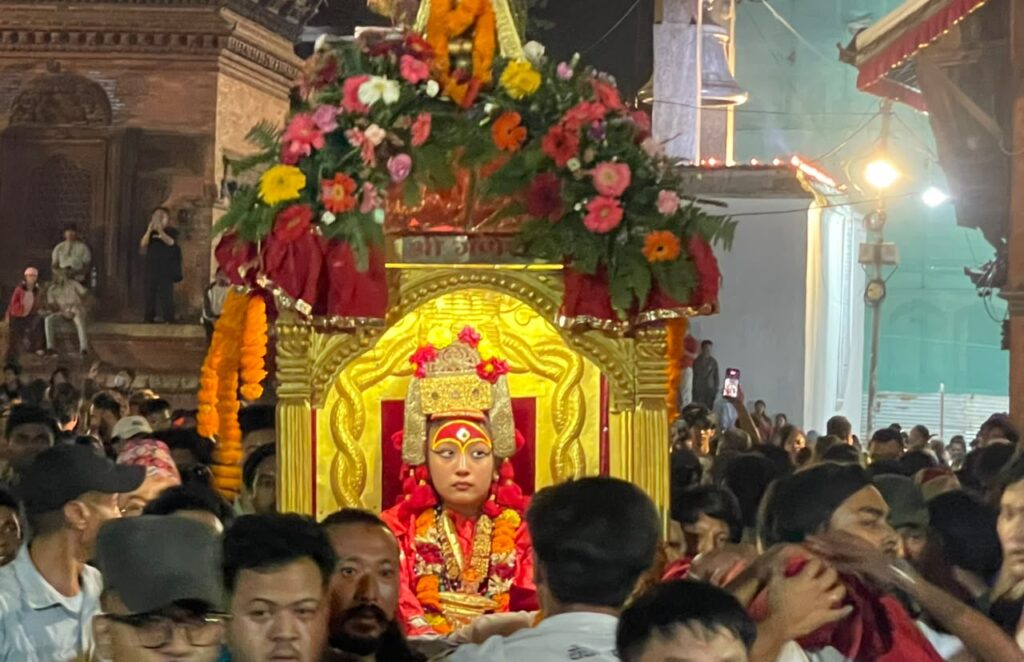
On the opening day, the Living Goddess Kumari was also carried in a palanquin to Taleju Temple within the Durbar Square complex for ritual worship. The festival’s major public chariot procession, involving Kumari, Ganesh and Bhairav, is scheduled for September 25.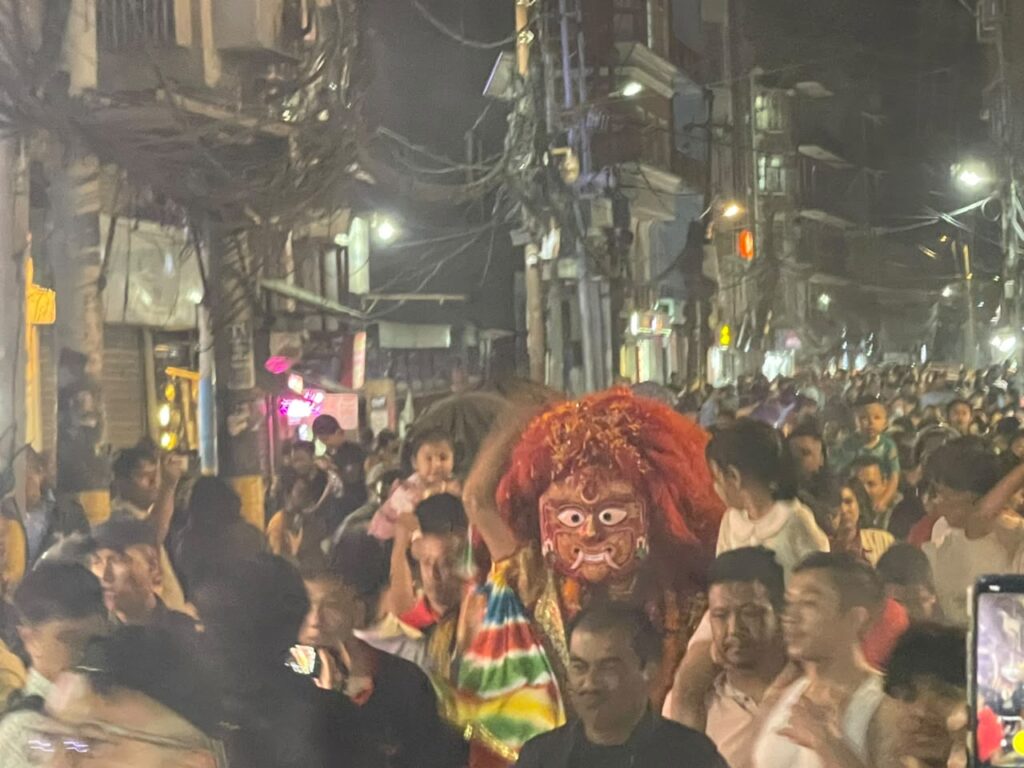
With religious rituals taking place alongside the Upaku tradition of remembrance, the opening of Indra Jatra reflects the deep cultural and religious traditions associated with Kathmandu’s historic Newar community.