Dhulikhel – At a time when artificial intelligence (AI) is transforming newsrooms across the world, Nepal’s photojournalists are taking proactive steps to ensure they remain equipped for the digital future.
As world leaders, technology experts, and policymakers gather in Shanghai for the World Artificial Intelligence Conference (WAIC) 2026 from July 17–20 to discuss responsible AI governance, global cooperation, and the future of emerging technologies, a similar conversation is unfolding in Nepal’s media landscape.
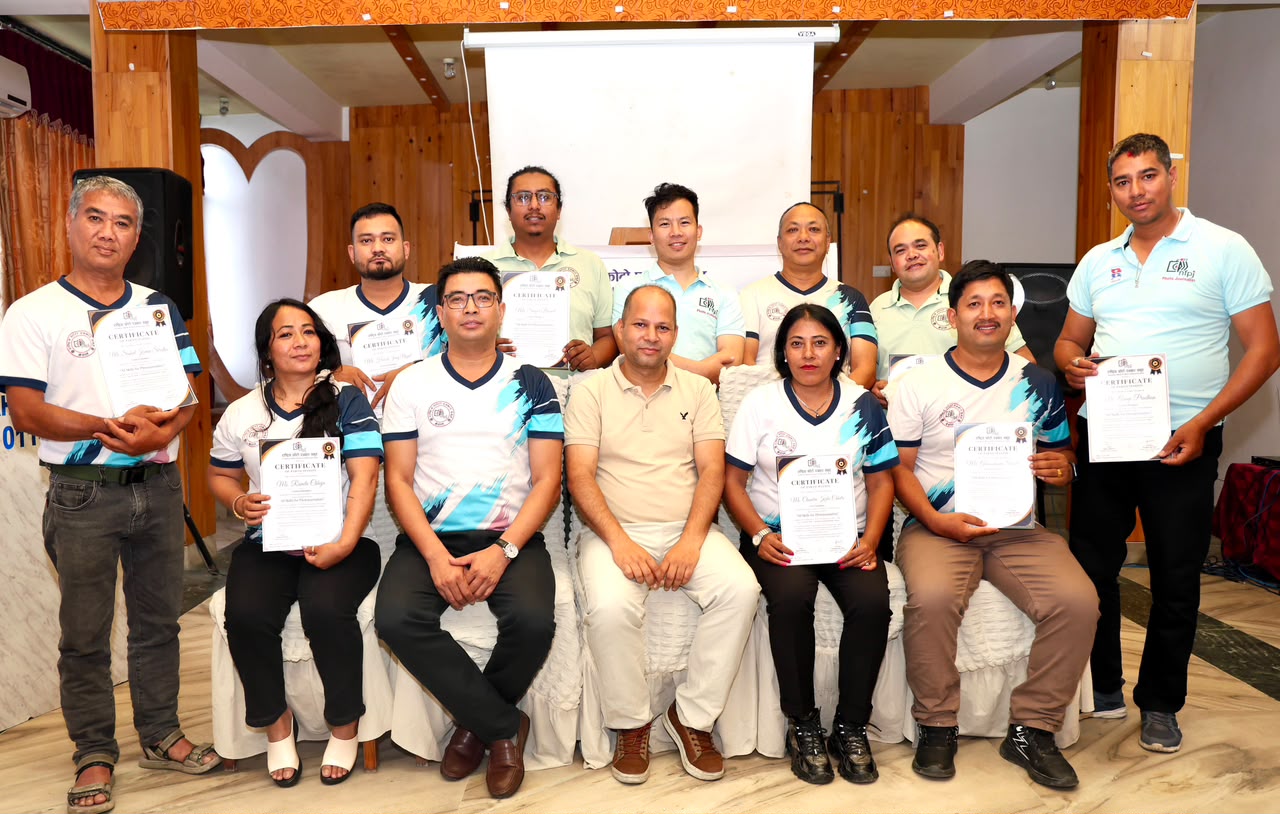
Recognizing the growing influence of AI on journalism, the National Forum of Photo Journalists (NFPJ) Nepal organized a one-day professional workshop, “AI Skills for Photojournalists: A Professional Capacity-Building Workshop,” on Saturday in Dhulikhel.
The workshop was designed to help photojournalists understand how artificial intelligence can enhance newsroom productivity while reinforcing the ethical standards that remain at the heart of professional journalism.
Members of the NFPJ Nepal Central Executive Committee participated in the intensive training, which combined expert presentations with practical exercises. The sessions focused on AI-assisted photo editing, digital newsroom tools, visual storytelling, news production, and the responsible integration of emerging technologies into everyday journalistic practice.
The training was facilitated by AI expert Ajay Sharma, who demonstrated how artificial intelligence can streamline newsroom workflows, improve efficiency, and support visual content creation without compromising accuracy, credibility, or editorial independence.
Addressing the closing session, NFPJ Nepal President Pradeep Raj Onta said artificial intelligence is rapidly becoming an integral part of modern journalism, making it essential for media professionals to continuously upgrade their skills.
“Technology is evolving faster than ever before. Our responsibility is not only to adopt AI but to use it ethically, responsibly, and professionally in the service of credible journalism,” Banta said.
He added that NFPJ Nepal will continue organizing technology-focused capacity-building programs and announced plans to conduct a two-day AI training program for all member photojournalists during the second week of Shrawan.
According to the organizers, the initiative reflects the organization’s broader commitment in preparing Nepal’s photojournalists for an increasingly technology-driven media environment. Beyond improving technical skills, the workshop aimed to strengthen participants’ understanding of ethical AI use, digital innovation, and the evolving role of visual journalism in the age of automation.
Participants described the training as timely, practical, and directly relevant to the changing demands of the profession. Many emphasized that continuous learning is becoming indispensable as AI reshapes how stories are captured, edited, verified, and presented to audiences.
With artificial intelligence rapidly redefining journalism worldwide, the workshop signals that Nepal’s photojournalists are not merely adapting to technological change—they are preparing to harness it responsibly while safeguarding the principles of accuracy, authenticity, and public trust that define quality journalism.