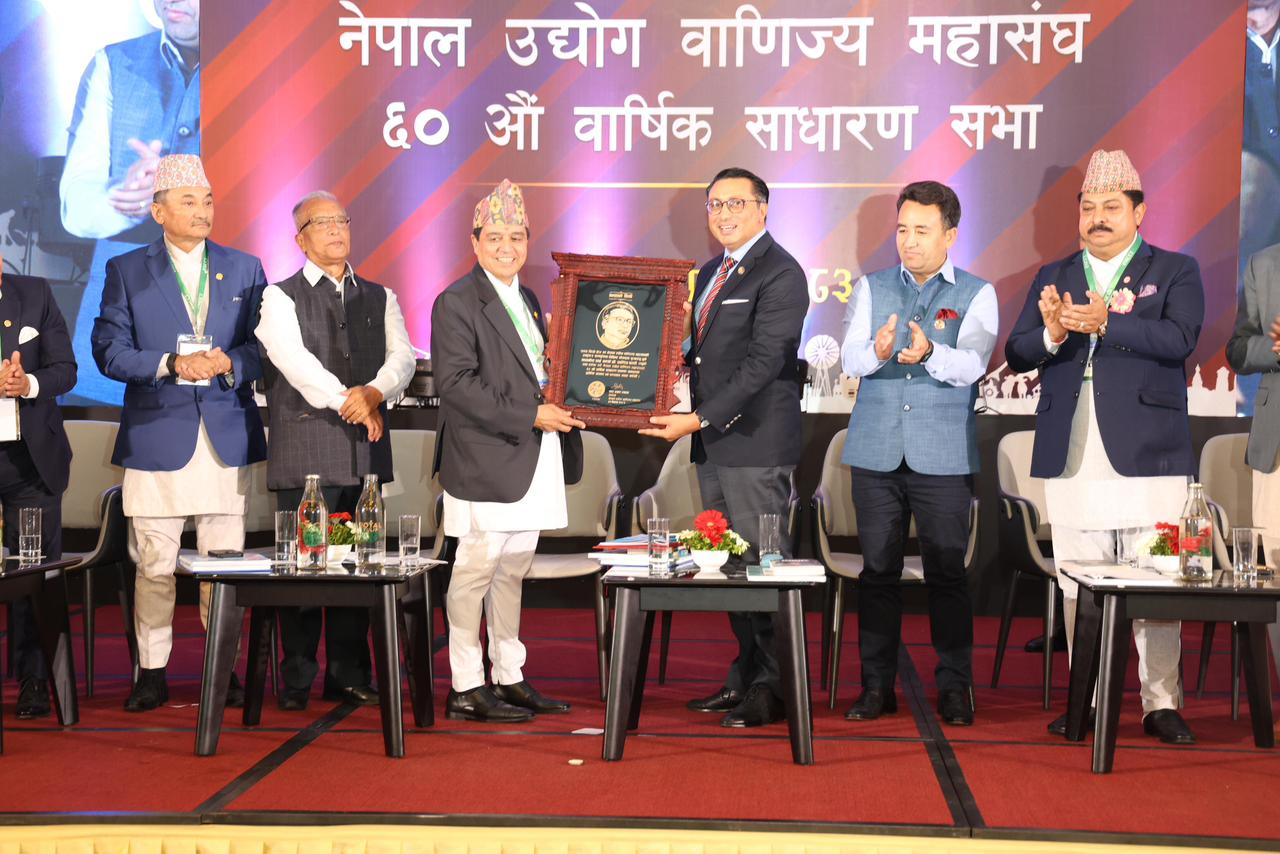
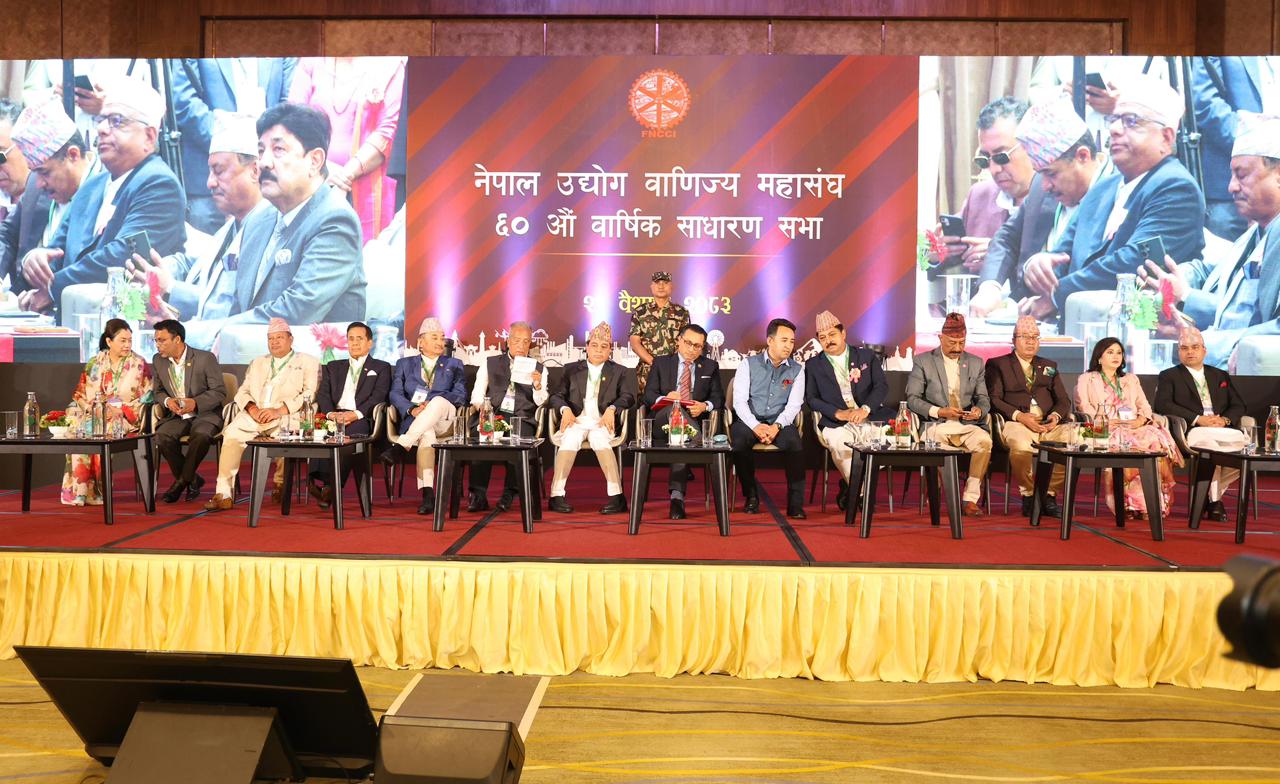
Kathmandu: President of the Federation of Nepalese Chambers of Commerce and Industry (FNCCI), Chandra Prasad Dhakal, has stressed the need to accelerate Nepal’s economic transformation through a second phase of economic reforms. Speaking at a program organized on the occasion of FNCCI’s 60th Annual General Meeting in Kathmandu today, Dhakal said the private sector has remained actively engaged in exploring new opportunities while working to turn past challenges into opportunities.
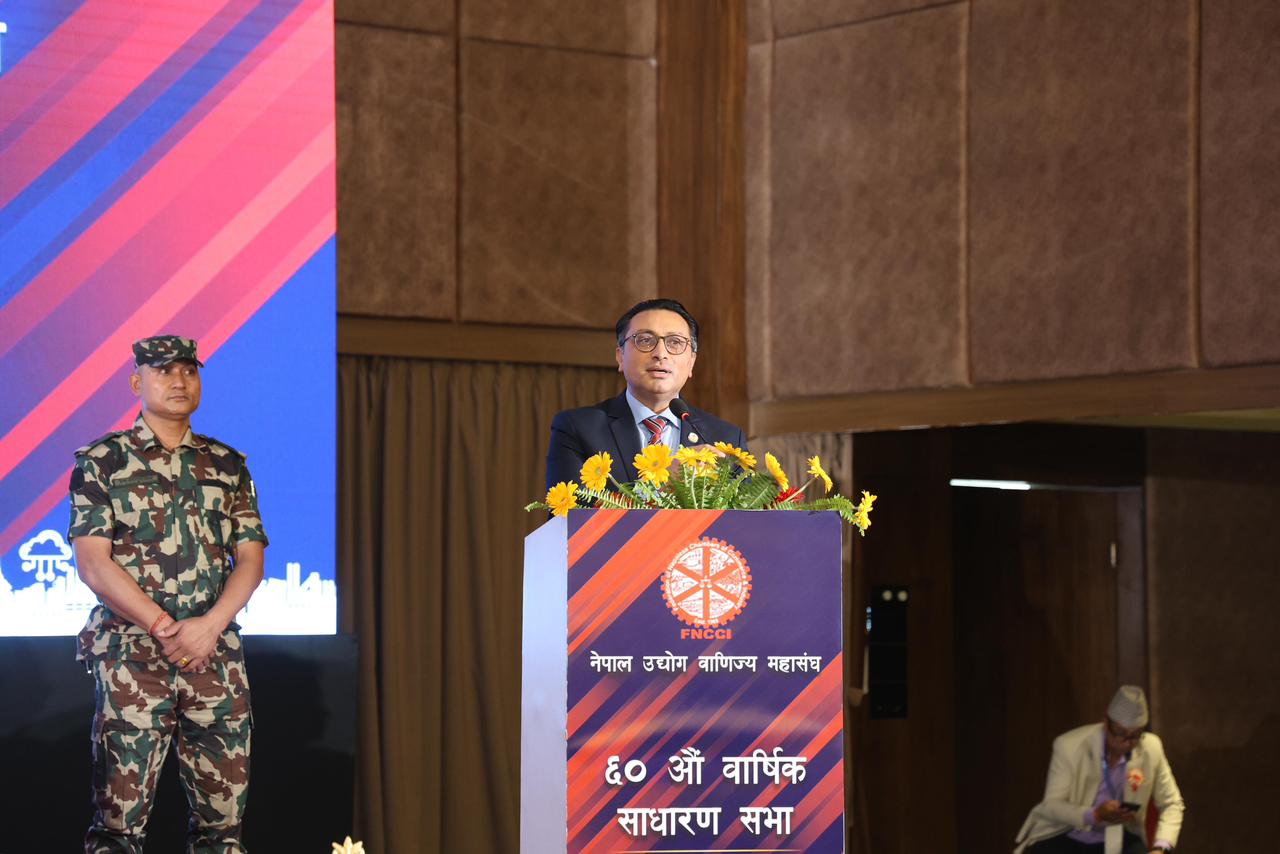
“We have tried to transform despair into hope and have been successful in many areas,” he said.Dhakal stated that the formation of a stable government following recent political changes is a positive sign for economic reform. Referring to the government’s formation with nearly a two-thirds majority, he urged that this political stability be utilized for policy consistency and national development.
Expressing gratitude for the government’s commitment to implementing strategies passed to protect and promote the private sector through FNCCI’s initiative, Dhakal said such efforts would boost the confidence of private entrepreneurs.“Private entrepreneurs need not only physical security but also assurance of policy stability,” he said.
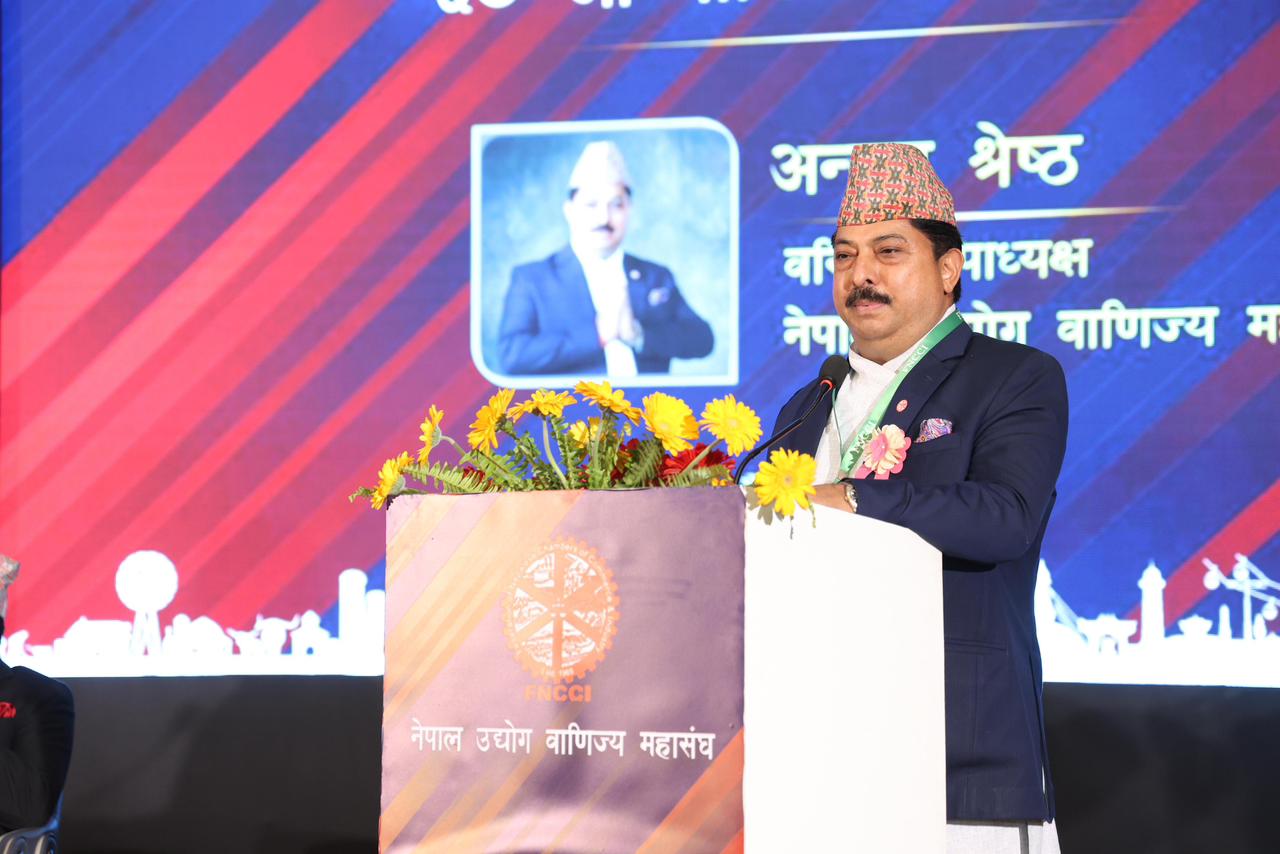
He emphasized the need to implement the recommendations of the high-level commission formed for the second phase of economic reforms and called for accelerating legal amendments, revisions, and repeals required to support economic transformation.Dhakal noted that Nepal currently has significant economic opportunities and stressed the importance of converting political stability into development and job creation.
“If the private sector is allowed to operate in a respectful and secure environment, Nepal has immense potential for rapid economic progress,” he said.Highlighting Nepal’s demographic advantage, he said the country’s average population age of around 25 and its proximity to major markets such as India and China present strong opportunities. He also pointed out that duty-free access to developed markets could make Nepali products more competitive globally.
Expressing concern over the inability to generate sufficient employment within the country, Dhakal noted that nearly 700,000 young people are forced to leave Nepal for foreign employment every year. “It is impossible to turn despair into hope without creating high-paying jobs,” he said.Comparing Nepal’s per capita income with that of South Korea, Dhakal acknowledged that while Nepal has made progress, the pace of reform has fallen short of expectations.“We have progressed, but we have not achieved results in line with our potential,” he said.
He also warned that the recent crisis in the Middle East has increased risks for Nepal’s economy, affecting tourism, remittances, and fuel costs, and stressed the need to focus on building a self-reliant economy.Dhakal said the private sector currently provides around 86 percent of total employment in Nepal and urged the government to create an investment-friendly environment.
“Excessive regulation has negatively impacted the investment climate,” he said.
Citing examples of countries such as Bangladesh, Rwanda, Cambodia, Vietnam, and Laos, which achieved rapid economic growth by encouraging private sector participation, Dhakal said Nepal should follow a similar path.
He emphasized that economic reforms should move forward through increased investment, greater use of technology, promotion of good governance, and expansion of productive sectors.Dhakal also informed that FNCCI is moving ahead with plans to establish an investment company to mobilize domestic capital.He expressed confidence that stronger cooperation between the government and the private sector could take Nepal’s economic development to new heights.