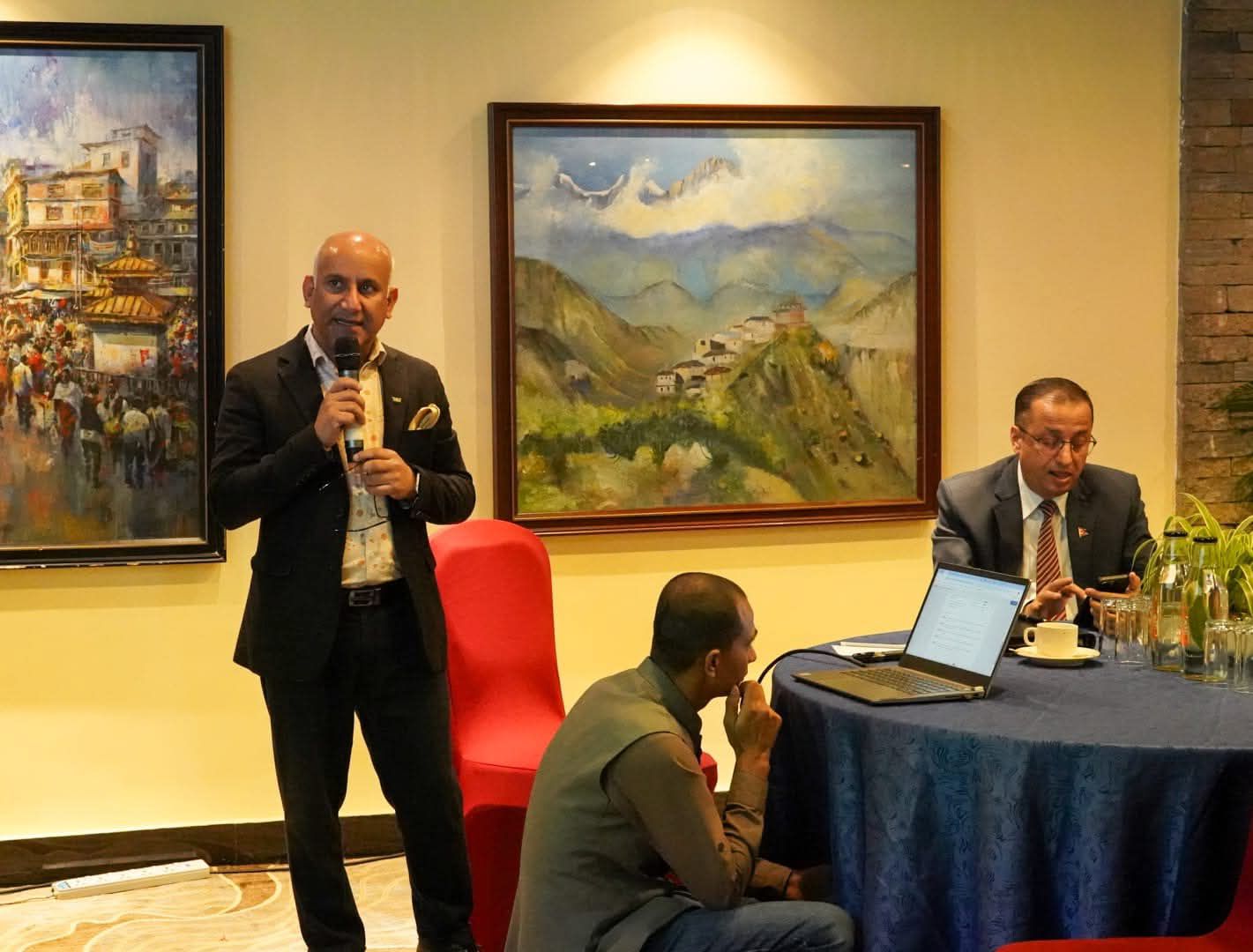
Kathmandu -Stakeholders have emphasized the need for alternative strategies to minimize the impact of the escalating crisis in the Middle East on Nepal’s tourism sector. During an interaction program titled “Middle East Crisis and Its Impact on Nepalese Tourism,” organized by the Nepal Tourism Board on Thursday, participants stressed that the situation should be viewed not only as a challenge but also as an opportunity.
Mukunda Prasad Niraula, Secretary at the Ministry of Culture, Tourism and Civil Aviation, stated that the Middle East is one of Nepal’s key source markets and also serves as a major transit hub for tourists traveling from Europe and the United States. He noted that the crisis could disrupt air connectivity and tourist arrivals. He added that the government is committed to promoting Nepal as a safe and accessible destination and has formed a special task force to outline future strategies.

Nepal Tourism Board CEO Deepak Raj Joshi presented the current status of tourist arrivals and potential impacts. Vice Chairman Ram Prasad Sapkota ‘Kamal’ highlighted the urgency of timely information dissemination and the exploration of alternative air routes. He also stressed the need to communicate Nepal’s safety to the international community and called for airfare subsidies to address rising fuel costs.
Ramkaji Khadka, Joint Secretary at the Ministry of Foreign Affairs, pointed out the growing global interdependence and said the government is working through inter-ministerial coordination to mitigate potential losses. He emphasized targeting India and China through economic diplomacy and adopting innovative approaches to seize emerging opportunities.
Board member Narendra Dev Bhatt stressed the importance of expanding alternative air connectivity, suggesting the introduction of new international routes. Similarly, NATTA President Kumar Mani Thapaliya recommended promoting routes such as Kathmandu–Hong Kong to ensure continuity in air travel.
Sagar Pandey, President of the Trekking Agencies’ Association of Nepal (TAAN), noted increasing uncertainty in travel via the Middle East and called for fuel subsidies and alternative routing options. Hotel Association Nepal (HAN) President Binayak Shah reported a rise in booking cancellations from European tourists and suggested focusing on India and China with attractive travel packages.
NATO President Bishweshwar Shrestha revealed that bookings have dropped by nearly 47 percent, warning of long-term consequences. Santosh Kumar Basnet, Director at Tribhuvan International Airport, highlighted infrastructure constraints, including limited parking and landing capacity, which pose operational challenges.
Airline representatives stated that while the crisis cannot be avoided, proactive strategies can help reduce its impact. They emphasized promoting Nepal globally as a safe, peaceful, and sustainable destination, simplifying visa procedures, and exploring new markets.
An Air India representative noted that despite rising fuel costs, no flights have been canceled and flexible booking systems have been introduced. Tourism entrepreneurs were also urged to introduce attractive packages to retain and attract travelers.
Concluding the event, Nepal Tourism Board’s Rohini Khanal expressed gratitude for the suggestions and underscored the importance of coordination and effective communication. Participants agreed that Nepal’s tourism sector can be strengthened through alternative air routes, supportive policies, targeted promotion in neighboring markets, and enhanced public-private collaboration.