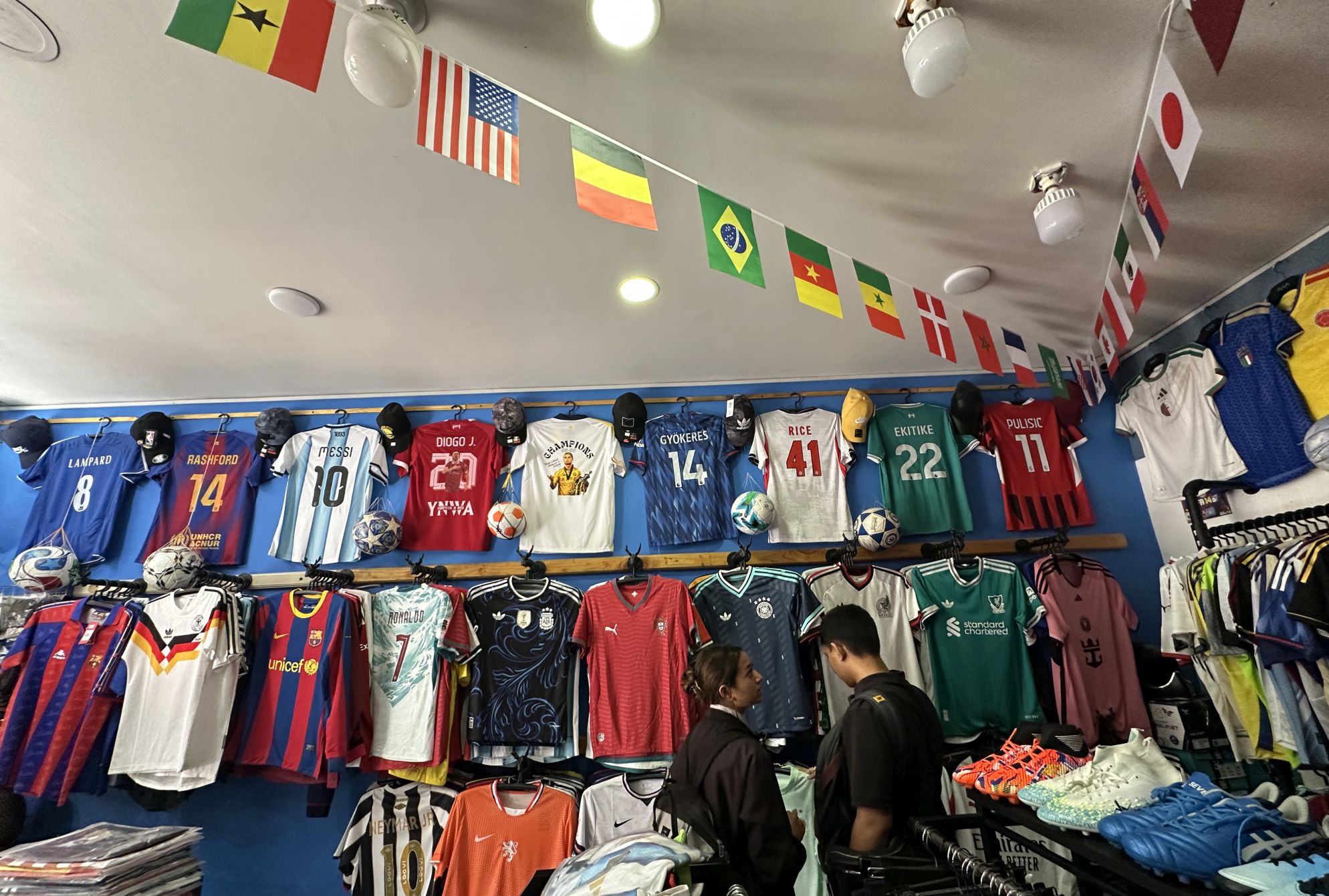
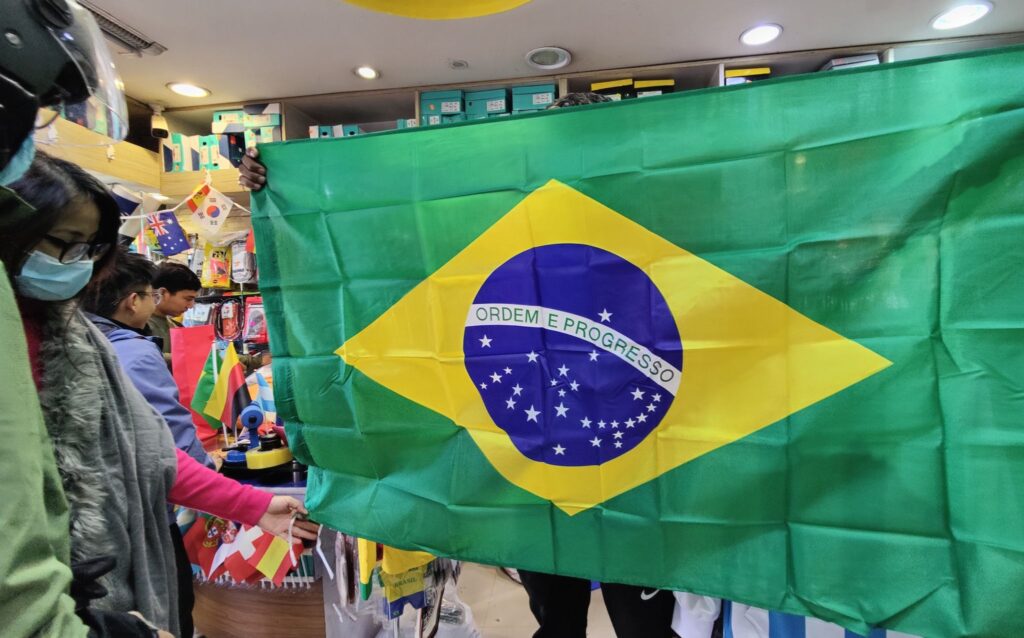
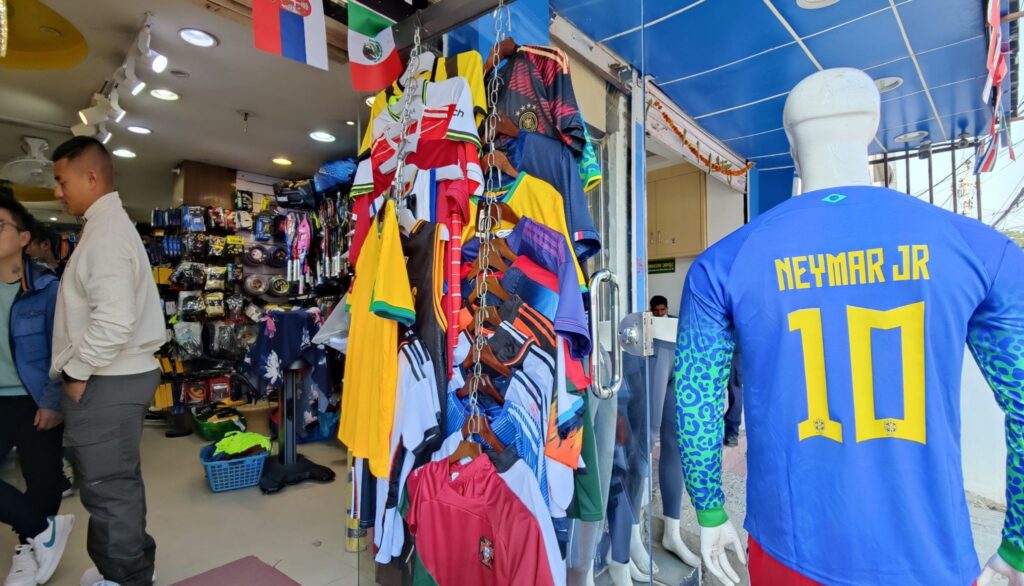
Walk through the labyrinthine, sun-drenched alleys of Mahabouddha or the bustling arteries of New Road, or Jawalakhel and you are immediately wrapped in a kaleidoscope of global football. Hanging from shop ceilings and spilling onto pavement racks are the iconic sky-blue and white stripes of Argentina, the deep scarlet of Portugal, the bright green yellow mix of Brazil and the imperial white of Real Madrid.
Kathmandu is a football mad city. Every major tournament turns the valley into a living, breathing mosaic of fandom. Yet, if you check the tags on the inner seams of these thousands of fluttering shirts, they all tell a story that has nothing to do with Buenos Aires, Lisbon, or Madrid.
They all read: Made in China.
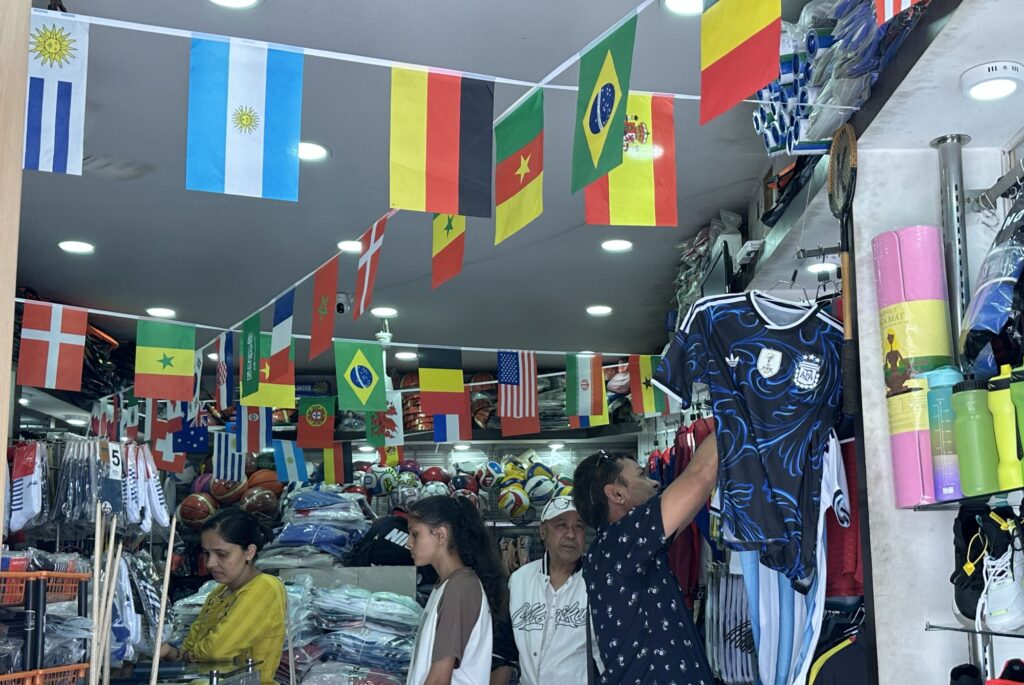
There is a glaring irony deeply stitched into this thriving economy. The Chinese Men’s National Football Team has historically struggled on the pitch, qualifying for the FIFA World Cup only once, back in 2002, where they exited without scoring a single goal. But while China cannot seem to win on the grass, it absolutely dominates the multi-million rupee business of football fandom in Nepal. When the World Cup kicks off, China is always the undisputed champion of the Kathmandu market.
Inside a cramped sports wholesale shop in Mahabouddha, Rajesh Shrestha weaves through towers of cardboard boxes freshly arrived from the Kerung border. He has been importing sportswear from China for over a decade.
“When the World Cup season nears, we don’t sleep,” Rajesh says, dusting off a neatly packed, neon-trimmed jersey. “Nepali football fans are incredibly passionate, but more importantly, they are highly discerning now. They don’t just want a cheap shirt; they want to look exactly like Messi or Ronaldo on TV.”
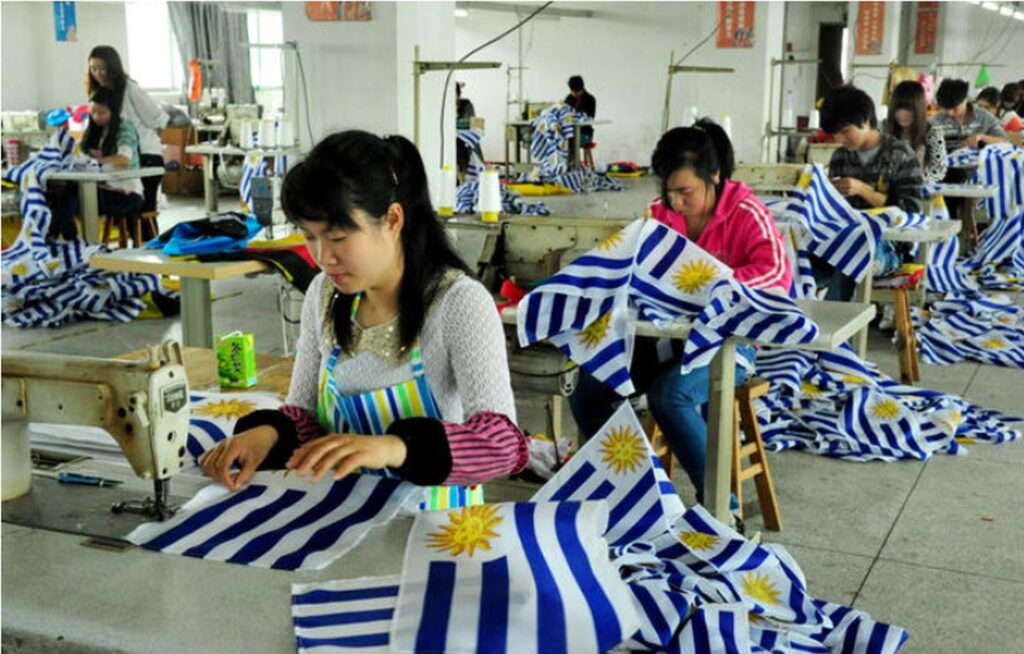 A factory producing flags for the national teams of football-playing countries at Zhejiang Wuyi Jinshi Industry Co., Ltd.
The market survives and thrives on a strict tier system manufactured entirely in Chinese industrial hubs like Yiwu and Guangzhou. “A Grade” / Fan Version costs Rs. 1,200 to Rs. 1,600 and features embroidered club crests and brand logos. It is durable, loose-fitting, and built to survive years of casual wear and repetitive washing machines. “Player Grade” costs Rs. 1,800 to Rs. 2,500 and is the holy grail for local futsal players. These feature heat-pressed rubber logos to avoid chafing, a slim-fit athletic cut, and laser-breathe holes.
“An authentic, officially licensed Nike or Adidas jersey costs upwards of Rs. 12,000 to Rs. 15,000 in authorized showrooms,” Rajesh explains. “Who can afford that casually? China gives the Nepali kid playing on a neat grass or muddy pitch, the exact same feeling of luxury for a fraction of the cost.”
The logistics behind Kathmandu’s jersey boom is a marvel of seasonal agility. Months before a major tournament begins, wholesalers in Kathmandu study European club transfers and international qualifiers.
If Kylian Mbappé moves to Real Madrid, or if Argentina wins another trophy, Chinese factories react almost instantly. Within days of a kit reveal in Europe, replication blueprints are finalized in China, and mass production begins.
From the factories, containers travel thousands of miles across mainland China, ascending the Xizang plateau to reach the Himalayan border points of Tatopani or Kerung. Once cleared through Nepali customs, they plunge into the Kathmandu Valley, instantly flooding retail stores, Instagram pages, and TikTok digital storefronts.
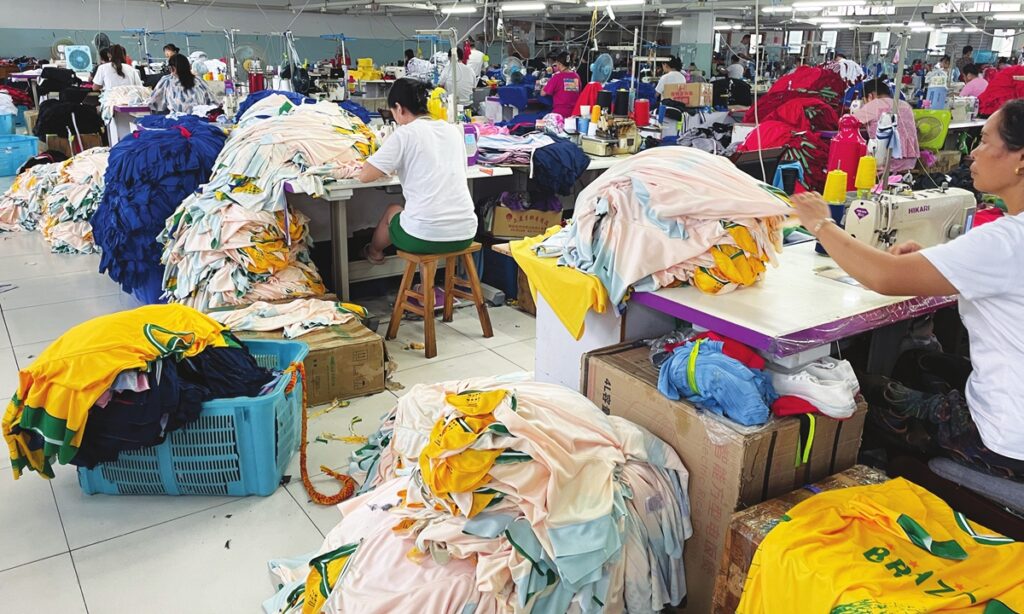 A workshop for soccer jersey in Yiwu,East China’s Zhejiang Province. Photo: Courtesy of Yiwu Danas Import & Export Co
For Chinese manufacturers, football is not a matter of national pride or sporting anxiety; it is pure, calculated data. They do not need their national team to step onto the pitch in a World Cup stadium to reap the rewards of the beautiful game.
“China understands the global supply chain better than anyone,” says Sunita Thapa, an online vendor who runs a popular Instagram T-Shirt store. “They don’t care who wins the match. Whether Brazil wins or Germany wins, China prints the shirts, exports the flags, and collects the revenue.”
Sunita points out that during tournament months, her daily sales skyrocket from five jerseys a day to over fifty. “The demand is so high that sometimes the border transport can’t keep up. If a particular team goes on a winning streak, that specific color sells out across Kathmandu in 24 hours.”
As dusk falls over Kathmandu, the floodlights of local futsal courts flicker on. Young Nepalis, dripping with sweat, sprint across artificial turf. They yell in Nepali, but their bodies are wrapped in the colors of the world. One kid sports a pristine black-and-gold Germany kit; another chases him down wearing the vibrant yellow of Brazil.
Neither Nepal nor China may be hosting the FIFA World Cup trophy on the pitch anytime soon. But on the backs of Kathmandu’s youth, and in the pockets of the city’s merchants, China’s football empire remains completely undefeated.