A difficult journey, a determined relief team and a grieving family reveal both the power of solidarity and the gaps in Nepal’s disaster response
Rasuwa — The road to Rasuwa is difficult to describe as a road at all.
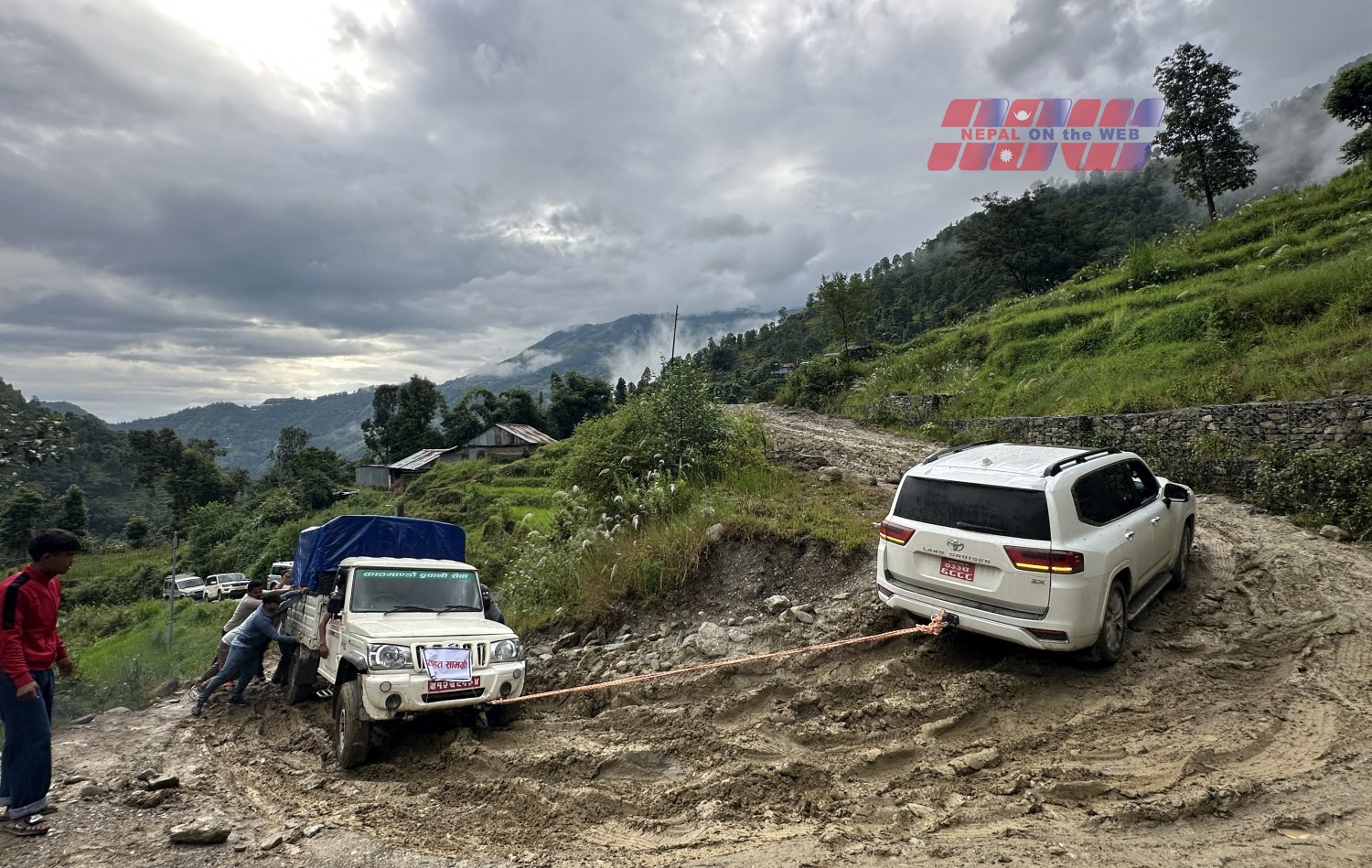
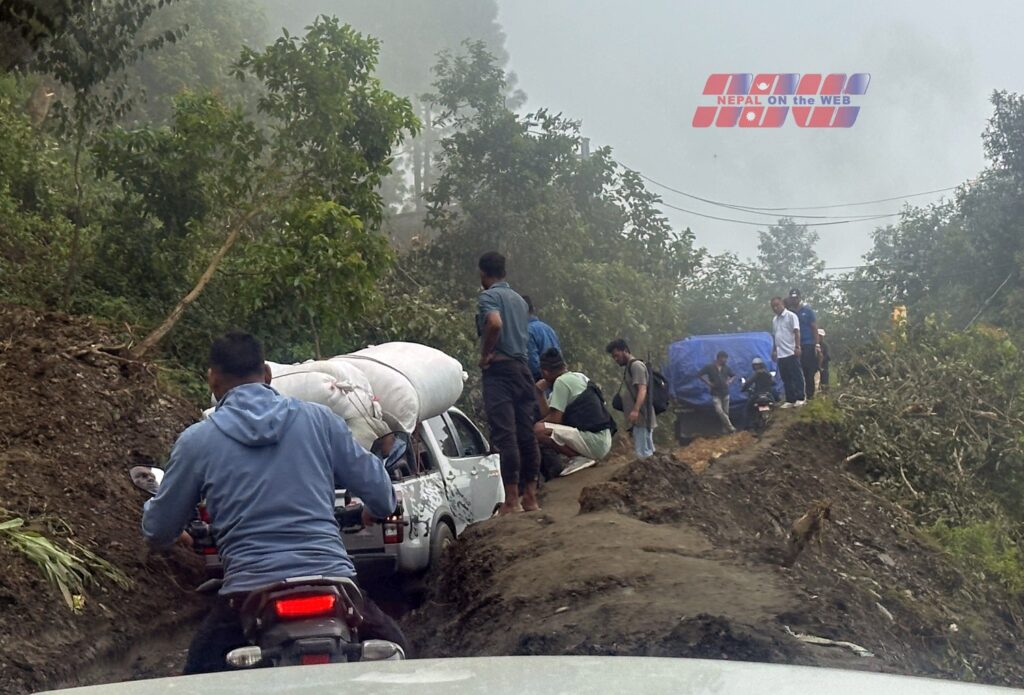
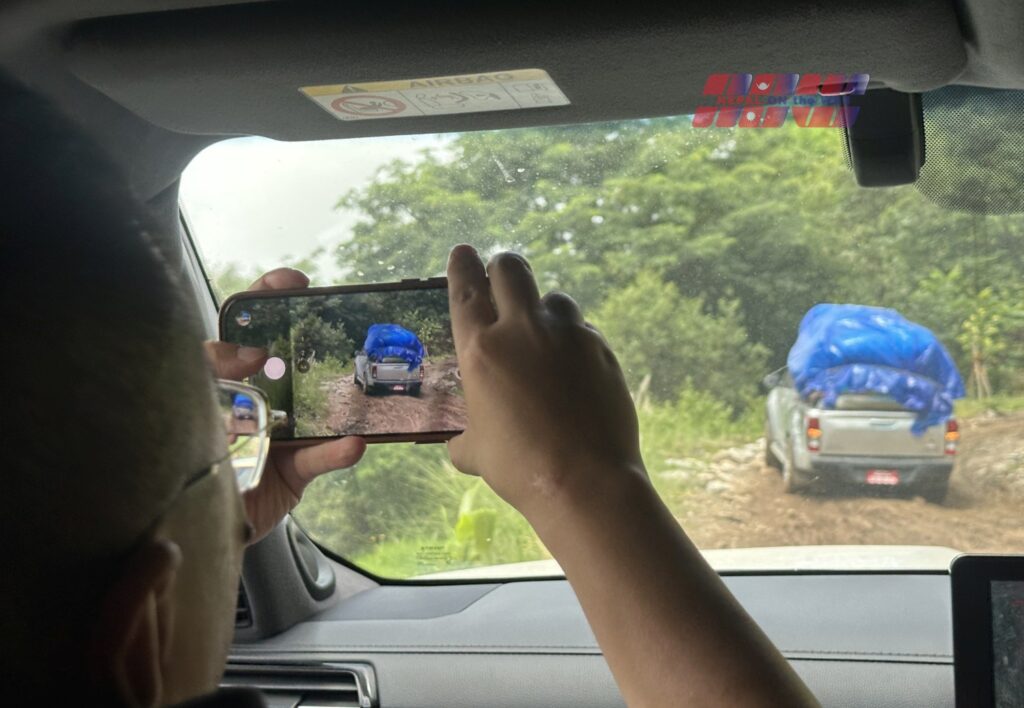
Days after devastating flash floods swept through the district, sections of the route remain muddy, damaged and hazardous. Vehicles crawl through deep ruts and loose gravel. In some places, one vehicle must pull another with a rope simply to keep the journey moving.
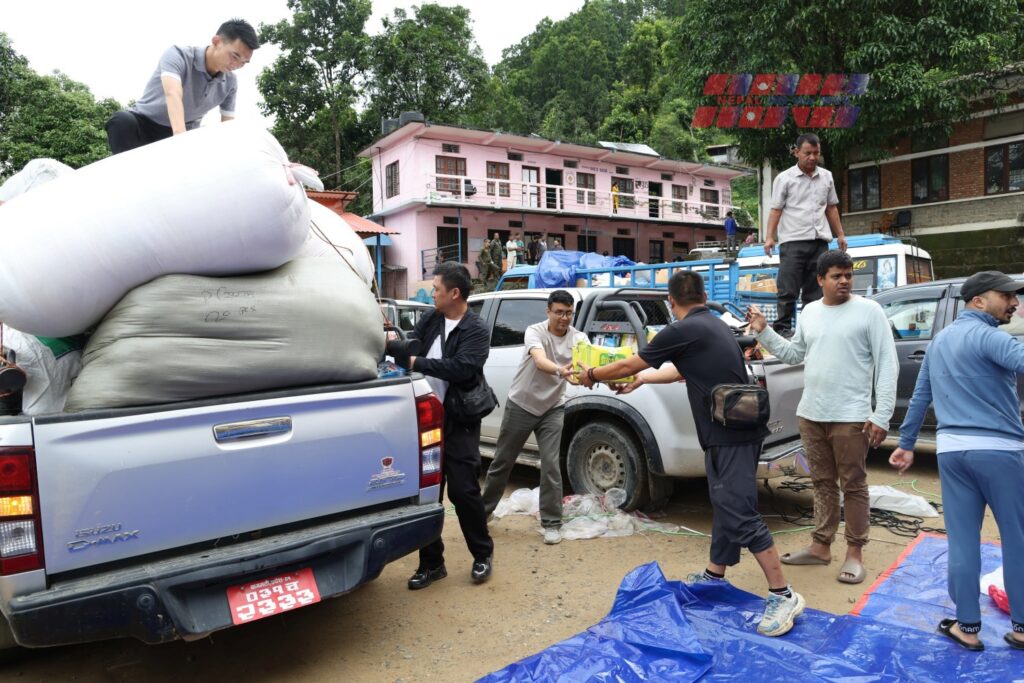
But on September 3, the difficult road did not stop a group of Nepali and Chinese people from carrying relief supplies to flood-affected communities.
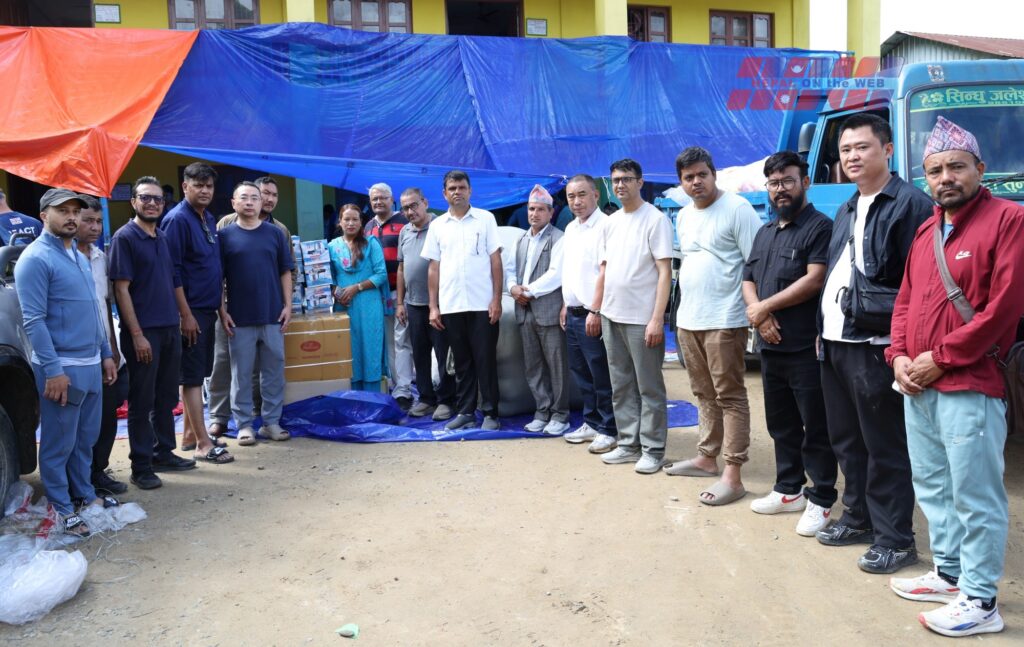
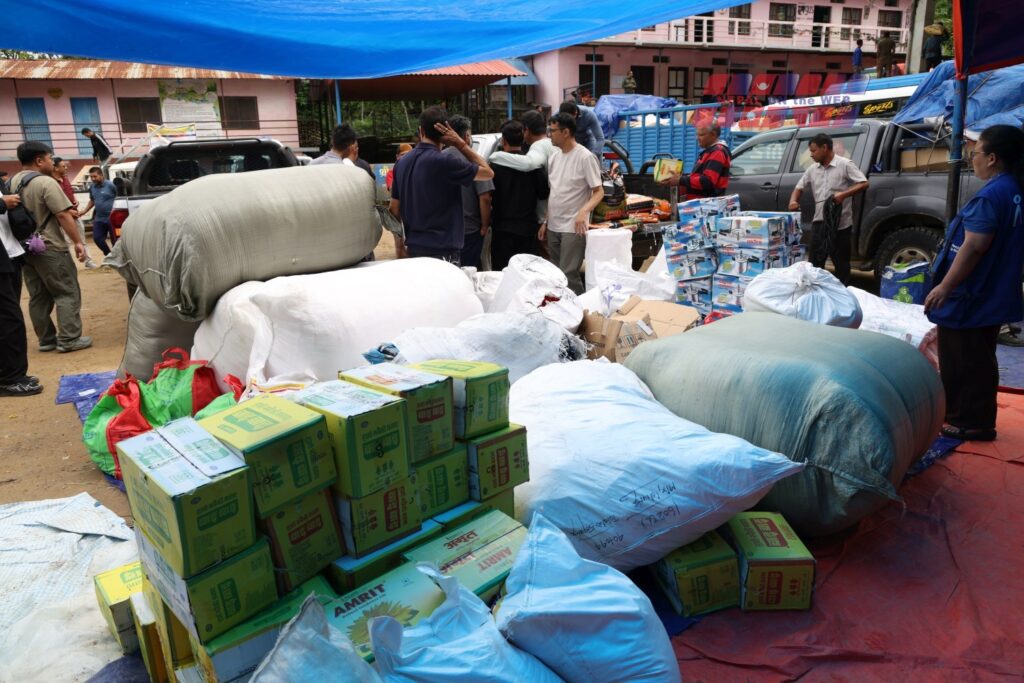
Their vehicles were loaded with essential materials collected for families still struggling to recover from the disaster. The journey was slow and physically demanding, but the team continued toward Uttargaya Rural Municipality.
At one point, the condition of the alternative road became a symbol of the challenges facing people trying to reach the affected communities. A vehicle carrying supplies had to be pulled through the muddy track.
The team eventually reached Uttargaya Rural Municipality 5 , where the relief materials were handed over to local authorities for distribution to flood-affected residents.
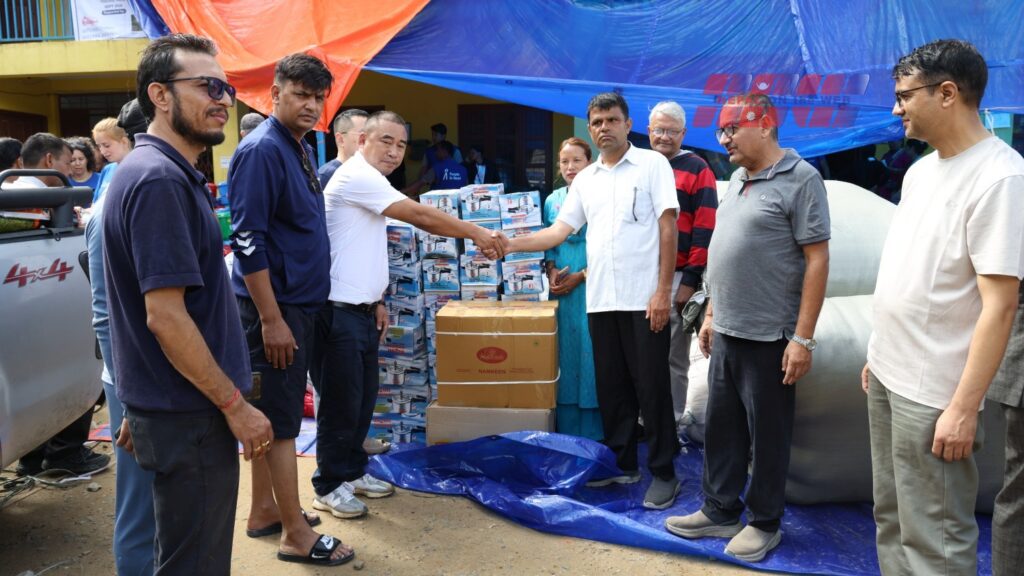
The supplies were not merely symbolic. They included everyday necessities needed by families whose lives have been disrupted by the floods — items that can make an immediate difference to people who have lost homes, belongings or their means of livelihood.
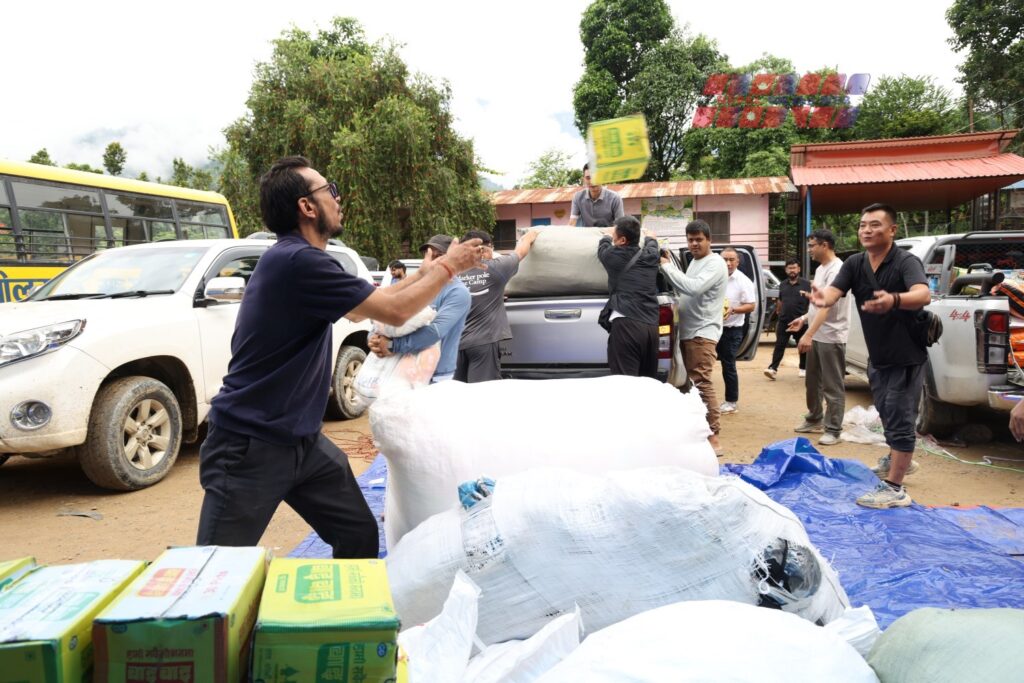
From the road to the people
The handover was more than a formal exchange of boxes and sacks.
Behind every package was a family waiting for help.
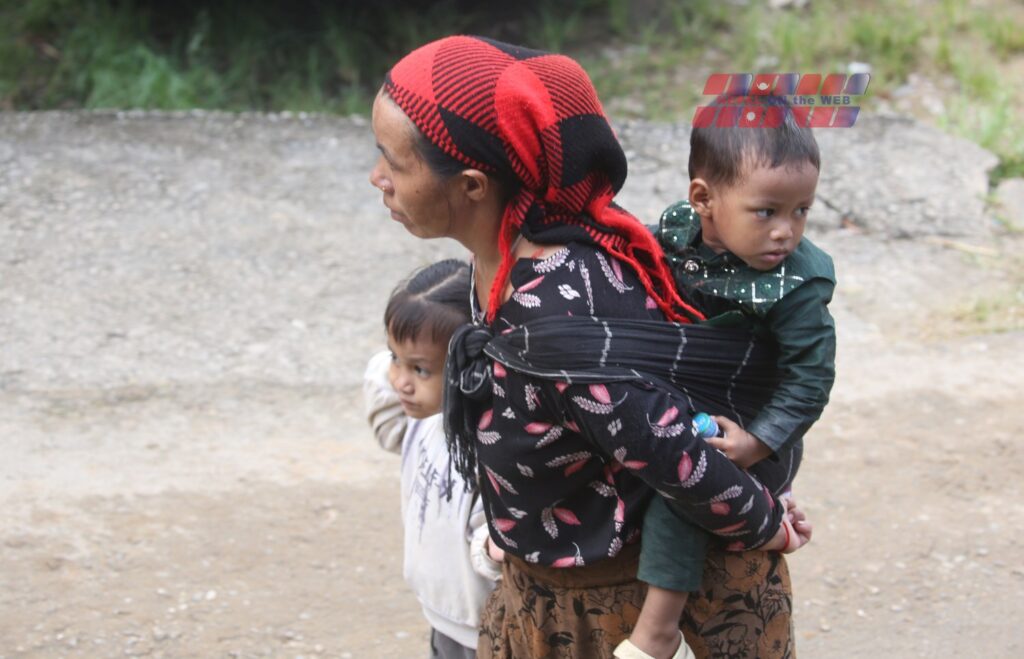
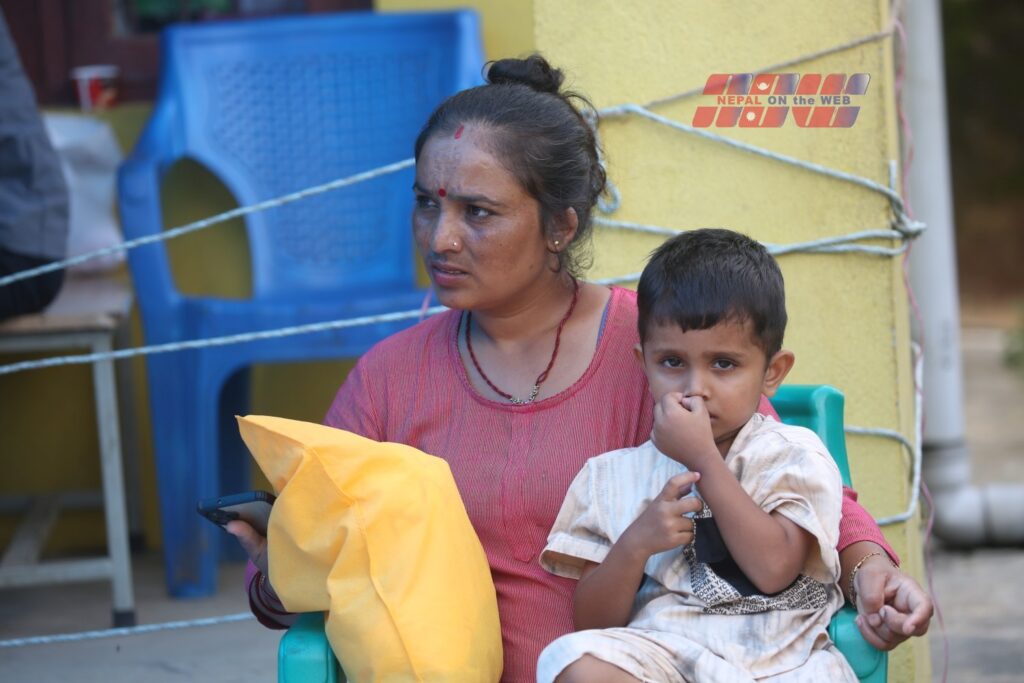
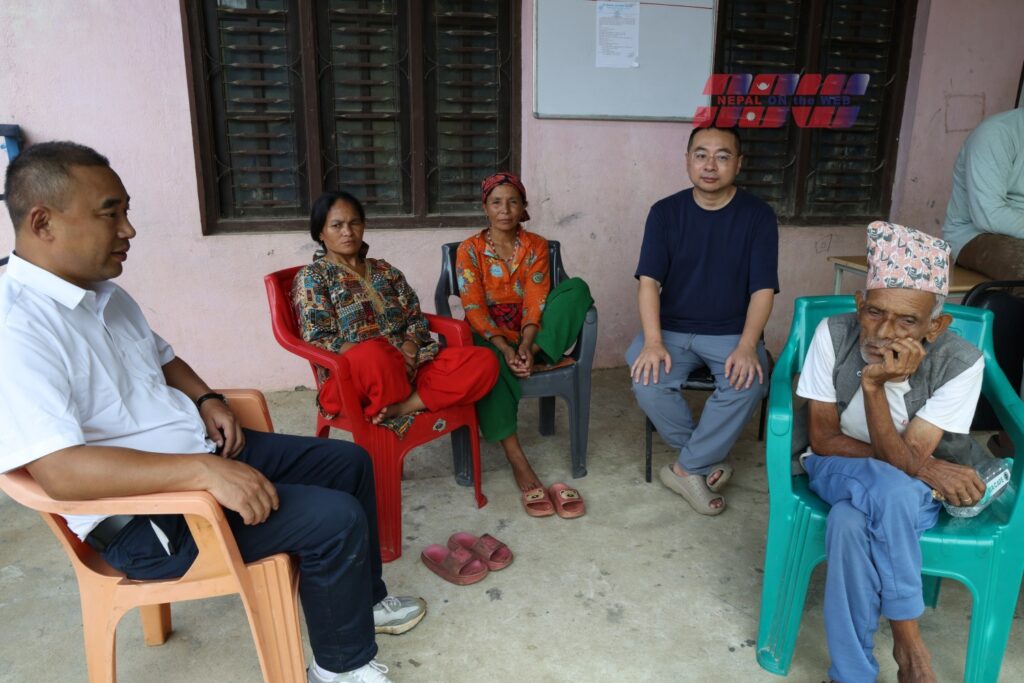
Among those the team sought to support was a woman caring for two small children after losing her husband near the Nepal-China border. Her grief is personal, but it is also part of a much larger story unfolding across flood-hit Rasuwa.
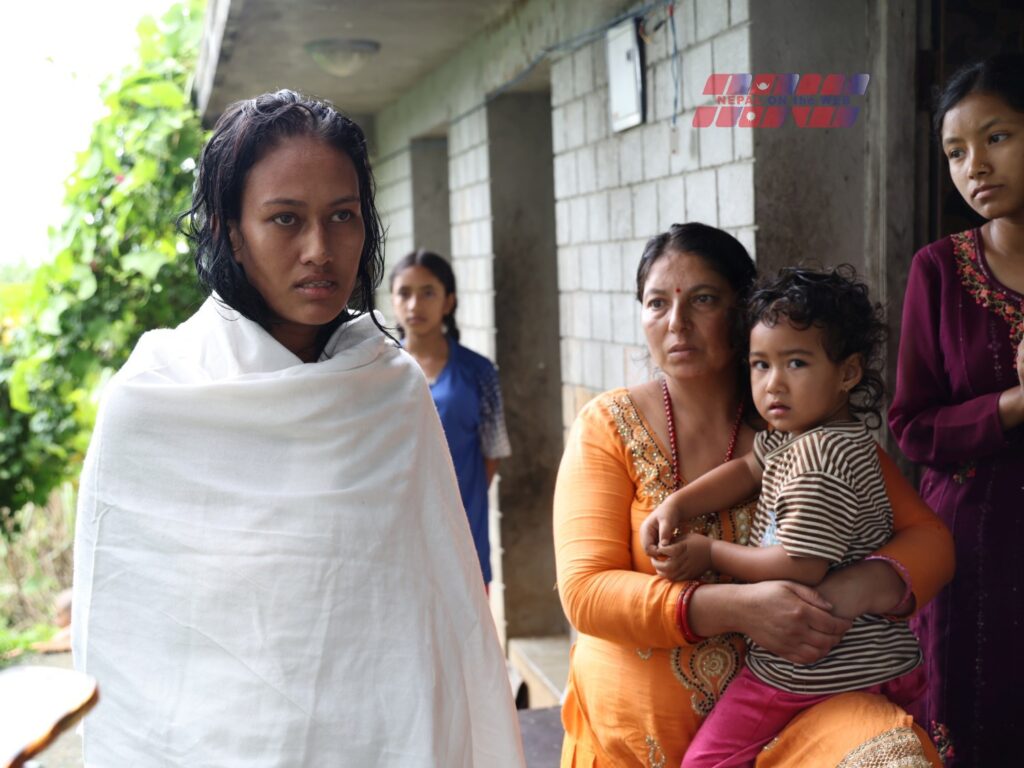
For families like hers, the disaster did not end when the floodwaters receded.
The days afterward brought uncertainty — finding shelter, securing food and essential supplies, searching for missing relatives and trying to understand how life could continue after such a sudden loss.
The relief team could not undo what had happened.
But it could offer something tangible: support.
A road through beauty and destruction
The journey also revealed a striking contradiction.
Rasuwa remains one of Nepal’s most beautiful mountain regions. Green hills rise above the road, mist hangs around the mountains and the landscape remains breathtaking even after disaster.
But beneath that beauty, communities are struggling.
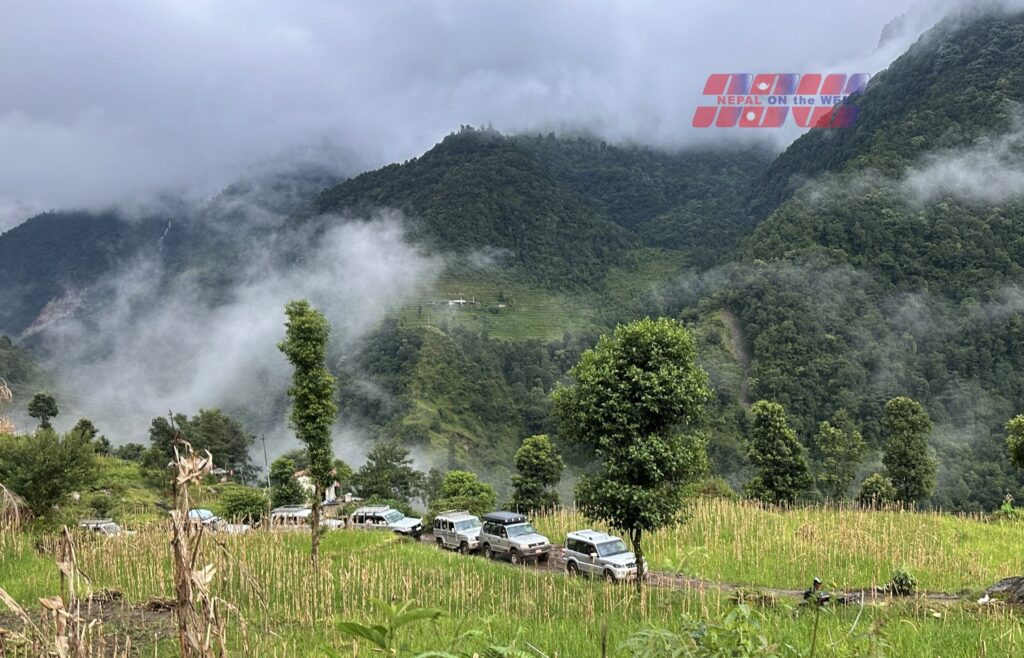
The contrast is difficult to ignore: nature can look peaceful while people below are dealing with loss, damaged infrastructure and uncertainty.
For the relief team, however, the difficult journey became part of the message.
The road was difficult. The willingness to help was not.
They travelled because people were waiting.
But why must victims wait for the road?
The journey raises a bigger question about Nepal’s disaster response.
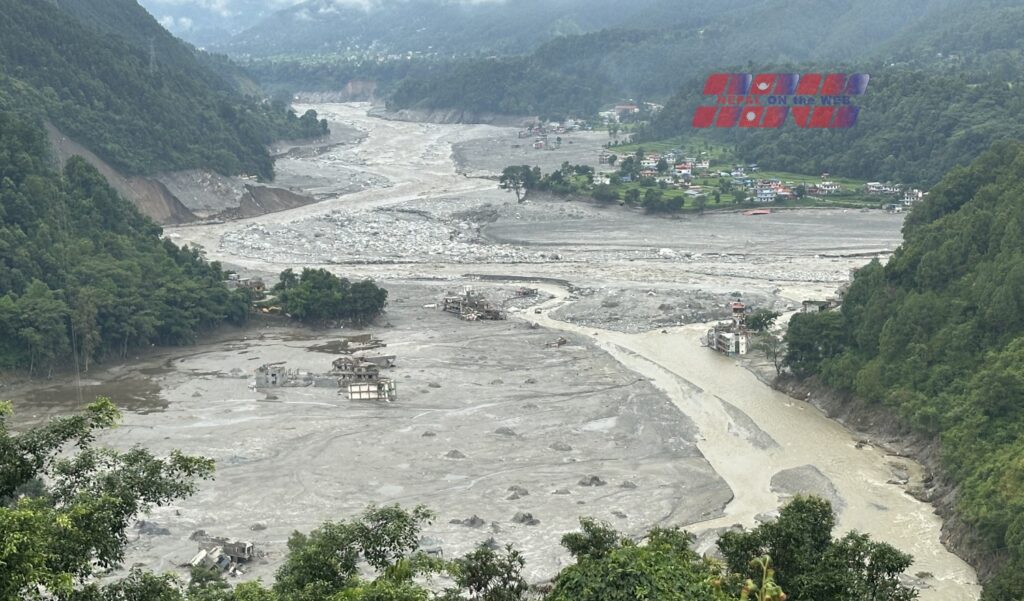
More than 10 days after the flash floods occur in Nepal China border, access to several affected areas remains difficult. Roads are damaged and communities continue to depend on limited routes for essential supplies and services.
Simply placing a JCB excavator on a damaged road cannot be the full measure of disaster response.
Heavy machinery can clear debris and reopen a passage. But disaster-hit communities need much more: food, shelter, medical assistance, communication, transportation, search and recovery operations, and sustained support.
When a road becomes the only lifeline connecting survivors to assistance, repairing that road should be among the most urgent priorities.
The people who travelled to Rasuwa demonstrated that difficult terrain does not necessarily prevent assistance from reaching those in need.
Which leaves a troubling question:
If ordinary people and relief volunteers can find a way through a broken road to deliver help, why should disaster victims have to struggle so long to receive it?
A road to the heart
The journey to Rasuwa was not simply a journey carrying relief supplies.
It was a journey of solidarity — Nepali and Chinese people travelling together to stand beside families facing one of the hardest moments of their lives.
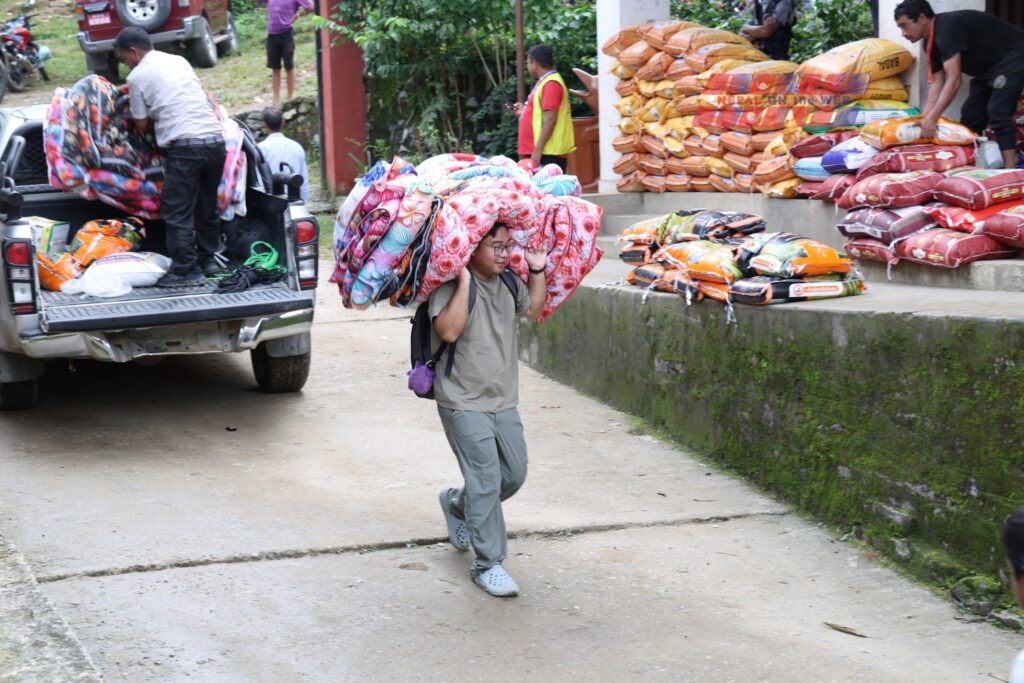
The vehicles may have struggled through mud and broken tracks. They may have needed ropes to get through.
But the purpose of the journey remained clear.
The road to Rasuwa may be broken. The road to a pure heart should not be.
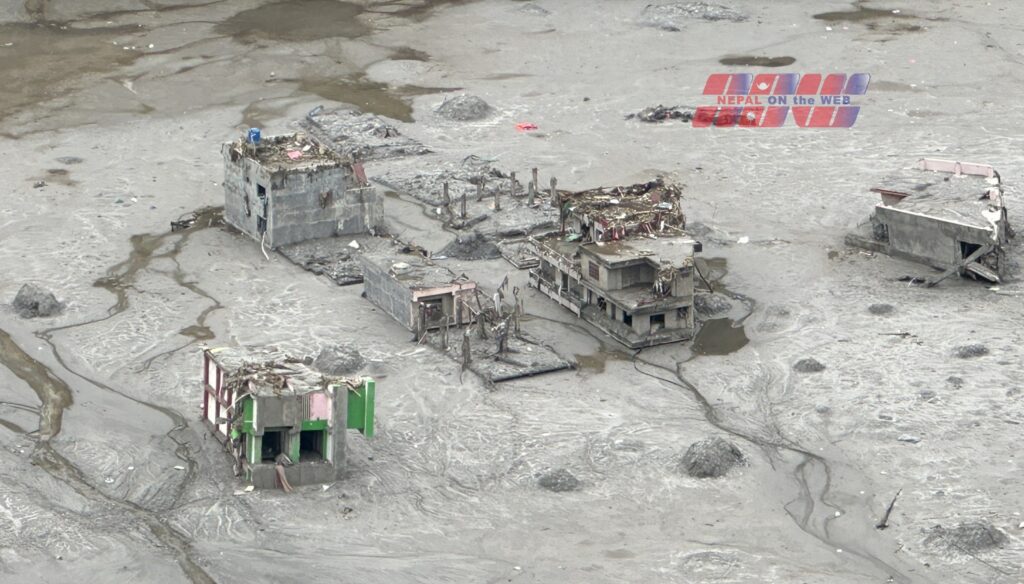
And perhaps that is the most powerful lesson from the journey: compassion can reach places where roads cannot — but compassion alone should never have to substitute for an effective disaster-response system.