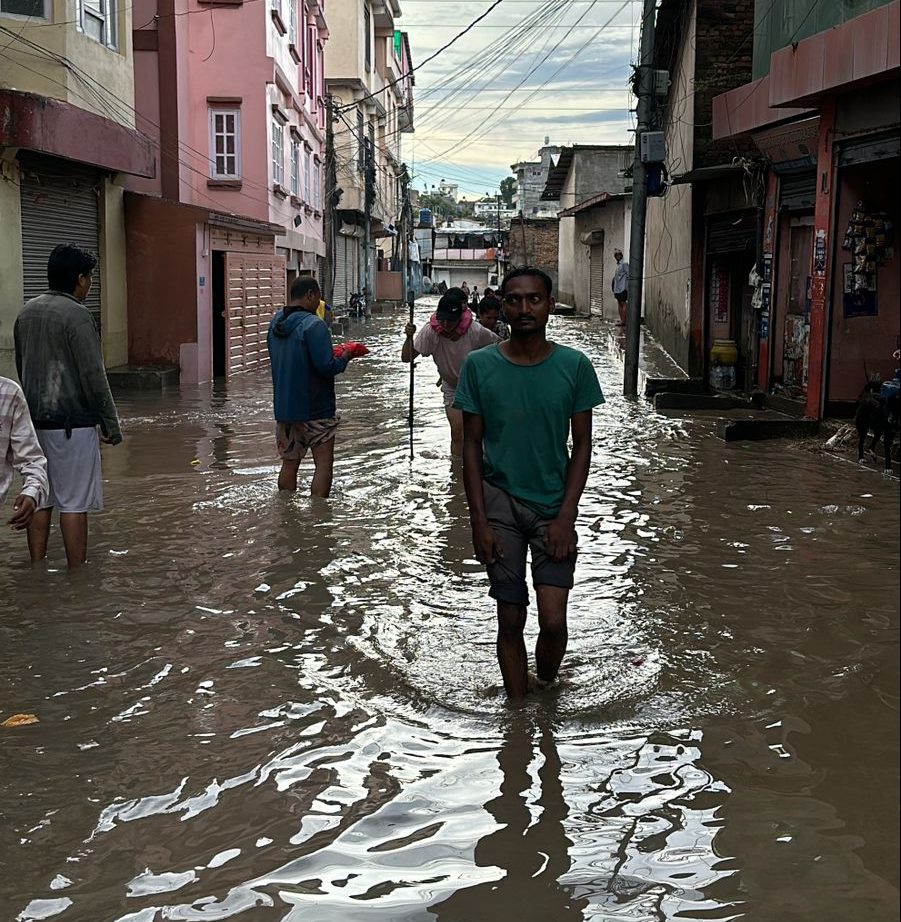
Kathmandu-Travelers heading to several parts of Nepal are advised to remain alert as continuous rainfall since Thursday night has increased the risk of flash floods, landslides, and road disruptions across the country.
The Meteorological Forecasting Division has forecast moderate to heavy rainfall throughout the day and into the evening, urging the public to exercise caution while traveling, particularly through hilly and flood-prone areas. Those with non-essential travel plans are encouraged to monitor weather updates and road conditions before beginning their journey.
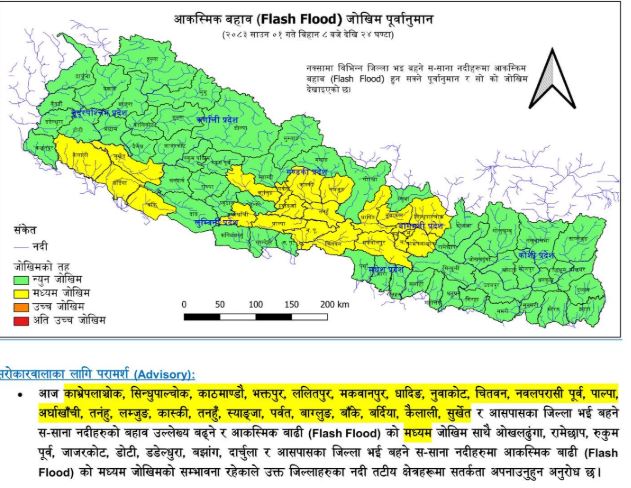
According to the Flood Forecasting Division, rivers and streams in Kathmandu, Bhaktapur, Lalitpur, Kavrepalanchok, Sindhupalchok, Makwanpur, Dhading, Nuwakot, Chitwan, Rasuwa, Gorkha, Tanahun, Lamjung, Kaski, Syangja, Parbat, Baglung, Nawalparasi East, Palpa, and Arghakhanchi are at an increased risk of flooding due to continuous rainfall.
The division has also identified Rukum East, Jajarkot, Dang, Dailekh, Surkhet, Doti, Achham, Bajhang, and Bajura as districts facing heightened flood risks.
Meanwhile, residents and travelers in Bhojpur, Khotang, Okhaldhunga, and Ramechhap have been warned of possible flash floods in smaller rivers and streams, with authorities urging people in vulnerable areas to remain vigilant.
The department said persistent rainfall could cause a sudden rise in river water levels, increasing the likelihood of floods, debris flow, landslides, and soil erosion. People have been advised to avoid unnecessary movement near rivers, streams, bridges, and flood-prone or landslide-susceptible areas.
The Meteorological Forecasting Division has also predicted heavy to very heavy rainfall in parts of the hilly regions, the mountain districts of Koshi, Bagmati, Gandaki, and Karnali provinces, as well as one or two locations in the Terai of Lumbini Province.
With adverse weather expected to continue, authorities have urged travelers to check the latest road conditions and weather forecasts before setting out and to follow instructions issued by local administrations and emergency response agencies.
Officials said postponing non-essential travel, where possible, could help reduce exposure to weather-related hazards until conditions improve.