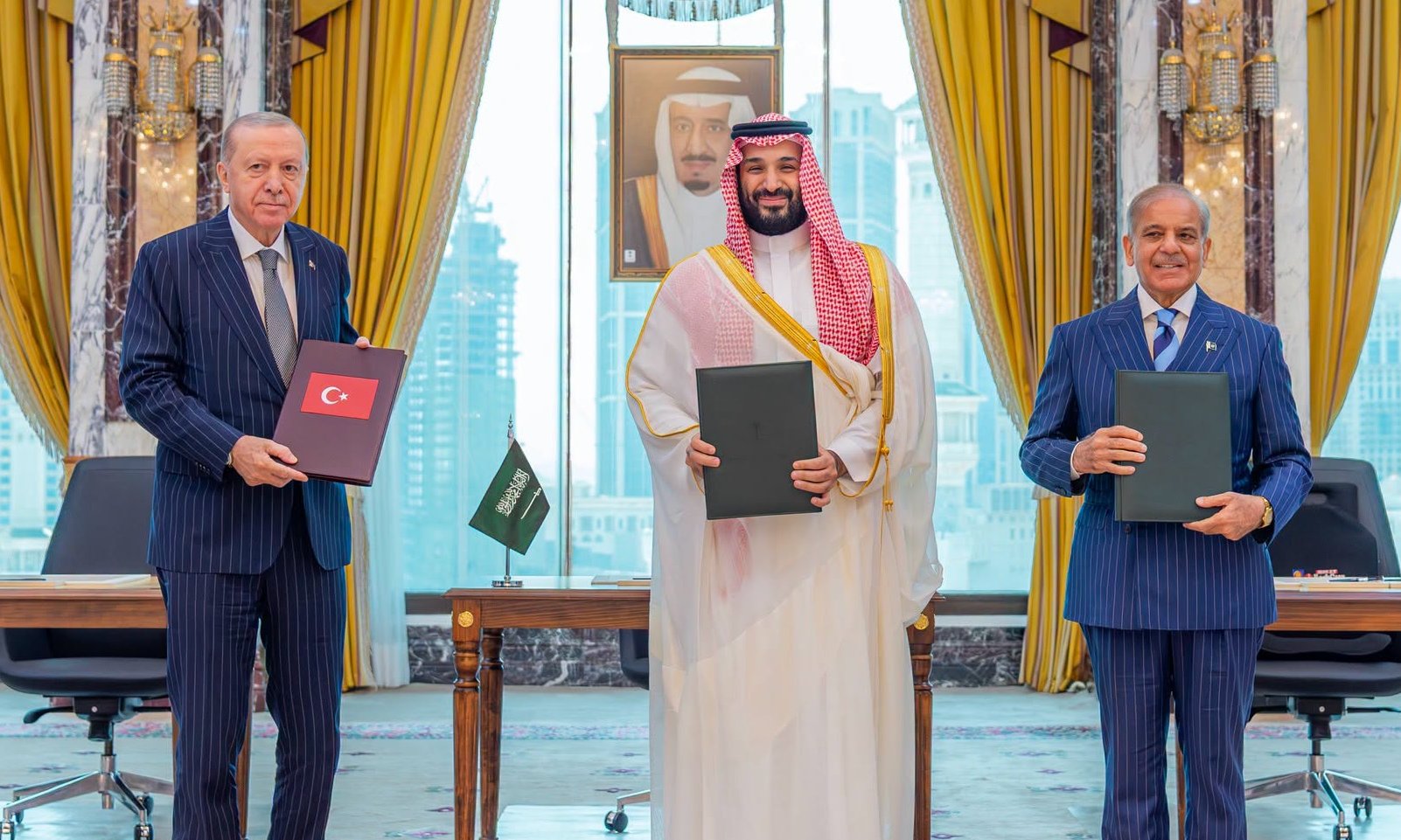
Kathmandu – The signing of the ‘Mecca Joint Defense Agreement’ between Saudi Arabia, Pakistan and Turkey can be seen as an important event indicating the changing security equation of West Asia.
Such security cooperation between three influential countries in the Muslim world has the potential to add a new dimension to the regional balance of power.
Mecca is a very sensitive and holy land for Muslims. Therefore, the defense agreement associated with the name of Mecca is not only a matter of military cooperation but also seems to carry political, strategic and diplomatic significance.
The coming together of Saudi Arabia’s economic and strategic influence, Pakistan’s military capability and Turkey’s regional diplomatic activism has made this cooperation more meaningful.
However, the objective of any joint defense mechanism should be regional peace and stability rather than a demonstration of power. West Asia has long been affected by conflict, insecurity and power competition. In such a situation, a new military alliance should not create a situation that increases competition rather than reduces tension. The agreement needs to prioritize transparency, dialogue and respect for sovereign nations.
Such regional developments are also of concern for Nepal. With a large number of Nepalese citizens employed in the Gulf and West Asia, changes in the security environment there can directly impact Nepal’s economy and civilian security. Therefore, Nepal should closely monitor the changing international security equation, focusing on national interests rather than sentimental aspects.
The real success of the Mecca Joint Defense Agreement will depend not on its military capabilities, but on how much it contributes to regional peace, stability, and cooperation. The justification for such an agreement will be confirmed only if it becomes a means of shared security, rather than the beginning of another competition in the name of the balance of power.