Kathmandu – Energy drinks sold in Nepal contain caffeine within safe limits, but they are not for everyone, the government’s food regulator has said, as concerns over energy drinks and caffeine in Nepal continue to make headlines.
The Department of Food Technology and Quality Control (DFTQC), under the Ministry of Health and Food Hygiene, issued a public notice on Wednesday after several media outlets published reports linking different energy drink brands to health concerns. The department said it remains committed to protecting public health and consumer interests.
Energy drinks are non-alcoholic caffeinated beverages. Their main ingredients usually include caffeine, guarana, glucuronolactone, taurine, inositol, carnitine, B-vitamins, sugar, water and food additives. According to the department, countries and international bodies have set safe consumption limits for these ingredients.
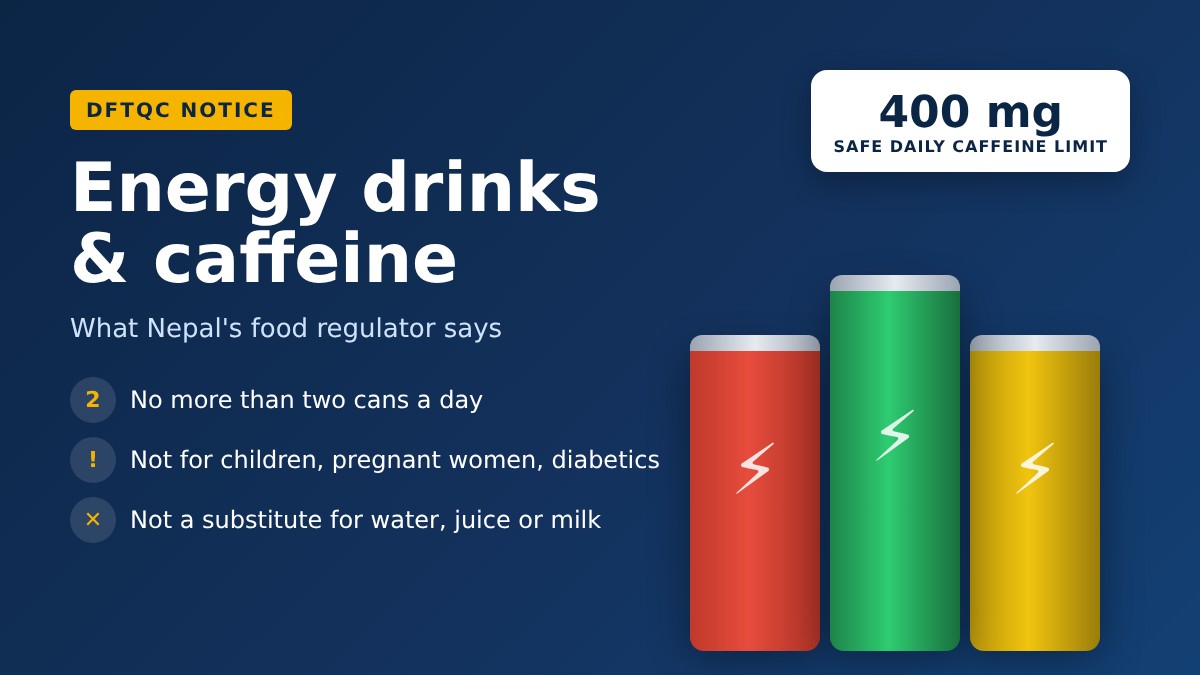
Citing the European Food Safety Authority (EFSA) and the US Food and Drug Administration (FDA), the notice says a healthy adult can safely consume up to 400 milligrams of caffeine a day from all sources combined, including tea, coffee, chocolate and energy drinks.
At present, 17 companies produce and sell energy drinks in Nepal with permission from various government bodies. Based on product labels and laboratory test reports, the department said all of them use around 100 milligrams of caffeine per can, less than 25 percent of the safe daily limit. On that basis, it concluded that the caffeine used by Nepali producers is within the safe range for human consumption.
Safe, however, does not mean suitable for all. The department has urged children, pregnant and breastfeeding women, people with diabetes and other illnesses, and anyone sensitive to caffeine not to drink energy drinks, in line with the warnings printed on the label.
Those who can drink them have been asked not to have more than two cans, of up to 330 ml each, in a day. The department also advised people not to use energy drinks as a replacement for nutritious drinks such as water, juice, milk or buttermilk (mohi), and not to mix them with other drinks.
Producers and sellers have also been reminded of their responsibilities. They must obtain permission from the relevant authorities before advertising, and their marketing must also communicate the warnings and safe consumption limits printed on the label. Any business acting against the Food Hygiene and Quality Act, 2081 will face action under the law, the notice states.
The department has also asked the media and everyone involved to share information based on scientific evidence, so that the public is neither misled nor alarmed. For consumers, the message is simple: read the label, know your limit, and remember that an energy drink is a treat, not a substitute for water.