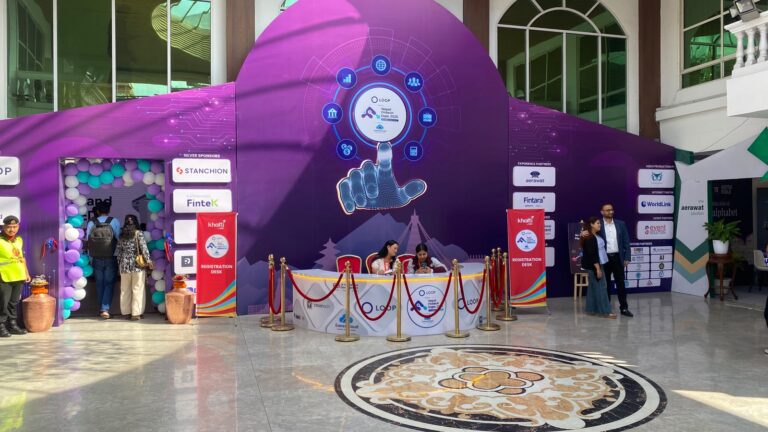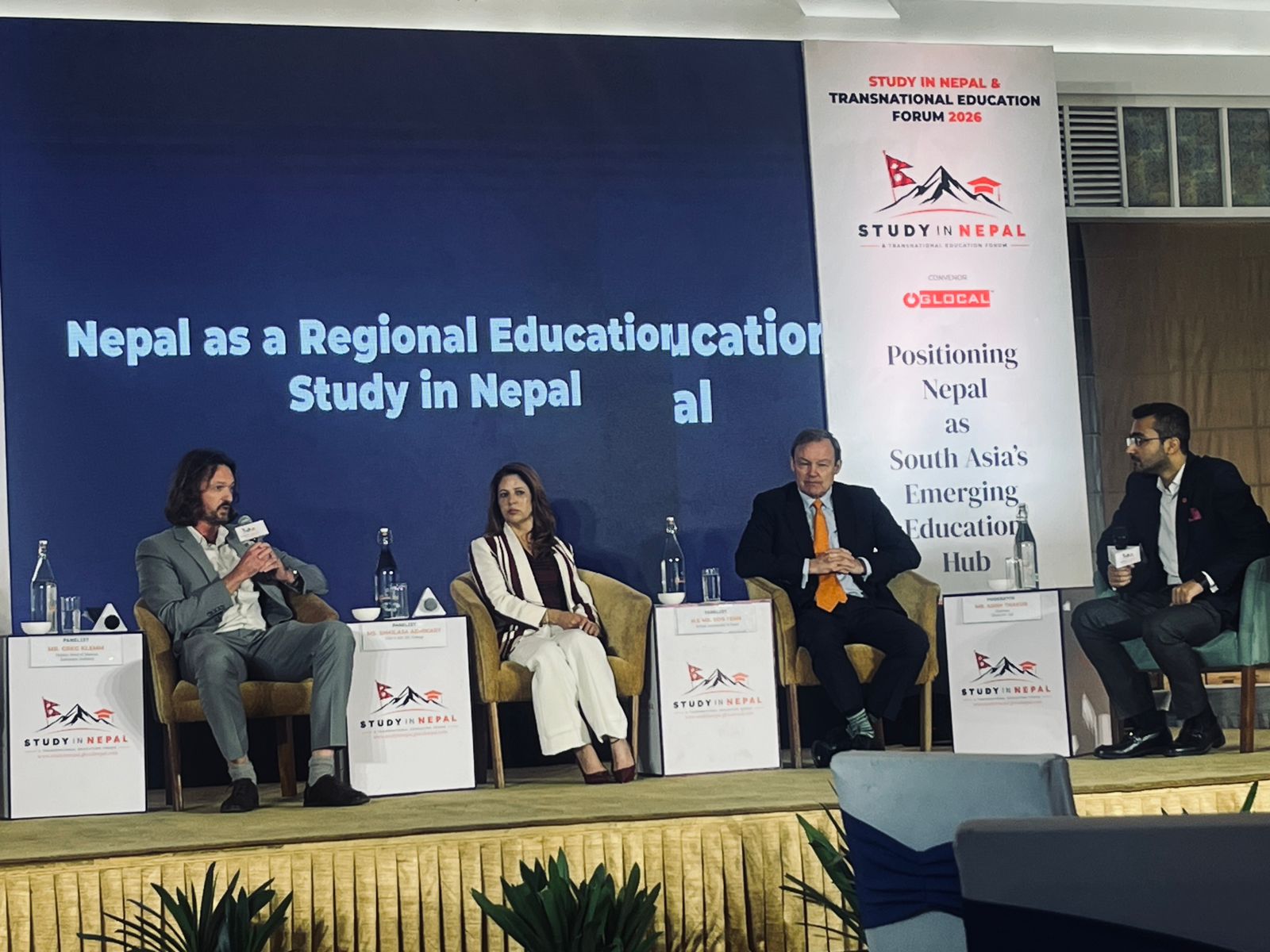
Kathmandu– The “Study in Nepal & Transnational Education Forum 2026” concluded in Kathmandu with education leaders, diplomats, and academic stakeholders emphasizing the importance of international collaboration to position Nepal as a regional education hub.
Speaking at the forum, British Ambassador to Nepal Rob Fenn said the United Kingdom remains one of the world’s most diverse countries and continues to attract students and professionals from across the globe. He noted that Nepal also holds strong potential to emerge as an important destination for higher education and academic partnerships.Ambassador Fenn highlighted that several colleges in Nepal are already delivering globally recognized UK degrees with equivalent academic standards. According to him, such collaborations can provide Nepali students with international-quality education and global exposure without having to leave the country.
Similarly, Australian Embassy Deputy Head of Mission Mr. Greg Klemen stated that Australia has become a leading destination for education, research, and employment opportunities. He said the opportunity for students to work while studying offers valuable practical experience and career development.
Klemen further emphasized that Nepal and Australia can strengthen cooperation by sharing educational expertise, skills, and international best practices. With supportive government policies and stronger partnerships, he said Nepal could become an important center for educational and cultural exchange.Panelist and CEO & MD of IEC College, Shailaja Adhikari, described Nepal as a promising destination for educational and cultural collaboration. She stressed that international partnerships can connect Nepali students with global opportunities and experiences.
Meanwhile, moderator and CEO of Glacier Ivy Pvt. Ltd., Aasish Thakur, said Nepal is not weak in capability or context, but challenges remain in the approval process rather than the curriculum itself. He pointed out that institutions are often required to seek repeated approvals for courses, slowing educational innovation and development.Thakur also noted growing interest among students and parents in exchange programs, international university collaborations, and experiential learning opportunities. He said partnerships between Nepali and foreign institutions could help Nepal’s education system become more globally competitive.Participants at the forum underscored the need for stronger policies, quality assurance, and international cooperation to establish Nepal as a recognized destination for higher education in the region.