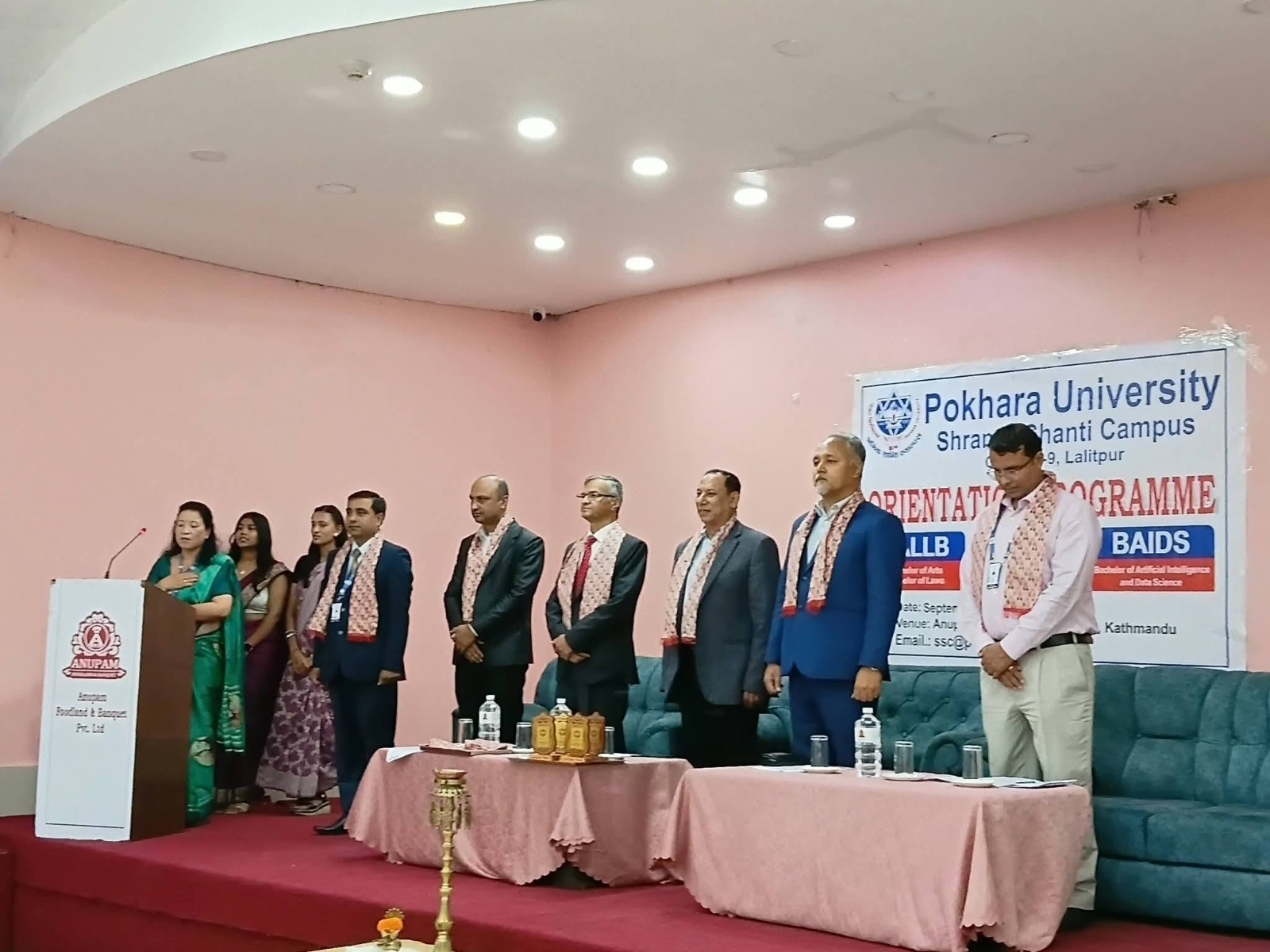
Lalitpur – Shramik Shanti Campus, a constituent campus of Pokhara University located in Chyasal, Lalitpur, successfully hosted its orientation program for newly enrolled students across its BAIDS (Bachelor of Artificial Intelligence and Data Science), BCSIT (Bachelor of Computer Science and Information Technology), and BALLB (Bachelor of Arts and Bachelor of Laws) programs.
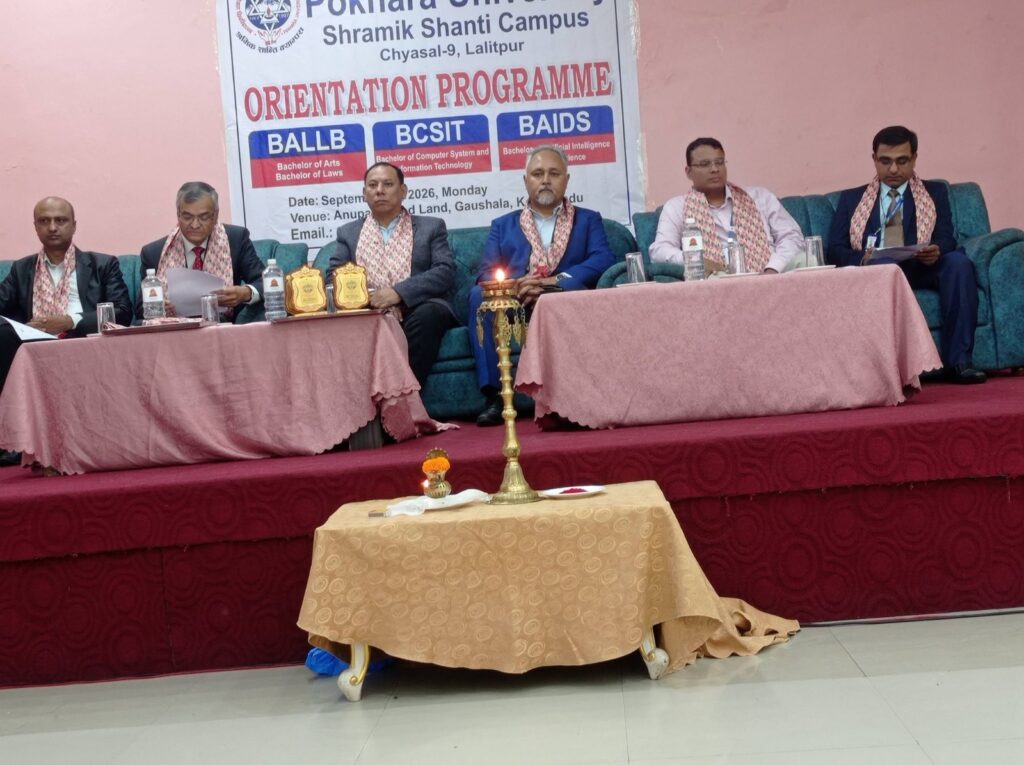
The ceremony brought together academic leaders, technology executives, campus faculty, and incoming students to celebrate the start of the academic year.
Bridging the Gap Between Academia and Industry
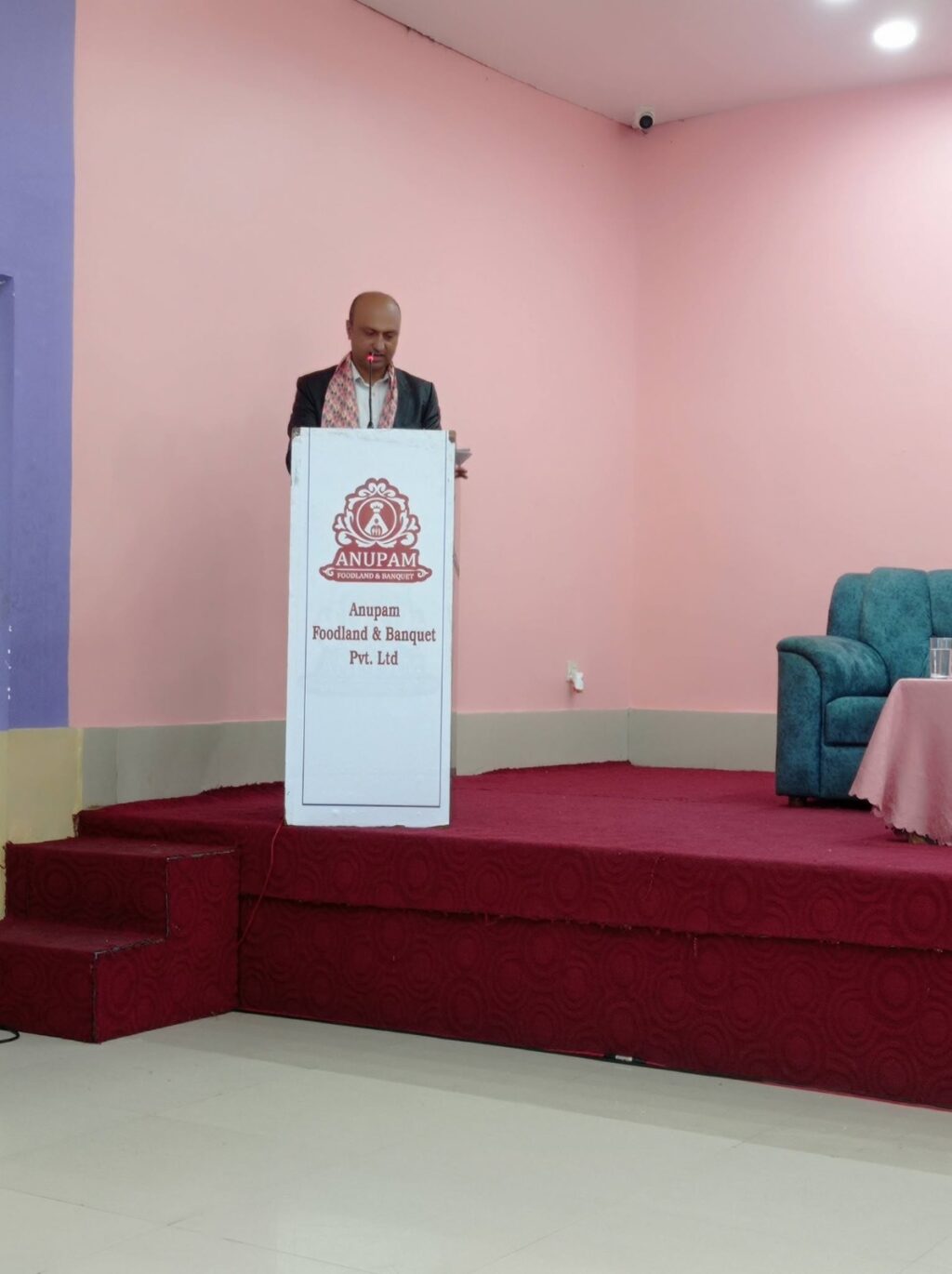
Addressing the gathering as a Special Guest, Chiranjibi Adhikari, Acting President of the Computer Association of Nepal (CAN Federation) and Founder & CEO of cybersecurity firm One Cover Private Limited, emphasized the vital partnership required between higher education institutions and the tech industry.
“IT industry leaders view the relationship between academia and industry as a vital partnership of complementary forces: academia sparks foundational discovery and long-term thinking, while industry drives rapid scaling, practical execution, and market delivery,” stated Adhikari.
He stressed that bridging the existing skill and expectation gap requires aligning operational timelines, incentives, and organizational goals across both sectors.
Strategic Interventions Highlighted
The orientation outlined key structural differences between academic research and market expectations:
Academic Focus: Deep theoretical knowledge, open publication, exploratory research, and long-term time horizons.
Industry Demands: Rapid execution speed, system-level problem solving, product scalability, immediate Return on Investment (ROI), and intellectual property protection.
To address workforce readiness concerns, the speaker outlined three core strategies:
Collaborative Frameworks: Expanding joint research projects, industry-integrated boards of study, and shared lab facilities.
Curriculum Evolution: Embedding real-world technical challenges, systems thinking, and emerging technologies like AI and cloud frameworks directly into campus education.
Talent Mobility: Increasing industry fellowships, visiting researcher programs, and co-op models to enable seamless exchange between educators and active industry professionals.